

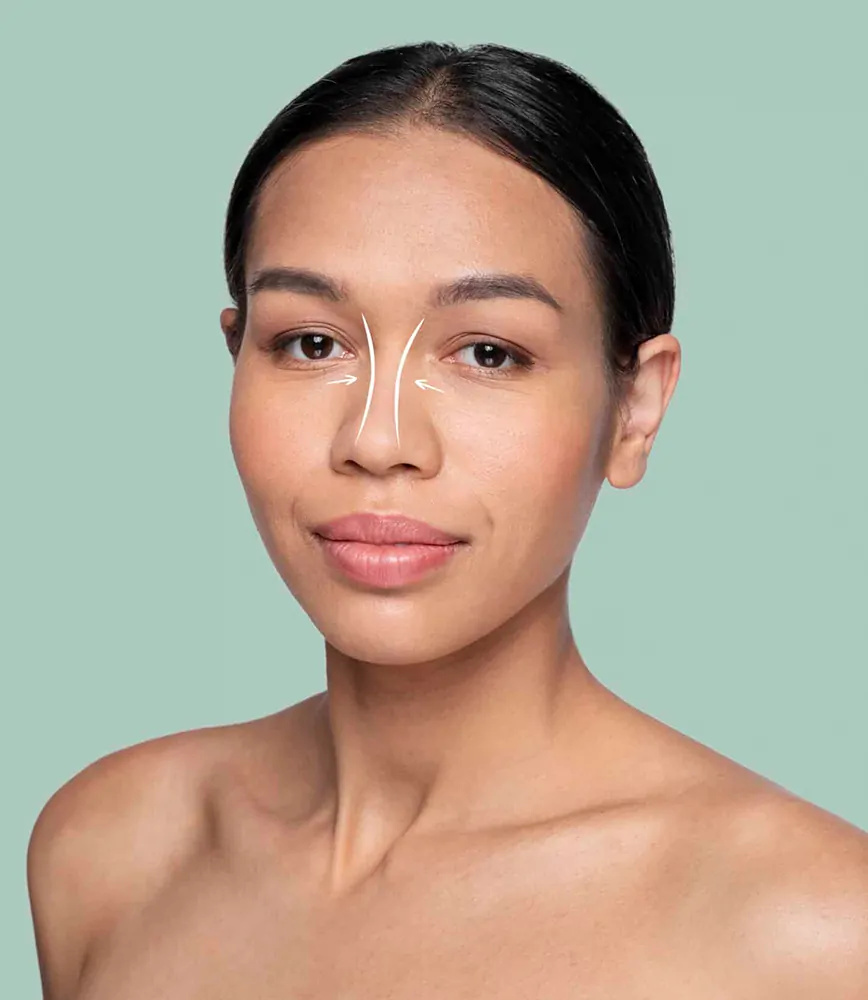
What is Ethnic Rhinoplasty?
Ethnic rhinoplasty is a highly individualized nasal surgery for patients seeking aesthetic refinement while preserving their natural, familial, or cultural facial characteristics. Rather than relying on standardized templates, surgical planning is based strictly on your unique anatomy. Because traits like skin thickness, cartilage strength, and nasal bone structure vary widely within every population, techniques must be customized to ensure proper structural support and clear definition. Both aesthetic goals and functional breathing issues can be addressed simultaneously. For international patients, Turkey offers specialized surgical expertise, advanced facilities, and structured recovery pathways.
Medical Review
- Medically reviewed by: Dr. Mustafa Bağlı, European Board Certified, ENT & Facial Plastic Surgery (3,000+ Rhinoplasty Procedures)
- Last medically reviewed: September 13, 2026
- Updated: September 13, 2026
- Location: Istanbul, Türkiye
Request an ethnic rhinoplasty assessment
2026 Ethnic Rhinoplasty in Turkey: A Surgeon’s Guide to Changing Your Nose Without Losing Your Face
Ethnic rhinoplasty, which takes into account different ethnic characteristics, offers the opportunity to perform more natural and personalized rhinoplasty. It stands out as a personalized technique to eliminate congenital or acquired nasal deformities.
Ethnic rhinoplasty; It aims to provide a more harmonious and balanced nasal form by addressing the different anthropometric and anatomical features of the person. Rather than one type fits all with ethnic rhinoplasty surgeons take into consideration the patient’s facial anatomy and ethnic characteristics. The aesthetic procedure is performed with high precision, so it does not take away from the natural appearance of the person.
Ethnic rhinoplasty, which plays an important role in keeping cultural diversity alive, can be applied using different open and closed techniques. In addition, cartilage grafting is also performed when necessary to be suitable for deep radix and low nasal projection. In this way, while increasing the volume of the nose in harmony with the facial structure of the person, it also allows height and length adjustment.
What is ethnic rhinoplasty? How does it work, how long does the procedure take, what are it’s advantages, and which patients are suitable for ethnic rhinoplasty?
What is Ethnic Rhinoplasty?
While each ethnicity has its own characteristics, these characteristics are extremely valuable in terms of cultural diversity. Therefore, care should be taken to ensure that aesthetic interventions are performed by preserving this cultural diversity. Ethnic rhinoplasty is a type of rhinoplasty that is performed by remaining faithful to the traces of people’s ethnic backgrounds.
With ethnic rhinoplasty, which is performed to provide an aesthetic appearance by preserving the unique facial features of people, structural disorders in the nose are improved. Excessive nasal tip lift, low disproportionate nasal tip, wide nostrils, incompatibility of chin and forehead structure, and flat, small, or large nose problems are solved.
Ethnic rhinoplasty, which is applied using different surgical methods, aims to meet both aesthetic and functional expectations of patients. With special procedures performed in ethnic rhinoplasty, both the anatomical features specific to their origins are preserved and the nasal disorders that disturb the patient are eliminated.
The main difference with traditional rhinoplasty is traditional rhinoplasty is generally focused on nose reduction. In this context, it includes reductions in the nasal bone and cartilage. However, in ethnic rhinoplasty, nasal augmentation, and cartilage addition procedures are usually performed to create a nasal structure suitable for the ethnic origin of the person.
In ethnic rhinoplasty, many factors are considered in order to achieve successful results for the purpose. Skin type, color, thickness, face shape, and chin structure are among these factors. Since it is performed by considering all these factors, it does not adopt a single type of surgery approach suitable for everyone.
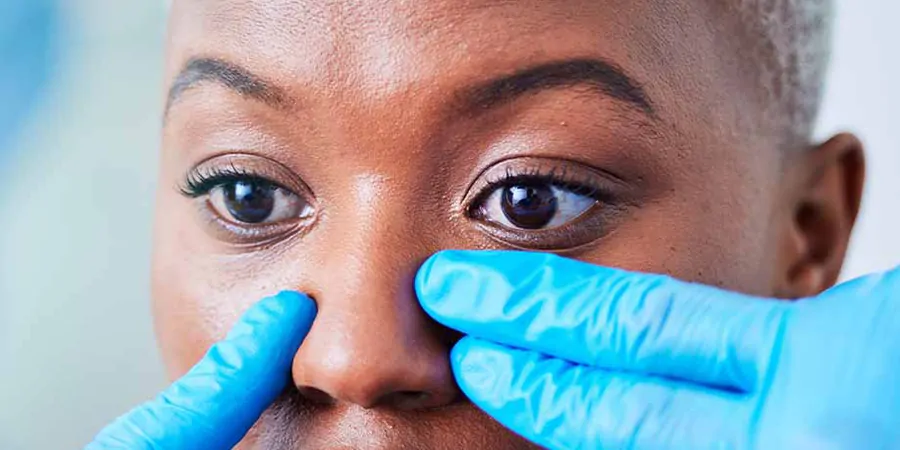
How Does Ethnic Rhinoplasty Work?
The duration of surgery in ethnic rhinoplasty may vary according to the method to be applied, the anatomy of the person and the specialist. For example, if the surgeon needs to harvest rib cartilage to increase tip projection that will make surgery longer.
Another factor affecting the duration of ethnic rhinoplasty (natural rhinoplasty) is whether nasal dorsum augmentation is needed. Despite available nonbiological materials to augment nasal dorsum the safest and long-lasting choice is patient’s own rib cartilage.Harvesting rib cartilage and reshaping it will make surgery longer but in this method success rate is very high.
Another determining factor in terms of duration is the ethnicity of the patient. For example, successful results can be obtained with open ethnic rhinoplasty in a Middle Eastern style nose structure. On the other hand, for those who need small interventions such as only tipplasty, closed surgery is usually sufficient. Therefore, the duration is longer or shorter depending on the patient rather than ethnicity.
Although the nasal structures of individuals with African American ethnicity look similar to each other, there are structural differences. These differences arising from bone, cartilage, and skin structure are decisive in the duration. For example, for some individuals, alar base surgery may be needed to achieve a narrower tip.
In ethnic rhinoplasty, although the duration of surgery varies according to the factors mentioned above, it is possible to say that it takes between 3-4 hours on average. This time may be longer if a very complex rhinoplasty procedure is to be performed. Therefore, in order to give a clear procedure time, the patient’s condition, needs and techniques should be discussed. Afterwards, a detailed planning is essential.
What is the Advantage of Ethnic Rhinoplasty?
Ethnic rhinoplasty, which allows patients to achieve the desired nose structure while preserving their ethnic characteristics, offers many advantages thanks to the advanced techniques it uses. The prominence of this aesthetic application recently is due to the advantages it offers to these patients.
The advantages of ethnic rhinoplasty are as follows:
- The results of the application made by addressing the ethnic characteristics of the person are extremely natural.
- While preserving the facial features that make the person unique, it allows to shape the desired nose structure.
- It is a professional approach as it is applied by experienced and trained specialists.
- It is a personalized aesthetic application with a special planning. Therefore, the results obtained create satisfaction.
- Correction of the nasal structure disorder that disturbs the person contributes to increased self-confidence. It also has positive effects on social life.
- It eliminates functional nasal disorders as well as aesthetic. Thus, it also contributes to the general health of the person.
- With the use of advanced technology and techniques, the risk of complications and side effects is low.
- Since it is applied with precision and advanced technologies, the recovery period is generally shorter. It offers the opportunity to return to daily life in a short time.
Ethnic rhinoplasty (natural rhinoplasty) applied with a personalized treatment plan usually gives satisfactory results. However, for the advantages and successful results it offers, it is essential to get help from a specialist in this aesthetic application. Otherwise, it is difficult to achieve a nasal structure that preserves the ethnic characteristics of the person and satisfies the person. In short, the procedure in this case cannot go beyond traditional rhinoplasty.
Am I Suitable for Ethnic Rhinoplasty?
The lower age limit of ethnic rhinoplasty, which preserves the special features of the origin of the person while removing structural defects in the nose, is those who are over 17 years old. Since the nose has not completed its development, it is not suitable for children and older individuals. Ethnic rhinoplasty is not recommended as the health conditions of some people will increase the risk of complications.
The features that suitable candidates for ethnic rhinoplasty should have are as follows:
- Those who are over 17 years old and dissatisfied with their nasal structure.
- Those who do not have health conditions that prevent rhinoplasty such as cancer, heart, blood disorder, and diabetes.
- Those with an overly upturned nose structure.
- Those with asymmetrical, disproportionate, and sagging nose structure.
- Those who are not satisfied with the appearance of the nose in length and width.
- Those with a nose structure incompatible with the forehead and chin.
- Those with an uncomfortably flat nose structure.
- Those who have a very small and nose experience discomfort due to this situation.
- Those who complain about the appearance of the nose and have the budget required for ethnic rhinoplasty.
- Those who have self-confidence problems due to structural defects in their nose.
In the first meeting with the specialist before the ethnic rhinoplasty (natural rhinoplasty) procedure, it is examined whether all these criteria are met. In addition, pregnancy, breastfeeding, and those with mental illness at a level to make their own decisions are not suitable for aesthetic surgery.
What is the Recovery Process After Ethnic Rhinoplasty?
The healing process is critical to get successful results in every aesthetic application. After ethnic rhinoplasty, the patient stays at the hospital for 1 night and the next day after the check-up examination the patient will be discharged. However, there are some topics that the patient should pay attention to during the healing process. By addressing these concerns, pain, soreness, nausea, and vomiting—common after the operation—are minimized. This also helps speed up the healing process.
Pain complaints in the first days after rhinoplasty are generally low. Medications prescribed by the specialist are mostly useful in managing complaints. In addition, it is normal to have slight bloody leakage from the nose in the first days. However, if the bleeding intensifies and lasts longer, it may be necessary to consult a specialist.
Swelling, edema and bruising around the nose usually heal at the end of the first week after the procedure. However, it is necessary to avoid picking and pulling the nose for a month. It may take up to 6-12 months for the edema to be completely removed. This period may be longer or shorter depending on the biological reactions of the person. It should be known that the duration is longer especially for those with thick nasal skin than those with thin skin.
During the healing process, the success of the procedure is evaluated with intermittent controls made by the specialist. In addition, the nose regains its new appearance approximately a few months after the procedure. If the desired results are not obtained after ethnic rhinoplasty, which generally has high success rates, corrections may need to be made with revision rhinoplasty. However, in the hand of an experienced specialist usually revision is
not needed.
Before – After Ethnic Rhinoplasty
Ethnic rhinoplasty generally has high success rates when compared before and after. It gives results that are natural, balanced with the facial structure of the person and do not disrupt the unique appearance.
As a result, ethnic rhinoplasty is a rhinoplasty procedure performed by addressing the ethnic characteristics of a person. This aesthetic operation, which preserves cultural diversity, allows the person to achieve the desired nose structure by preserving the characteristics specific to their origin. While it can be performed open or closed, it uses different techniques such as repositioning the nostrils, cartilage grafting and implant placement. In this way, it is a procedure that balances the facial features of the person and makes it look more aesthetic without breaking away from its essence.
For many international patients, considering ethnic rhinoplasty brings up a delicate balance. You may desire aesthetic refinement, yet you deeply want to preserve the facial features that connect you to your family and cultural identity. The goal of this surgery is never to adopt a standardized appearance. Instead, ethnic rhinoplasty in Turkey focuses on individualized modifications that harmonize with your unique facial proportions while maintaining the essence of who you are.
A successful outcome requires looking beyond broad demographic categories. Ethnicity alone does not determine your nasal structure. Two patients from the exact same background can present with completely different skin thickness, cartilage strength, nostril shape, and airway anatomy. Because of this substantial individual variation, there is no single technique suitable for all patients seeking an ethnic nose job in Turkey. A responsible surgical plan must always prioritize your actual physical anatomy and functional breathing needs over generalized assumptions.
This highly personalized approach is central to the practice of Dr. Mustafa Bağlı. As a European Board Certified specialist in both ENT and Facial Plastic Surgery who has performed over 3,000 rhinoplasty procedures, his methodology integrates structural support with aesthetic finesse. Whether the surgical goal involves refining a wide nasal base, elevating the nasal bridge, securing tip support, or correcting the nasal airway, the focus remains on creating a balanced, natural looking outcome that respects your original identity.
This comprehensive guide is designed to help you make informed medical decisions about your care. It explores how specific anatomical factors influence surgical planning, what vital questions to ask during an ethnic rhinoplasty consultation, and how to set realistic expectations for your healing journey. While traveling for ethnic nose surgery in Turkey provides access to advanced medical facilities, finding the right surgeon requires careful research, transparent communication, and a clear understanding of what is surgically achievable for your specific anatomy.
What Does Ethnic Rhinoplasty in Turkey Actually Mean?
Ethnic rhinoplasty in Turkey refers to a highly individualized approach to nasal surgery. It focuses on refining the nose while respecting a patient’s natural, familial, and cultural facial characteristics. Rather than applying a single standardized template, the surgical plan is built entirely around your unique anatomical structure and personal aesthetic goals.
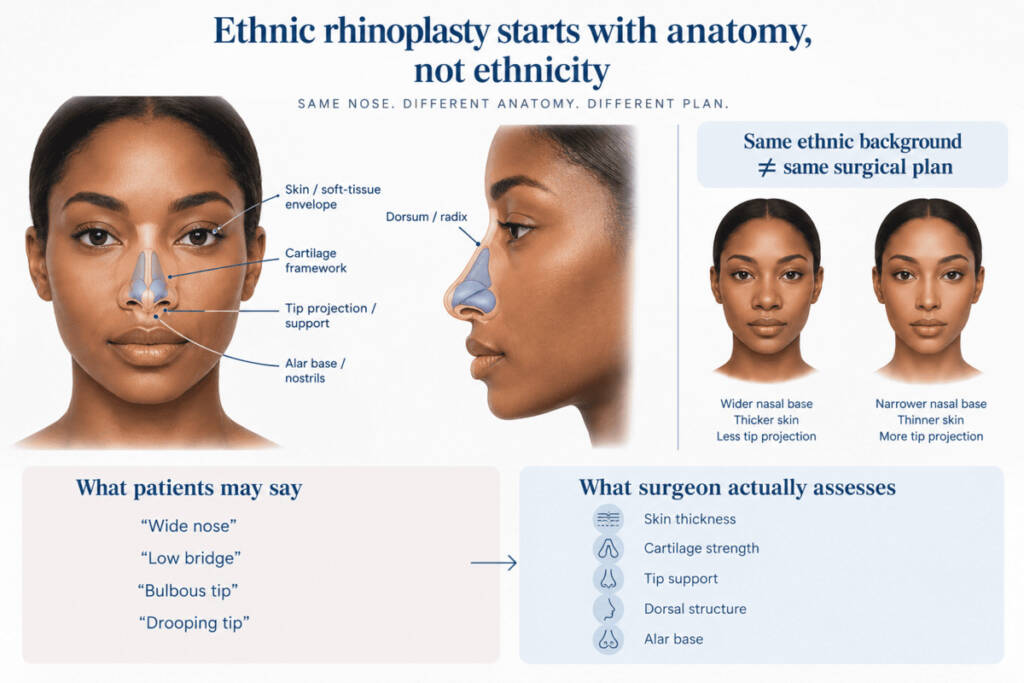
Is ethnic rhinoplasty a different operation?
No, ethnic rhinoplasty is not a separate medical procedure. It is a specialized planning philosophy. The surgical techniques used, such as cartilage grafting, structural support, or tip refinement, are the same methods utilized in all modern rhinoplasty. The key difference lies in how these techniques are selected. A skilled ethnic rhinoplasty surgeon carefully applies these methods to harmonize with your specific facial proportions rather than attempting to fit your nose into a standardized “ideal” shape.
Why “ethnic” describes a planning approach, not one nose type
The term “ethnic” is frequently misunderstood as referring to specific, uniform nose shapes. In reality, ethnicity does not dictate your anatomy. While certain anatomical characteristics may appear more frequently in some populations, there is no single nose type for any demographic group.
An ethnic rhinoplasty approach simply acknowledges that your underlying physical traits require a customized surgical strategy. Your surgeon must evaluate your unique skin thickness, cartilage strength, and nasal bone structure, creating a plan based on clinical reality rather than a rigid formula based on your background.
Can two people from the same background need completely different plans?
Yes, absolutely. Two patients sharing the exact same cultural or geographic background can present with completely different nasal anatomy and aesthetic goals.
One patient might have a high nasal bridge and thin skin, requiring preservation techniques to maintain their dorsal contour. Another patient from the same background might have thicker skin and softer cartilage, requiring extensive structural augmentation and cartilage grafting to achieve clear tip definition. Your anatomical reality and your functional breathing needs always dictate the surgical plan.
What does preserving your identity actually mean?
Preserving your identity means making targeted aesthetic changes without erasing the features that make you look like yourself. In anatomical terms, this might involve refining a wide alar base or lifting a drooping nasal tip while maintaining a natural bridge height that suits your facial profile.
During your consultation, your surgeon will discuss exactly which features you want to adjust and which you want to protect. The goal is to ensure the final result looks naturally yours, avoiding an overly operated or unnatural appearance.
Ethnic rhinoplasty vs reduction-focused rhinoplasty
Historically, reduction focused rhinoplasty aimed to make noses smaller by aggressively removing cartilage and bone. This older approach often leads to breathing problems and a pinched appearance, especially for patients with thicker skin or wider facial proportions.
Modern ethnic rhinoplasty in Turkey frequently relies on structural rhinoplasty instead. Rather than simply removing tissue, this approach involves adding support. By using precise cartilage grafts, the surgeon provides clear tip projection and maintains the internal nasal airway. This structural focus ensures the nose functions properly and maintains a balanced, natural looking aesthetic over your lifetime.
Is Ethnic Rhinoplasty in Turkey Right for Me?
Deciding to undergo ethnic rhinoplasty in Turkey requires evaluating both your physical health and your psychological readiness. A safe and successful outcome depends on complete facial growth, a clear medical history, and a shared understanding of what surgery can realistically achieve for your specific anatomy. Ultimately, formal candidacy must be determined through a clinical examination.
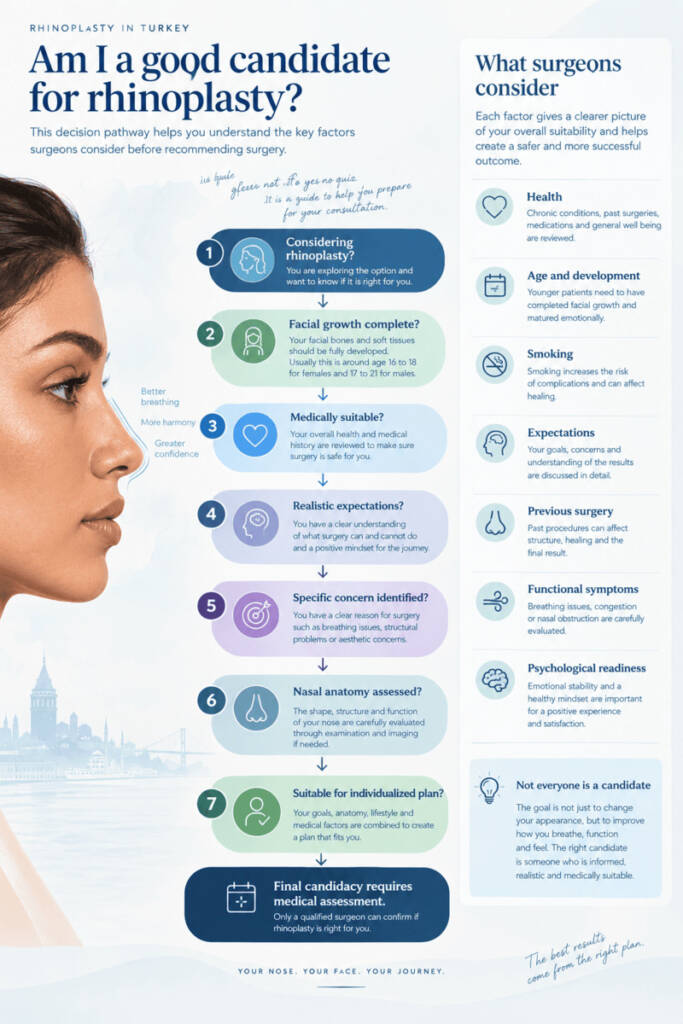
Who is generally considered a good candidate?
A good candidate is an individual in strong general health who has specific, identifiable concerns about their nasal appearance or breathing function. Suitable candidates understand that the procedure is designed to refine their existing features rather than completely transform their face. They approach the surgery seeking an improvement tailored to their individual anatomy, rather than seeking absolute perfection.
Does facial growth need to be complete?
Yes, your facial bones and cartilage must be fully developed before undergoing any nasal surgery. Operating on a nose that is still growing can disrupt natural facial development and alter the long term surgical result. For most patients, facial growth is complete by their late teens, although this timeline varies individually. A surgeon will evaluate your facial maturity during your initial consultation.
How do health, smoking and medications affect candidacy?
Your physical health directly impacts your safety under anesthesia and your body’s ability to heal properly.
- General Health: Conditions like uncontrolled high blood pressure, diabetes, or bleeding disorders must be medically managed before you can be cleared for surgery.
- Smoking: Nicotine constricts blood vessels, significantly reducing vital blood flow to the nasal skin. This increases the risk of delayed healing, infection, and poor scarring. Surgeons strictly require total smoking cessation for several weeks before and after the procedure.
- Medications: Certain daily medications and over the counter supplements, especially blood thinners, can increase surgical bleeding. These will need to be paused under medical supervision prior to your operation.
What makes expectations realistic?
Realistic expectations are grounded in your actual physical anatomy. Factors like your skin thickness, existing cartilage strength, and overall facial proportions set firm limits on what can be safely changed. While surgery can beautifully refine a wide nasal base or improve tip support, it cannot replicate a reference photograph of another person. Understanding that your final result will still look like you is a primary indicator of surgical readiness.
When might a surgeon recommend waiting or declining surgery?
A responsible surgeon will delay or decline surgery if the medical risks outweigh the potential aesthetic benefits. This frequently occurs if a patient is pregnant, breastfeeding, actively smoking, or dealing with an active nasal infection. Additionally, patients seeking a revision rhinoplasty must typically wait at least one full year after their previous surgery to allow internal tissues to soften and heal. A specialized surgeon will also decline to operate if a patient requests structural changes that are anatomically unsafe.

Why can body-image concerns affect the decision?
Psychological readiness is just as important as physical health. If a patient believes that changing their nose will solve unrelated personal or social issues, surgery is unlikely to bring them lasting satisfaction. Patients who are excessively fixated on minor anatomical details may also struggle to accept the natural unpredictability of the healing process. A thorough consultation helps ensure that the motivation for surgery is healthy and focused purely on realistic anatomical improvement.
How Is Ethnic Rhinoplasty in Turkey Planned Around Your Anatomy?
Ethnic rhinoplasty in Turkey relies entirely on a customized surgical plan built around your unique physical characteristics. Rather than using standard aesthetic templates, the procedure requires a comprehensive evaluation of your internal and external nasal anatomy. A successful outcome depends on understanding how your skin envelope, cartilage strength, and bone structure interact with your overall facial proportions. Because every patient brings a completely different anatomical starting point, your surgeon must design an individualized approach that addresses both cosmetic refinement and functional breathing.
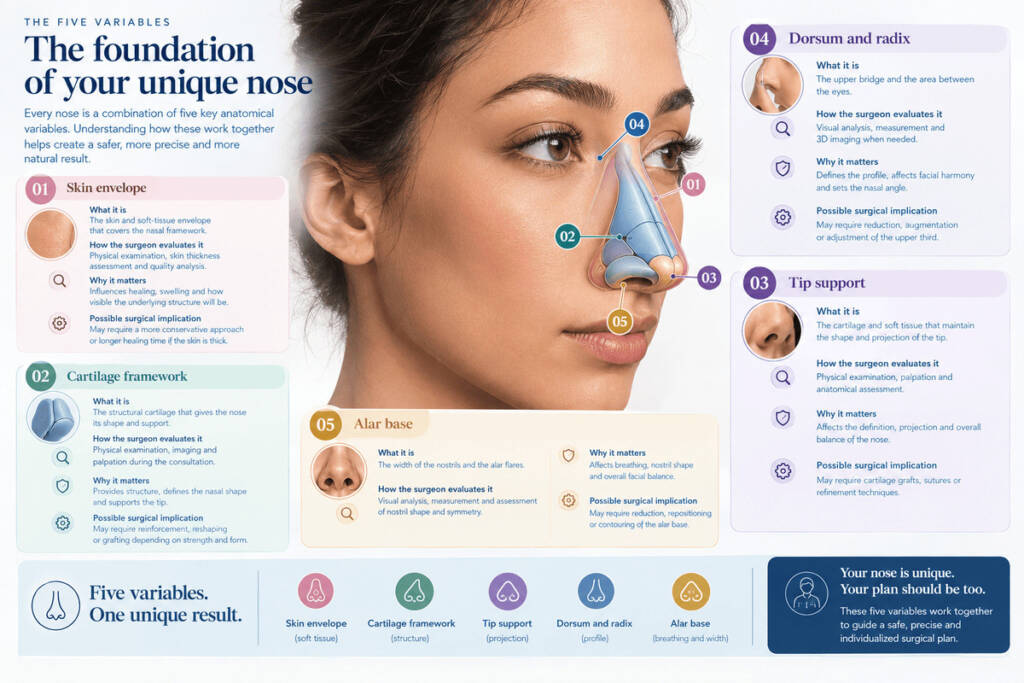
1. Skin and soft tissue thickness
Your skin and soft tissue envelope significantly influence the final visible result and the overall recovery timeline. Patients with thicker, sebaceous skin require stronger underlying structural support to achieve visible refinement, as thick skin naturally camouflages the fine details of the cartilage framework. For these patients, simply removing cartilage often leads to a loss of definition and structural collapse. Conversely, thinner skin reveals underlying structural details very easily, meaning the surgeon must meticulously smooth the cartilage to prevent visible irregularities. Your surgeon will adjust their surgical techniques based on how your specific skin type is expected to heal and contract over time.
2. Cartilage strength and available support
The lower lateral cartilage and septal cartilage provide the foundational framework of the nose. In many patients seeking ethnic rhinoplasty, the native cartilage may be relatively soft or thin, offering limited structural support. If the existing cartilage cannot adequately support the desired cosmetic changes or maintain an open nasal airway, the surgeon will need to reinforce it. This process frequently involves harvesting cartilage grafts from your septum to build a stable, resilient structure. Without this crucial reinforcement, the nose may lose its shape or develop breathing problems as swelling subsides during the healing process.
3. Tip projection and structural support
Tip projection refers to how far the nose extends outward from the face. Depending on your specific anatomy, your nasal tip may lack projection, appear bulbous, or point downward. Achieving clear tip definition requires carefully modifying the nasal tripod, which is the anatomical structure supporting the lower third of the nose. Instead of aggressively removing tissue, a modern tip support rhinoplasty focuses on precise suturing and strategic cartilage grafting. This methodology ensures the new nasal tip shape remains stable over time, resisting the downward pull of gravity and scar tissue contracture.
4. Dorsum, bridge and radix
The dorsum, commonly known as the nasal bridge, varies substantially among individuals. Some patients present with a high, prominent bridge they wish to reduce, while others have a low, broad bridge they wish to elevate and define. The starting point of the bridge, known as the radix, also deeply affects the perceived length and harmony of the nose. If augmentation is required to elevate a flat nasal bridge, your surgeon may use specialized grafting techniques to build height. If reduction is needed, careful bone contouring is performed to maintain a smooth, natural profile.
5. Alar base width and nostril shape
The alar base refers to the width of the lower nose where it meets the cheeks, while nostril flare describes how much the nostrils bow outward. Many patients seek alar base rhinoplasty to narrow this specific area. However, alar modification is not automatically required for every patient presenting with a wider lower nose. The decision to reduce interalar width or alter nostril shape must be made with extreme precision to preserve natural breathing function and prevent an unnatural, pinched appearance. The modifications must respect the natural curvature of your nostrils.
Why facial proportions matter as much as the nose
A nose that looks beautiful on one person may look entirely out of place on another. Your surgeon evaluates your overall facial proportions, including the width of your cheekbones, the projection of your chin, and the symmetry of your jawline. The ultimate goal of ethnic rhinoplasty in Turkey is complete facial harmony. A refined nose must balance seamlessly with your existing features. Altering the nose without closely analyzing the surrounding facial architecture can severely disrupt this natural balance, leading to a result that looks surgically altered rather than naturally refined.
Why the same technique can produce different results
Because every single patient possesses a unique combination of skin thickness, cartilage strength, and bone structure, applying the exact same surgical maneuver to two different people will yield two entirely different outcomes. Furthermore, individual bodies manage postoperative swelling and tissue healing differently. This biological reality explains why you cannot simply provide a reference photograph and expect an identical surgical outcome. Drawing on comprehensive expertise in both ENT and Facial Plastic Surgery, your surgeon tailors every technique to work specifically with your anatomy, ensuring a safe, functional, and deeply personalized result.
What Can Ethnic Rhinoplasty in Turkey Change and What Can It Not?
Ethnic rhinoplasty in Turkey focuses on achieving proportional harmony by addressing your specific anatomical concerns. While advanced surgical techniques can dramatically refine the nasal structure, the extent of these changes is ultimately governed by your unique skin thickness, cartilage strength, and bone structure. Understanding the anatomical cause of your concern and the physical limits of surgery is the first step toward a successful outcome.
| Patient concern | Anatomical feature | Possible surgical approach |
|---|---|---|
| Low bridge | Low dorsum/radix | Augmentation |
| Dorsal hump | Bone/cartilage | Reduction |
| Poor tip definition | Tip framework/soft tissue | Tip refinement/support |
| Wide nostrils | Alar base | Selected alar modification |
| Crooked nose | Septum/bone/cartilage | Straightening |
| Breathing difficulty | Septum/valve/turbinates | Functional correction |
Can a low bridge be augmented?
Yes, a low or flat nasal bridge can be augmented to increase its height, definition, and structural presence on the face.
This is typically achieved through dorsal augmentation. This technique uses strong cartilage grafts, often carefully harvested from the patient’s own septum, ear, or rib, to build up the bridge. The primary limitation to augmentation is the skin envelope’s ability to stretch safely over the new structure, alongside the amount of viable grafting material available.
Can a dorsal hump be reduced?
Yes, a prominent dorsal hump can be carefully reduced to create a straighter or smoother nasal profile.
During dorsal reduction, the surgeon modifies excess bone and cartilage along the bridge. However, reduction must be meticulously balanced with the patient’s existing facial proportions and ethnic identity. Overcorrecting or removing too much tissue can compromise the internal nasal airway and create an unnaturally scooped appearance that disrupts facial harmony.
Can a broad nose be narrowed?
Yes, a broad nasal structure can be narrowed through osteotomies (controlled realignments of the nasal bones) and cartilage reshaping.
However, the degree of narrowing depends heavily on soft tissue thickness. Because thick skin does not shrink or contract indefinitely, there is a biological limit to how narrow the final result can appear. Attempting to force a highly narrowed underlying structure beneath a thick skin envelope often results in lost definition and compromised breathing.
Can a bulbous or under defined tip be refined?
Yes, an under defined or bulbous nasal tip can be refined by reshaping and structurally supporting the lower lateral cartilages.
Rather than simply excising or removing cartilage, which can lead to structural collapse over time, modern tip refinement rhinoplasty uses precise suturing and grafting to create definition. The visibility of this newly created definition is ultimately filtered through the patient’s skin thickness.
Can a drooping or under projected tip be corrected?
Yes, an under projected or drooping nasal tip can be elevated and supported to improve its forward projection and rotation.
A drooping tip is often caused by weak native cartilage and poor structural support. Surgeons correct this by building a stable central pillar using cartilage grafts. This ensures the tip remains securely supported during the healing process and does not drop back down as scar tissue forms.
Can a wide alar base or nostril flare be reduced?
Yes, a wide alar base or excessive nostril flare can be reduced through targeted alar base modification.
This technique involves precise tissue removal at the base of the nostrils to reduce overall width. It is important to note that alar base reduction is not automatically required for every patient with a wider nose. When performed, reductions must be highly conservative to preserve natural breathing function and prevent a pinched, overly operated appearance.
Can asymmetry be improved?
Yes, nasal asymmetry can be significantly improved by straightening the deviated septum and carefully realigning the nasal bones and cartilages.
However, complete, millimeter perfect symmetry is biologically impossible for any human face. The surgical objective is to create significantly better visual harmony and balance, acknowledging that slight, natural anatomical variations will always remain.

What can surgery not guarantee?
Surgery cannot guarantee perfect symmetry, a specific healing timeline, or the exact replication of a reference photograph.
Your native anatomy, skin behavior, and individual scar tissue formation establish the final boundaries of what is possible. While a highly skilled surgeon can reshape the underlying structural framework, your body’s biological healing response ultimately dictates the final aesthetic result.
Why natural does not mean unchanged
A natural result means the nose harmonizes seamlessly with your facial proportions, not that the surgical changes are invisible.
The objective of ethnic nose surgery is to refine your specific anatomical concerns while maintaining the essence of your identity. A successful ethnic rhinoplasty produces a nose that looks as though you could have been naturally born with it, preserving your unique heritage while fulfilling your personal aesthetic and functional goals.
How Is Ethnic Rhinoplasty in Turkey Adapted to Different Nasal Anatomies?
The approach to ethnic rhinoplasty in Turkey depends primarily on your individual nasal anatomy, your facial proportions, your functional breathing needs, and your desired degree of change. While your ancestral background can provide helpful context about certain anatomical tendencies, an ethnic label is never a substitute for a comprehensive physical examination. A highly individualized surgical plan must address the specific structural realities of your skin envelope, your cartilage strength, and your underlying bone.
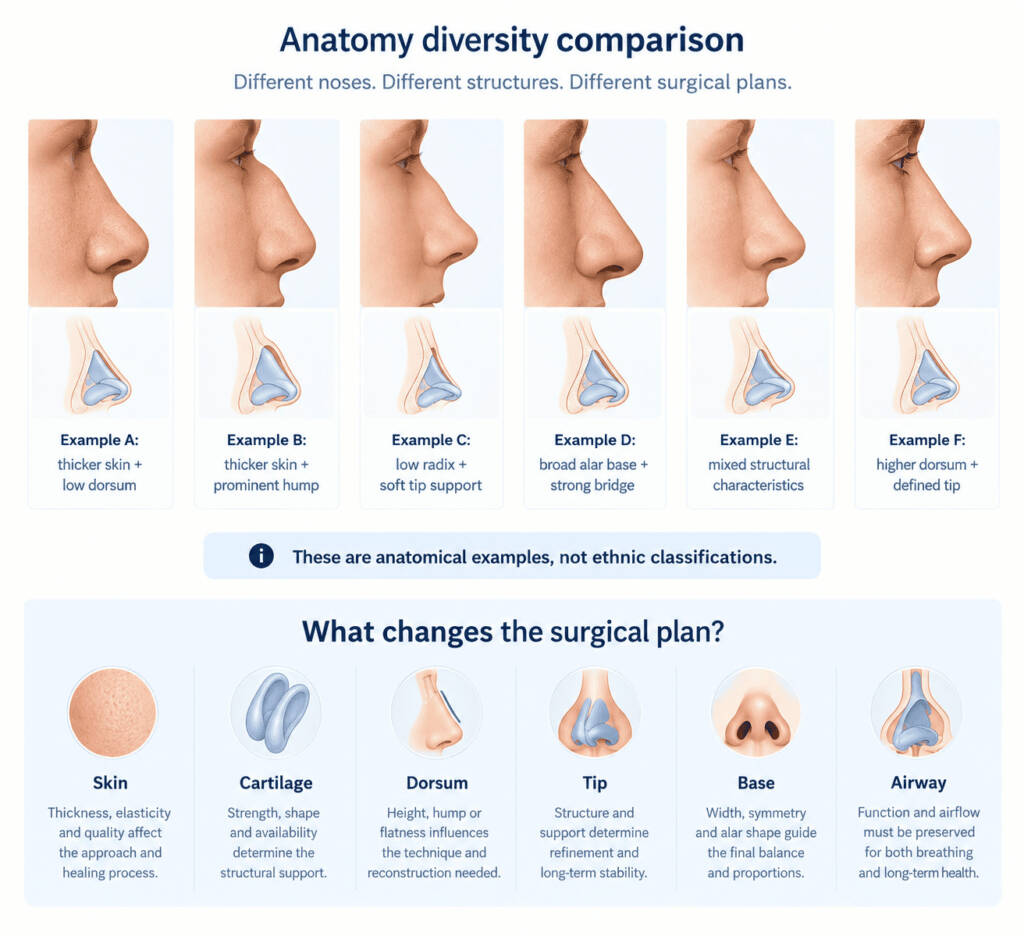
African and Afro-Caribbean patterns
Patients researching African rhinoplasty in Turkey or Afro-Caribbean rhinoplasty in Turkey often present with specific structural traits. Common anatomical patterns may include thicker soft tissue, softer nasal cartilage, a lower nasal bridge, and a wider alar base.
Because thick skin can easily mask the underlying cartilage framework, surgeons must focus heavily on structural support rather than simple tissue removal. Techniques frequently involve harvesting strong cartilage grafts from the septum or rib to build a stable central pillar. This structural approach provides clear tip definition and projection that will not collapse as the nose heals. However, you should never assume that all patients from this demographic require alar base reduction or bridge augmentation. The surgical plan must be adapted exclusively to your unique cartilage strength and your specific aesthetic goals.
Middle Eastern, North African and Turkish patterns
Individuals seeking Middle Eastern rhinoplasty in Turkey frequently request modifications to a prominent dorsal hump or a plunging nasal tip that drops when they smile. Anatomically, this group may possess thicker sebaceous skin combined with strong nasal bones and overdeveloped cartilage in the upper bridge.
Surgical planning often requires precise dorsal reduction to smooth the profile. Because the skin is frequently heavy, the surgeon must simultaneously reinforce the nasal tip to prevent it from drooping as scar tissue forms and swelling subsides. It is crucial not to assume that every patient needs a dramatic reduction. Overcorrecting a dorsal hump can severely narrow the internal nasal valve and compromise your breathing. Furthermore, functional issues like a deviated septum are common and must be corrected alongside aesthetic changes.
East and Southeast Asian patterns
Patients inquiring about Asian rhinoplasty in Turkey, and specifically East Asian rhinoplasty in Turkey, often present with a lower radix (the starting point of the bridge between the eyes), a wider nasal base, and thinner or weaker lower lateral cartilages.
To create greater facial harmony, the surgical plan frequently incorporates dorsal augmentation to elevate the bridge, alongside structural grafting to increase tip projection. The goal is to provide better definition and structural stability so the skin envelope stretches safely over the new framework. Surgeons must avoid the assumption that every patient desires a high Westernized bridge. The appropriate height and width must be meticulously matched to your unique facial proportions to ensure a natural looking result.
South Asian, Hispanic and Latino patterns
The anatomical traits found in patients seeking South Asian rhinoplasty in Turkey or Hispanic rhinoplasty in Turkey are incredibly diverse. These populations encompass vast genetic variety and mixed ancestries. A patient might present with a combination of thick skin and a prominent dorsal hump, or conversely, a broad nasal tip with very soft underlying cartilage.
This diversity requires a highly versatile surgical approach. A surgeon might need to carefully reduce the bony bridge while simultaneously adding strong structural cartilage grafts to support the tip. There is absolutely no single anatomical template for these regions. Precise clinical evaluation of your specific soft tissue thickness versus your bone structure is the only way to formulate a safe and effective surgical plan.
Mediterranean and mixed-heritage patterns
Patients looking for mixed heritage rhinoplasty present the clearest evidence that individual anatomy supersedes ethnic categories. These individuals may display a highly unique combination of features, such as strong asymmetrical bone structure paired with weak tip cartilage, or thin skin covering a severely deviated septum.
For these patients, the surgeon must carefully map both the internal airway and the external framework without relying on any demographic assumptions. Standardized techniques are entirely ineffective here. Every surgical maneuver must be customized to balance the disparate anatomical elements present in the nose while ensuring the airway remains fully supported.
Why your anatomy matters more than your ethnic label
Ethnic labels are broad social categories, but surgical planning requires precise medical data. The success of ethnic rhinoplasty in Turkey relies entirely on treating the exact physical structures present in your nose. Two people from the same geographic region can require completely opposite surgical techniques based entirely on their unique biological makeup.
Dr. Mustafa Bağlı utilizes his comprehensive background as a European Board Certified specialist in ENT and Facial Plastic Surgery to evaluate exactly how your cartilage, bone, and soft tissue interact. Having performed over 3,000 rhinoplasty procedures, this dual expertise ensures that structural modifications enhance your aesthetic appearance while strictly preserving your natural breathing function.
Ultimately, your surgical journey should focus on achieving proportional harmony for your specific face. The goal is to honor your cultural identity while delivering a natural, highly individualized, and medically responsible result.
Which Techniques Are Used in Ethnic Rhinoplasty in Turkey, and When?
There is no single correct surgical method for ethnic rhinoplasty in Turkey. The techniques your surgeon selects will depend entirely on your unique internal anatomy, skin thickness, and personal aesthetic objectives. A highly customized procedure often combines several different methods to achieve facial harmony while protecting your breathing function. During your consultation, your surgeon will evaluate your nasal framework to determine exactly which surgical tools will safely achieve your goals.
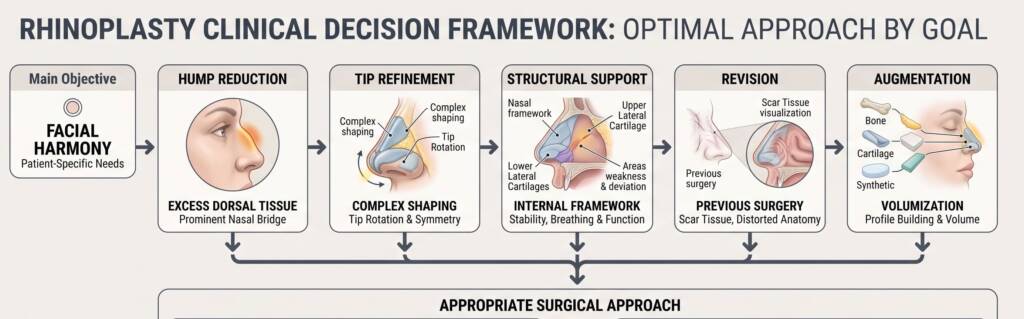
Open or closed rhinoplasty: how is the approach chosen?
The choice between an open or closed approach depends heavily on the complexity of the required changes. Closed ethnic rhinoplasty involves incisions hidden entirely inside the nostrils, offering a shorter initial recovery and no external scarring. However, it provides limited visibility for the surgeon. Open ethnic rhinoplasty utilizes a small columellar incision located on the tissue between the nostrils, allowing the surgeon to gently lift the skin envelope and see the entire cartilage framework clearly. Surgeons typically choose the open approach when precise tip refinement, extensive cartilage grafting, or complex structural changes are necessary to support a thicker soft tissue envelope.
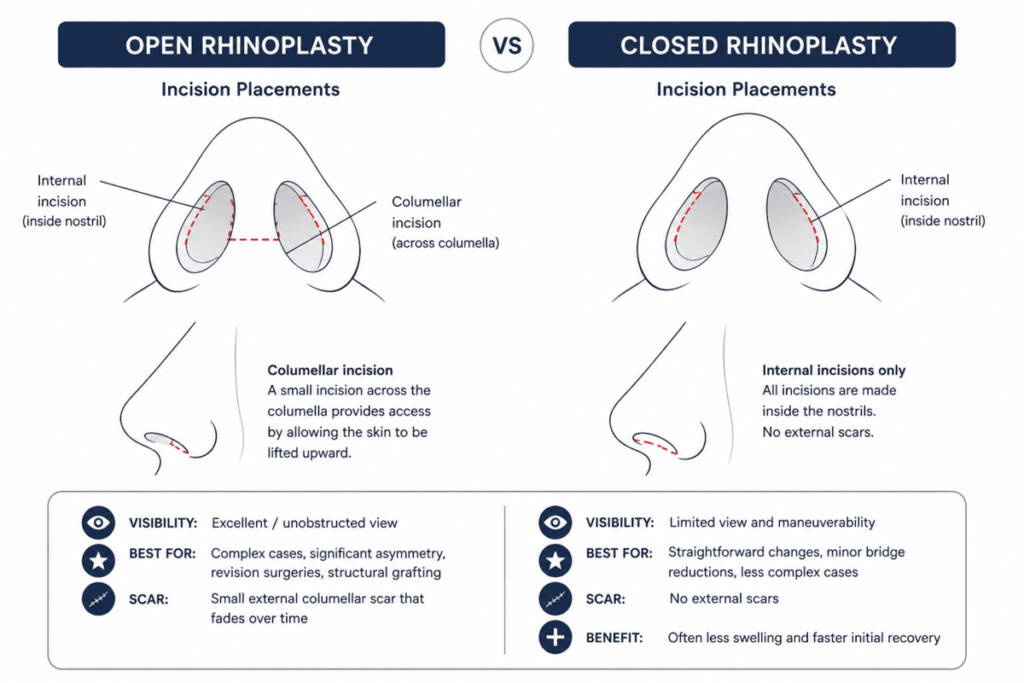
Structural vs reduction focused planning
Older cosmetic techniques heavily relied on reduction focused planning, where bone and cartilage were aggressively removed to make the nose smaller. This often led to breathing difficulties and structural collapse over time. Today, modern ethnic rhinoplasty in Turkey emphasizes structural rhinoplasty. Instead of simply removing tissue, the surgeon builds and reinforces the underlying framework using cartilage grafts. By utilizing your own cartilage harvested from the septum, a structural approach allows the surgeon to build a stable foundation that resists the unpredictable forces of scar tissue contraction during the healing process.
Preservation rhinoplasty
Preservation rhinoplasty Turkey is an advanced surgical philosophy aimed at maintaining as much of your native anatomy as possible. Instead of cutting away the top of the nasal bridge, the surgeon removes tissue from beneath the bridge and gently lowers the natural structure intact. This technique is excellent for patients who want to reduce a dorsal hump while keeping their natural nasal contour. However, it is not suitable for everyone. Patients requiring massive augmentation or those with severe nasal asymmetry may need a more traditional structural approach.
Piezo or ultrasonic rhinoplasty
Piezo rhinoplasty utilizes specialized ultrasonic instruments to reshape nasal bones with sound waves. Unlike traditional surgical tools that physically cut or break the bone, the Piezo device sculpts the bone with extreme precision without damaging the surrounding soft tissue. This significantly reduces postoperative bruising and swelling. It is important to note that ultrasonic devices only work on bone, meaning this technique is used specifically for modifying the bony upper bridge and has no effect on the cartilage of the nasal tip.
Tip refinement and structural support
Tip refinement rhinoplasty involves reshaping the lower third of the nose to improve definition, rotation, and projection. In many patients seeking ethnic rhinoplasty, the nasal tip lacks strong cartilage support. Surgeons frequently use specialized tip sutures and septal extension grafts to build a stable foundation. The goal is to provide clear definition that shows through the skin envelope without creating a pinched or unnatural appearance. Because the procedure often involves managing heavier soft tissue, robust structural support is required beneath the skin to ensure the fine details of the refined tip remain visible long after the initial swelling has subsided.
Alar base reduction and alarplasty
Alarplasty Turkey involves carefully reducing the width of the nasal base or decreasing nostril flare. This technique is highly individualized and is only performed when a wider base visually disrupts your overall facial proportions. When an alar base reduction is necessary, the surgeon must remove tissue very conservatively. Removing too much tissue can compromise the nasal airway and create an artificial look. The incisions are typically placed carefully along the natural creases of the nostrils to ensure the resulting scars fade seamlessly over time.
As a European Board Certified specialist in both ENT and Facial Plastic Surgery, Dr. Mustafa Bağlı draws upon his extensive experience performing over 3,000 rhinoplasty procedures to determine the safest combination of techniques for your specific anatomy. His comprehensive medical background ensures that whether your surgical plan requires complex structural grafting or delicate ultrasonic bone contouring, your aesthetic results will fully support your functional breathing needs.
When Is Cartilage Grafting Needed in Ethnic Rhinoplasty in Turkey?
Cartilage grafting is a surgical technique used to build up a low nasal bridge, refine a bulbous tip, or reinforce the overall nasal framework. This step is not about changing your ethnic identity. It is a structural necessity used when a patient’s native cartilage is too weak or too sparse to support their functional and aesthetic goals.

Why might structural grafting be necessary?
Many patients seeking ethnic rhinoplasty present with a specific anatomical combination of thicker skin and softer underlying cartilage. Without adequate structural support, the heavy skin envelope can compress the nasal tip over time.
To achieve clear definition and prevent the nose from collapsing during the healing process, a surgeon must reinforce the internal framework. Grafts act as architectural pillars. They can safely elevate a flat bridge through dorsal augmentation, or they can secure the tip in a natural position using a columellar strut or septal extension graft.
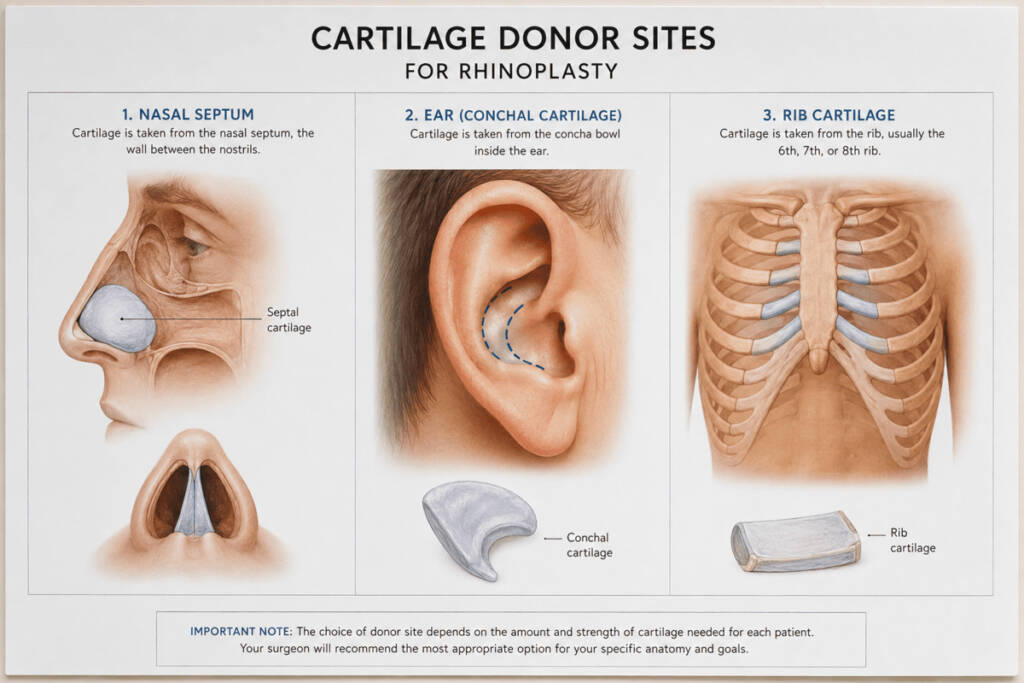
Septal cartilage
The septum is the dividing wall inside the nose and serves as the primary and preferred source for autologous cartilage.
- Advantages: Septal cartilage is straight, strong, and highly versatile. It can be harvested through the exact same incisions used for the rhinoplasty, meaning there are no additional recovery sites.
- Limitations: Some individuals naturally possess a small or thin septum. This provides limited material, which may not be sufficient for extensive structural reconstruction.
Ear/conchal cartilage
When septal cartilage is inadequate or previously depleted, the ear is frequently the next donor choice.
- Advantages: Conchal cartilage is harvested through a small, hidden incision behind the ear without changing the ear’s visible shape.
- Best applications: Because it is naturally curved and softer than septal cartilage, it is excellent for tip refinement and reconstructing the alar rim. However, it is generally not rigid enough to support a major bridge elevation.
Rib/costal cartilage
Rib cartilage is required when significant structural support is necessary. This is especially true for patients who need major bridge elevation or those undergoing complex revision surgeries.
- Advantages: It provides an abundant supply of strong, rigid material capable of supporting a thicker soft tissue envelope.
- Considerations: Harvesting requires a small incision on the chest. While rib cartilage carries a slight risk of warping over time, skilled surgeons mitigate this through specialized carving techniques.
Diced cartilage and fascia
This advanced technique involves wrapping tiny, diced pieces of cartilage inside a layer of fascia, which is a thin connective tissue often taken from the scalp or temple.
Surgeons use this method primarily for dorsal augmentation. The fascia acts as a smooth, natural blanket over the diced cartilage. This prevents any sharp edges or irregularities from becoming visible through the skin, ensuring a remarkably smooth and natural looking nasal bridge.
Are synthetic implants an option?
While synthetic implants like silicone are popular in certain regions, most highly specialized surgeons strongly prefer using autologous cartilage, which is tissue harvested directly from your own body.
Your own living tissue carries a significantly lower risk of infection, extrusion, or rejection compared to foreign materials. Autologous cartilage integrates naturally into your nasal structure, providing a safer and more permanent biological result over your lifetime.
Does every patient need a graft?
No, not every patient requires a cartilage graft. If your native cartilage is strong enough to support your desired aesthetic changes and maintain an open, functional airway, additional grafting is completely unnecessary. The decision to use a graft is based strictly on your individual anatomical requirements and never on broad demographic assumptions.
How does previous surgery affect available cartilage?
A primary rhinoplasty often utilizes or removes a significant portion of the available septal cartilage. Consequently, patients seeking a revision rhinoplasty frequently lack sufficient internal grafting material.
When planning a revision procedure, your surgeon must carefully evaluate the remaining tissue. In these complex cases, Dr. Mustafa Bağlı typically relies on ear or rib cartilage to safely rebuild the compromised nasal framework and restore both breathing function and facial harmony.
Will Ethnic Rhinoplasty in Turkey Improve Your Breathing as Well?
Yes, ethnic rhinoplasty in Turkey can simultaneously improve both your aesthetic appearance and your nasal breathing. Because the external shape of your nose is directly determined by its internal framework, cosmetic modifications and functional breathing are deeply intertwined. A qualified surgeon can perform a functional rhinoplasty, often called a septorhinoplasty, to correct internal airway blockages while simultaneously refining the external shape of the nose.
Why appearance and airflow share the same structures
The cartilage and bone that create the visible shape of your nose are the exact same structures that hold your nasal airway open. The septum acts as the central supporting wall, while the upper and lower lateral cartilages form the roof and sidewalls of the breathing passages. If a surgeon alters the external shape without carefully supporting this internal architecture, the airway can easily collapse. Consequently, safe ethnic rhinoplasty requires an approach that protects and reinforces these vital breathing structures.
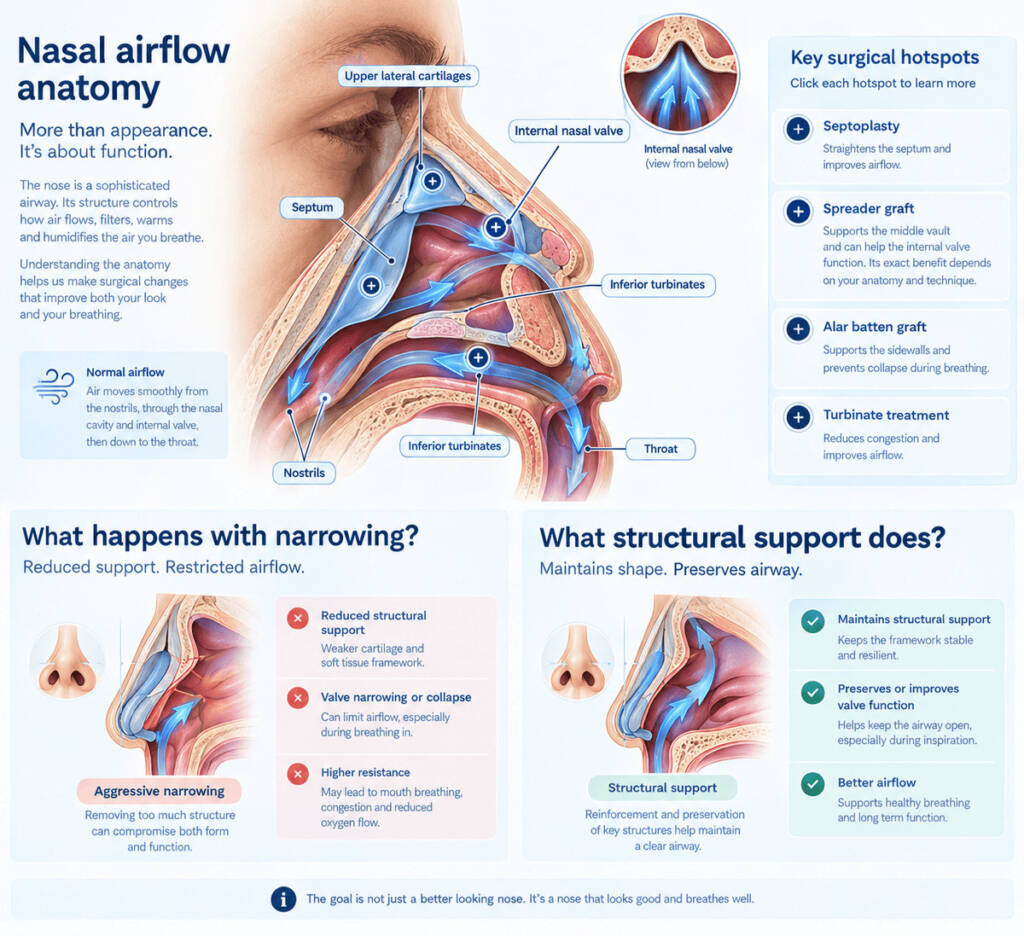
What is the internal nasal valve?
The internal nasal valve is the narrowest point in your entire nasal airway, located where the upper cartilage meets the septum. This tiny space is responsible for the majority of the air resistance you feel when breathing. Even a slight millimeter of narrowing or structural weakness in this critical area can cause a feeling of severe nasal obstruction. A thorough preoperative examination will specifically evaluate the strength and openness of your internal nasal valves.
How can aggressive narrowing affect airflow?
Aggressive cosmetic narrowing directly reduces the size of your breathing passages. If a surgeon attempts to make a wide nose significantly narrower without reinforcing the internal nasal valve, the sidewalls of the nose may collapse inward when you inhale. This is a common consequence of outdated reduction techniques. To prevent this, modern structural rhinoplasty prioritizes leaving enough space and cartilage strength to ensure clear, unobstructed airflow.
When might septoplasty be combined?
A septoplasty is a functional surgical procedure performed to straighten a deviated or bent septum. It is frequently combined with cosmetic ethnic rhinoplasty. If a deviated septum is blocking your airway or causing your external nose to appear crooked, the surgeon must correct it to achieve both a straight cosmetic result and healthy breathing. Furthermore, the cartilage removed during a septoplasty provides the ideal grafting material needed to build structural support for your cosmetic changes.
What are spreader grafts?
Spreader grafts are small, rectangular pieces of cartilage, typically harvested from your septum, that are surgically placed between the septum and the upper lateral cartilages.
Surgeons use them to widen and support the internal nasal valve. From a functional perspective, spreader grafts permanently open the airway to improve breathing. From a cosmetic perspective, they can help straighten a crooked bridge or widen a bridge that appears unnaturally pinched, ensuring a smoother, more balanced dorsal line.
What are alar batten grafts?
Alar batten grafts are curved pieces of cartilage, often taken from the ear or septum, that are placed into the lower sidewalls of the nose (the alar region).
These grafts are used to reinforce the external nasal valve, preventing the nostrils from collapsing inward during deep inhalation. They are particularly vital for patients who naturally possess very soft lower lateral cartilages or for patients requiring complex revision surgery due to previous structural collapse.
When might turbinate treatment be considered?
Turbinates are small, bony structures inside the nasal cavity covered by soft tissue that warms and humidifies the air you breathe. In some patients, especially those with chronic allergies, the inferior turbinates become permanently enlarged, blocking the airway. If an examination reveals significant turbinate hypertrophy, your surgeon may carefully reduce their size during your rhinoplasty to further open the breathing passages.
Can cosmetic rhinoplasty make breathing worse?
Yes, poorly planned cosmetic rhinoplasty can severely worsen your breathing. If too much cartilage is removed, or if the nasal bones are narrowed too aggressively without structural reinforcement, the nasal valves will collapse.
This is precisely why selecting a surgeon with deep functional expertise is critical. As a European Board Certified specialist in both ENT and Facial Plastic Surgery, Dr. Mustafa Bağlı evaluates every patient from both an aesthetic and a functional perspective. Having performed over 3,000 rhinoplasty procedures, he understands that a truly successful ethnic rhinoplasty must not only look natural and balanced but must also protect, or actively improve, your ability to breathe freely.
What Happens During Ethnic Rhinoplasty in Turkey, From Assessment to Discharge?
The process for ethnic rhinoplasty in Turkey involves carefully staged medical assessments to ensure your safety and aesthetic goals align with your actual anatomy. Traveling internationally for surgery requires clear communication and a structured clinical pathway. From your initial inquiry to your hospital discharge, the process is designed to convert preliminary aesthetic ideas into a medically responsible surgical plan.
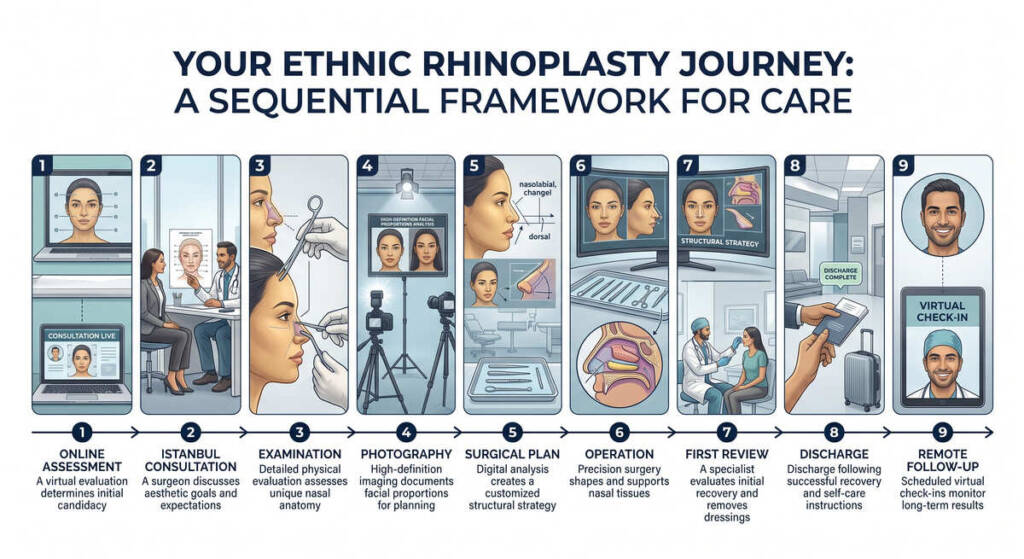
Remote assessment before travelling
Your surgical journey begins before you book a flight. During a remote preliminary assessment, you will typically submit clear photographs of your nose from multiple angles alongside a detailed medical history. This allows the surgical team to evaluate your general suitability for surgery and understand your aesthetic objectives.
While this step is crucial for planning your trip, it is important to understand that an online consultation cannot provide a final surgical diagnosis. Your internal anatomy, cartilage strength, and skin thickness can only be fully assessed during an in person clinical examination.
In person examination
Once you arrive in Istanbul, you will attend a comprehensive, in person clinical consultation. This is the most critical step in your surgical journey. The surgeon will physically evaluate your soft tissue envelope, the rigidity of your cartilage framework, and your overall facial proportions.
During this time, you will discuss exactly which features you wish to refine and which ethnic or familial characteristics you want to preserve. The surgeon will explain the physical limitations of your anatomy and detail the specific structural techniques required to achieve a natural looking result safely.
Functional/endoscopic assessment where clinically indicated
Because the external shape of the nose is inextricably linked to internal breathing function, a thorough functional evaluation is standard protocol. If you report breathing difficulties, or if the surgeon suspects a structural blockage, an endoscopic assessment may be performed.
Using a small, specialized camera, the surgeon examines your internal airway, evaluating the septum, the nasal valves, and the turbinates. This ensures that any necessary functional corrections, such as a septoplasty, are seamlessly integrated into your cosmetic surgical plan.
Standardized photography and surgical planning
Following your physical examination, the clinic will take standardized, medical grade photographs of your face from multiple specific angles. These images are not for social media, they are essential clinical tools used for detailed surgical planning and establishing your baseline anatomy.
Your surgeon will use these photographs to finalize the surgical strategy, ensuring the proposed changes will harmonize with your unique facial balance. This is also the final opportunity to clarify your expectations and ensure you have provided full informed consent before proceeding to the operating room.
Anaesthesia, operating time and hospital stay
Ethnic rhinoplasty is performed under general anesthesia administered by a specialized anesthesiologist. The exact operating time varies significantly depending on the complexity of your individual anatomy.
A straightforward primary rhinoplasty may take two to three hours, while complex structural grafting or a revision procedure can take considerably longer. Following the surgery, you will be monitored closely by medical staff. Most patients are required to stay in the hospital for one night for postoperative observation and pain management before being discharged to their hotel to begin the recovery process.
What Is Recovery From Ethnic Rhinoplasty in Turkey Really Like?
Recovery from ethnic rhinoplasty in Turkey is a gradual process of soft tissue healing and structural settling. While the initial acute healing takes about one to two weeks, the complete refinement of your nasal contours can take well over a year. Your individual timeline depends heavily on your specific anatomy, particularly your skin thickness and the extent of cartilage grafting performed.
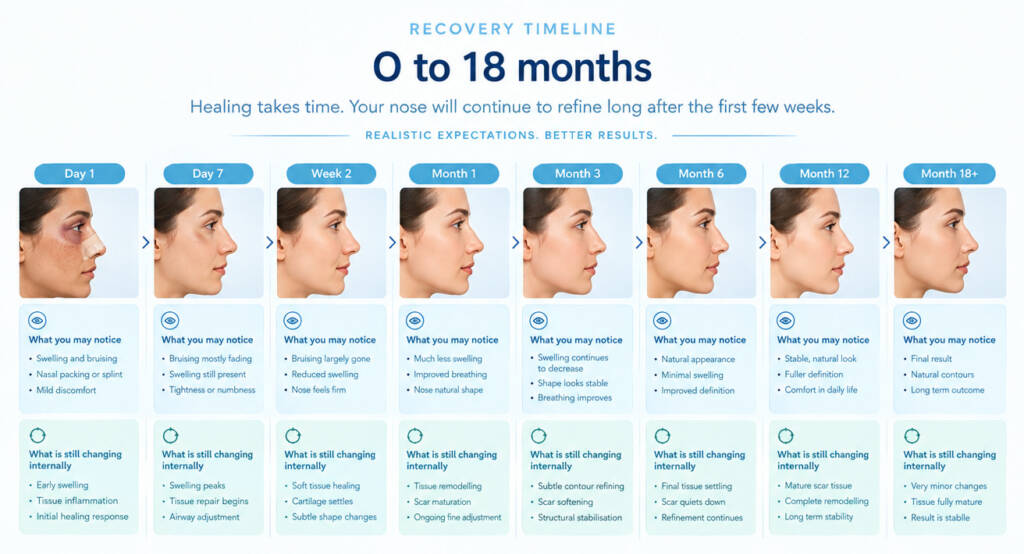
Days 1 to 7
The first week involves the most visible swelling, bruising, and nasal congestion. You will likely wear an external splint to protect the newly shaped bone and cartilage. Breathing through your nose may be difficult due to internal swelling and the presence of protective internal splints. Most international patients spend this week resting at their hotel in Istanbul before their initial follow up appointment to have the external splint removed and to receive medical clearance for their flight home.
Weeks 2 to 6
During this phase, bruising typically fades, and the most obvious postoperative edema begins to subside. You will look presentable to the public, though your nose will still appear noticeably swollen to you, particularly around the nasal tip. The internal tissues are actively healing, so the nose may feel stiff, rigid, or numb. This temporary numbness is a normal part of the nerve healing process.
Months 3 to 12
This is the primary refinement period. The broader swelling resolves, and the finer details of the underlying cartilage framework slowly become visible. The skin envelope gradually contracts over the newly constructed bridge and tip. During these months, it is entirely normal for swelling to fluctuate based on heat, sodium intake, hormonal changes, and physical activity.
Beyond 12 months
For many patients, especially those who underwent complex revision surgery, the final result is not fully realized until 18 to 24 months postoperatively. The nasal tip is usually the very last area to settle into its permanent shape, drop into its final position, and regain full sensation.
Why thicker skin may refine more slowly
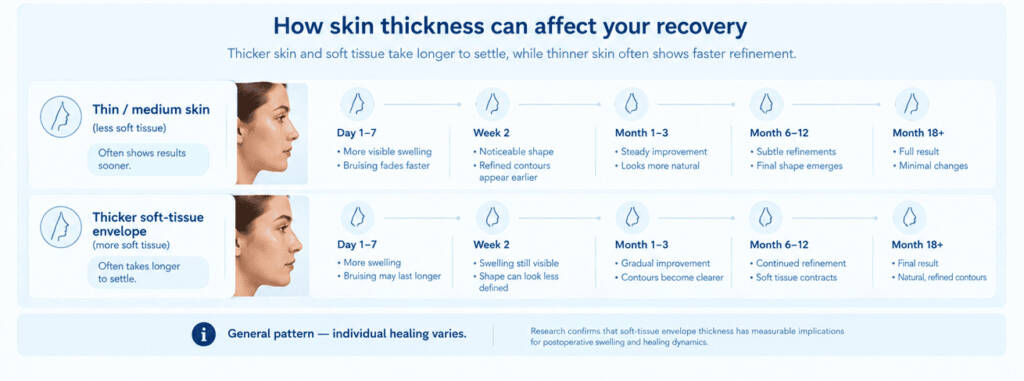
Skin thickness plays a massive role in your ethnic rhinoplasty recovery timeline. A thicker soft tissue envelope retains fluid longer and contracts much more slowly than thin skin. Because many patients seeking this procedure present with thicker, more sebaceous skin, prolonged tip swelling is a normal biological response, not a surgical complication. Patience is essential. The surgeon builds strong underlying cartilage support specifically to hold the shape of the nose while this heavy skin layer takes the necessary months to shrink and reveal the final definition.
When can you return to work and normal activities?
Most patients feel comfortable returning to desk work or normal daily routines within ten to fourteen days, usually shortly after the external splint is removed. However, jobs requiring heavy lifting, bending, or intense physical exertion will require a longer absence to prevent blood pressure spikes that could trigger bleeding or increase swelling.
When can you exercise or return to sport?
Light walking is encouraged immediately after surgery to promote healthy blood circulation. However, strenuous cardiovascular exercise, weightlifting, and running should typically be avoided for at least four to six weeks. Contact sports pose a significant risk to the healing nasal bones and must be completely avoided for several months. Your surgeon will provide a personalized clearance schedule based on your specific structural modifications.
When can you wear glasses?
Resting heavy frames on your nasal bridge can indent or shift the healing bones. Patients are generally advised to avoid wearing prescription glasses or sunglasses that rest on the bridge for at least four to six weeks. Taping the glasses to the forehead or wearing contact lenses are common temporary solutions during this delicate healing window.
What does long distance follow up look like?
For international patients, postoperative care continues long after returning home. After your initial clearance to fly, you will participate in a structured remote follow up protocol.
Dr. Mustafa Bağlı leverages his extensive expertise as a European Board Certified ENT and Facial Plastic Surgeon with over 3,000 rhinoplasty procedures to monitor your progress safely. Through scheduled video consultations and standardized photographic reviews, his team tracks your healing trajectory across borders. This ensures that you have ongoing medical guidance and peace of mind as your new nasal contours refine over the following year.
Scarring and Pigmentation After Ethnic Rhinoplasty in Turkey
Incision healing and changes in skin pigmentation are common concerns for patients with darker or melanin rich skin tones. While individual genetics play a significant role in how your body heals, the vast majority of rhinoplasty incisions heal exceptionally well and become virtually undetectable over time. Understanding the difference between normal scar maturation and abnormal healing is essential for managing your recovery confidently.
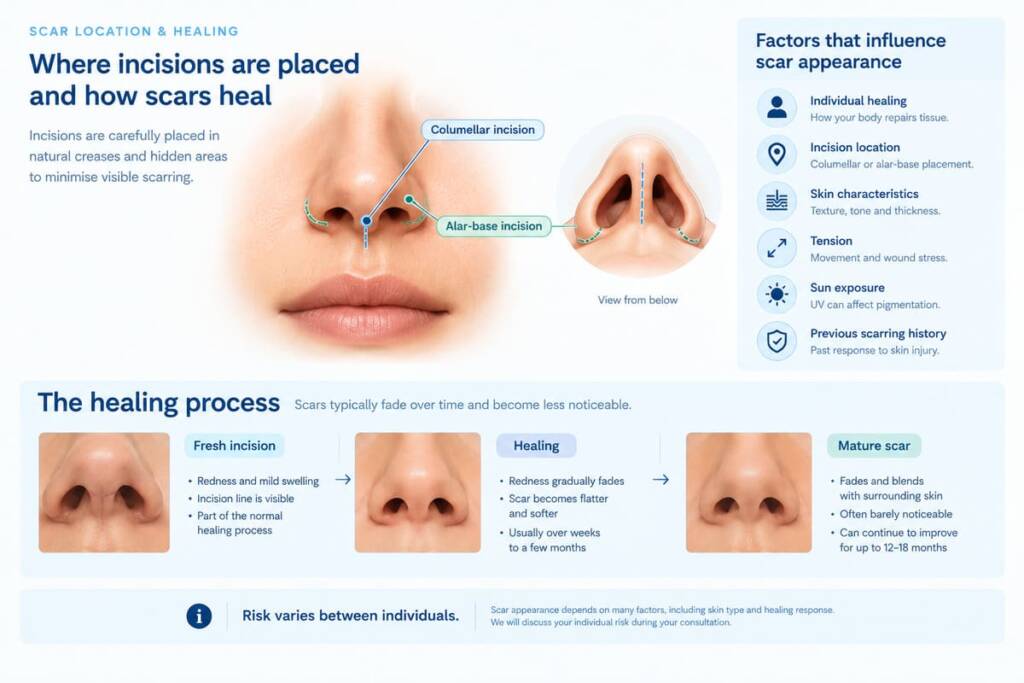
Does open rhinoplasty leave a visible scar?
An open rhinoplasty requires a small incision across the columella, which is the narrow strip of tissue separating your nostrils. Because this incision is placed at the narrowest point and closed with meticulous surgical precision, the resulting mark is usually imperceptible once fully healed. During the first few weeks, it may appear slightly red or raised, which is a normal and expected part of the initial healing phase.
Does alar base reduction leave scars?
If your surgical plan includes narrowing a wide nasal base, the surgeon will make incisions exactly where the nostrils meet the cheeks. Surgeons intentionally place these incisions within the natural anatomical creases of the nose to effectively hide the healing tissue. When performed conservatively and closed carefully, alar base scars typically fade completely into the natural shadows of your face.
What are hypertrophic scars and keloids?
A hypertrophic scar is a raised, thickened area that remains strictly within the boundaries of the original incision. A keloid is a thick overgrowth of scar tissue that expands beyond the surgical site. Many patients worry deeply about keloids. However, keloids are extremely rare on the central face and nose, even in patients who have a history of developing them on other parts of their body.
Can post inflammatory pigmentation occur?
Post inflammatory hyperpigmentation is a temporary darkening of the skin around the surgical site caused by the natural trauma of surgery. This reaction is observed more frequently in patients with Fitzpatrick skin types three through six. This temporary discoloration is not a scar and typically fades naturally over several months as the underlying tissue inflammation resolves.
What factors influence scar appearance?
The final appearance of your healing tissue depends on your individual genetics, the natural thickness of your skin, and the surgical technique used. Excessive tension on the incision lines can cause a healing wound to widen. Therefore, a highly skilled surgeon will ensure that strong underlying cartilage grafts support the structure of the nose, rather than relying on tight skin closure.
How are scars managed after surgery?
Proper aftercare is just as critical as surgical precision. Strict sun protection is absolutely mandatory during your first year of recovery to prevent permanent hyperpigmentation. Your surgeon may also recommend medical grade silicone gels or specialized ointments to keep the incisions hydrated and encourage a smooth, flat, and highly natural looking result.
The Risks and Revision Rate of Ethnic Rhinoplasty in Turkey
All surgical procedures carry inherent risks, and ethnic rhinoplasty in Turkey is no exception. A responsible medical decision requires understanding the difference between normal postoperative healing, potential surgical complications, and the possibility of requiring a secondary procedure. While advanced surgical techniques significantly reduce risks, no surgeon can guarantee a perfect outcome or a complication free recovery.
Expected during normal recovery
Immediately following surgery, certain physical reactions are expected and do not indicate a surgical failure. Significant swelling and mild bruising around the eyes and nose are standard, typically peaking within the first 72 hours. You will also experience temporary nasal congestion, mild bleeding, and numbness around the nasal tip. These normal recovery symptoms gradually resolve over several weeks as your tissues heal.
Possible complications
While less common, some patients experience complications that require medical management but do not necessarily compromise the final aesthetic result. These may include persistent nasal bleeding, localized infection at the incision site, or prolonged swelling that takes longer than average to subside. Changes in skin sensation or temporary hyperpigmentation around the incisions can also occur, particularly in patients with melanin rich skin, though these typically fade with proper sun protection and time.
Rare but serious complications
Serious complications are rare but must be considered before consenting to surgery. These include significant breathing difficulties caused by internal airway collapse, severe asymmetry, or a septal perforation (a hole in the nasal septum). If cartilage grafts were used to build structural support, there is a small risk that the graft could warp, shift, or become visible under the skin. In exceptionally rare cases, poor blood supply can lead to skin necrosis (tissue death).
What factors can increase the likelihood of revision?
The likelihood of requiring revision surgery increases when the surgical plan does not adequately account for a patient’s specific anatomy. Patients with thicker skin or weak underlying cartilage have a higher risk of losing structural definition if the surgeon relies on tissue removal rather than structural reinforcement.Failure to follow strict postoperative care instructions, unexpected trauma to the nose during healing, or aggressive scar tissue formation can also alter the final result and necessitate a secondary procedure.
What do published rhinoplasty revision rates actually tell us?
General medical literature frequently cites global rhinoplasty revision rates between 5% and 15%. However, these generalized statistics cannot predict your individual outcome. A published revision rate includes everything from minor in office touch ups to major structural reconstructions. Furthermore, the likelihood of revision depends heavily on the complexity of your initial anatomy, the experience of your surgeon, and your personal healing process, rather than broad demographic averages. [FACT REQUIRES VERIFICATION]
What happens if you are dissatisfied?
Patient dissatisfaction is not always the result of a surgical error; it frequently stems from mismatched expectations. Your nose will continue to change for up to a year as minor swelling subsides and the skin envelope contracts. If you are dissatisfied with the evolving shape, clear communication with your surgeon is essential. They can help you determine whether the issue is temporary swelling, a minor irregularity that can be easily addressed, or a structural issue requiring further surgery.
[DOCTOR INSIGHT NEEDED]
When should revision be considered?
If a structural problem or significant aesthetic dissatisfaction persists, revision rhinoplasty in Turkey may be considered. However, surgeons strictly require patients to wait a minimum of 12 months after their primary surgery before undergoing a revision. This mandatory waiting period ensures that all internal swelling has resolved, the scar tissue has softened, and the nasal framework is stable enough to endure another operation safely.
How Should You Judge Before-and-After Photos of Ethnic Rhinoplasty in Turkey?
Looking at surgical galleries is a crucial step when researching ethnic rhinoplasty in Turkey, but these images can be highly misleading if you do not know what to evaluate. A truly useful surgical portfolio demonstrates consistent, long term results across multiple viewing angles, rather than just dramatic immediate transformations. Learning to read clinical photography helps you separate reliable medical evidence from clever marketing.
![Valid vs misleading comparison · annotated SVG · P5] Two pairs stacked vertically, using illustrated or consented-model faces, so the asset carries zero Art. 7 exposure. Valid: identical lighting direction and intensity, camera distance and focal length, head rotation, neutral expression on both, same background, no makeup change, interval stated. Misleading: the same underlying result with softer frontal light on the after, head rotated a few degrees, camera closer, expression changed, makeup added, no interval. Numbered callouts on each altered variable with a one-line note on what it does to perceived result.](https://www.mustafabagli.com/wp-content/uploads/2026/09/valid_vs_misleading_before_and_after_facial_plastic_surgery_in_turkey_for_guidance-936x1024.jpg)
Why one profile photo proves very little
A side profile is the easiest angle to photograph and the easiest surgical contour to change. However, a profile image completely hides severe asymmetry, a pinched nasal tip, or a bridge that has been narrowed too aggressively. You cannot evaluate the true success of an ethnic nose surgery based solely on how straight the nasal bridge looks from the side. True facial harmony is judged from the front, which a profile shot simply cannot show.
Which views should you see?
To thoroughly assess a surgeon’s technical skill, you need a complete anatomical picture. A reliable case study will always include a front view, a profile, a three quarter view, and a base view looking up from the bottom. The base view is exceptionally critical for evaluating alar base reductions and nostril symmetry,showing whether the surgeon maintained natural and open breathing passages.
Why time since surgery matters
The nose changes significantly as swelling subsides and scar tissue forms beneath the skin. Photos taken just a few weeks or months after surgery show a swollen nose held in place by temporary internal swelling. A final, stable rhinoplasty result cannot be accurately judged until at least 12 to 18 months postoperatively.Always look for the postoperative timing in a surgical gallery to ensure you are looking at a permanent outcome rather than a temporary phase of healing.
Why lighting, distance and expression should match
Inconsistent photography can create the illusion of a better surgical result. If the before photo is taken up close with harsh overhead lighting, and the after photo is taken from further away with soft lighting, the visual comparison is completely invalid. Changes in camera focal length can artificially alter facial proportions, making a nose look smaller than it actually is. Evaluate whether the head position, camera distance, and facial expression are perfectly matched in both images.
Why skin thickness matters when comparing cases
When reviewing ethnic rhinoplasty before and after galleries, patients often search for noses that resemble their own starting point. However, your individual skin thickness dictates how much structural refinement will actually show through. A patient with very thin skin will show sharp tip definition quickly, whereas a patient with a thick soft tissue envelope requires entirely different structural support and will heal with a softer overall contour. Do not assume you will achieve an identical result just because you share a similar ethnic background with a patient in a photograph.
What should every case disclose?
Clinical transparency builds trust. A highly credible surgical gallery should clearly state whether the procedure was a primary or revision rhinoplasty, as revisions are significantly more complex. It is also highly useful when the surgeon notes if structural cartilage grafts were required. When evaluating surgeons in Turkey, prioritize those who provide standardized clinical photography rather than heavily filtered social media images. This demonstrates a strict commitment to medical accuracy, detailed anatomical planning, and realistic patient expectation management.
How Much Does Ethnic Rhinoplasty in Turkey Cost, and What Drives the Price?
Ethnic rhinoplasty is not priced based on a patient’s ethnic background, but rather on the specific surgical techniques required to achieve their goals safely. For patients consulting with Dr. Mustafa Bağlı, the cost of ethnic rhinoplasty in Turkey typically ranges between $4,500 and $5,000 USD, depending on the exact anatomical requirements of the procedure. To understand this investment, it is important to look at the clinical factors that dictate the final quotation.
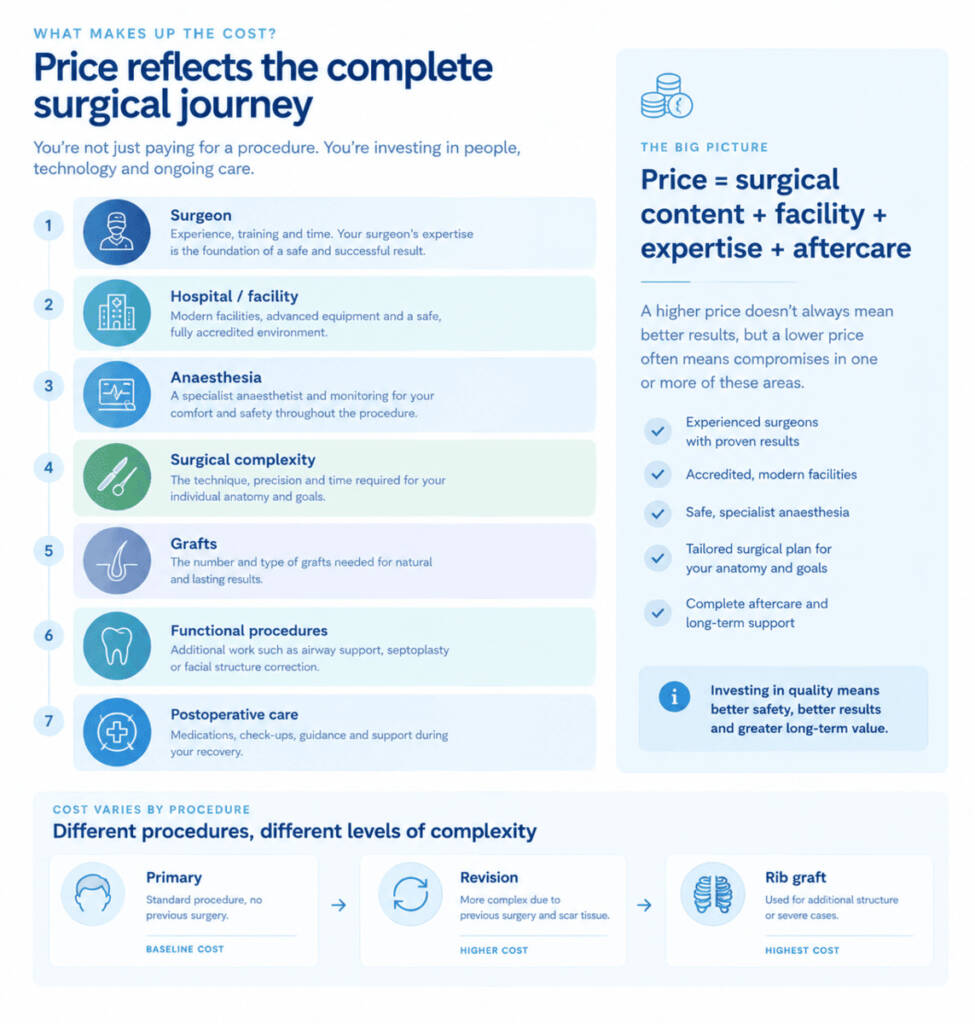
What actually determines the price?
The baseline cost of any rhinoplasty is built upon the surgeon’s fee, the anesthesiologist’s fee, and the hospital’s operating room charges. However, the primary driver of price variation is surgical complexity. A procedure requiring extensive structural reinforcement, precise functional airway repair, or advanced ultrasonic bone contouring demands significantly more operating time and specialized expertise than a straightforward cosmetic reduction.
How does grafting affect the cost?
Many patients require cartilage grafts to build bridge height, define the tip, or structurally reinforce a heavier soft-tissue envelope. If your surgeon can harvest sufficient grafting material from your nasal septum during the normal course of the operation, the impact on the total price is usually minimal. However, if your native septal cartilage is too weak or too sparse, harvesting cartilage from other donor sites requires additional surgical time, which increases the overall cost.
How does rib cartilage affect the cost?
When major structural support is needed, a rib (costal) cartilage harvest is often necessary. This requires creating a separate incision on the chest to extract the cartilage, which the surgeon then meticulously carves to rebuild the nasal framework. Because harvesting rib cartilage acts as a secondary procedure that extends the total time under anesthesia, it will predictably increase the final cost of an ethnic nose surgery in Turkey.
How does revision affect the cost?
Secondary or revision surgeries are inherently more complicated than primary (first-time) procedures. The surgeon must navigate altered anatomy, manage dense scar tissue, and often rebuild a completely depleted cartilage supply. Due to the unpredictable nature of previously operated tissue and the high level of technical mastery required to correct it, revision rhinoplasty in Turkey always carries a higher costthan a primary surgery.
What may a package include or exclude?
International patients traveling for surgery are frequently offered comprehensive care packages. A standard rhinoplasty package generally includes the surgical fees, anesthesia, a one-night hospital stay, and immediate postoperative medications. Many clinics also bundle hotel accommodation and VIP airport transfers into the price. However, it is vital to ask what is excluded. Patients should clarify if they are responsible for extended hospital stays, travel insurance, flights, or potential future revision fees.
Why can two rhinoplasty quotations differ substantially?
If you compare the ethnic rhinoplasty Istanbul price across different clinics, you will likely encounter a wide range of estimates. Substantial price discrepancies usually reflect the surgeon’s level of specialized board-certified training, the safety accreditations of the hospital facility, and the specific surgical techniques being proposed. A lower quotation might reflect a shorter, reduction-only procedure that skips necessary structural grafting, or it may indicate a facility that lacks comprehensive postoperative medical support.
Why does a personalized quotation matter?
Because your nasal bone structure, cartilage strength, and soft-tissue thickness are entirely unique, a flat-rate price listed on a website cannot reliably predict what your specific surgery will require. A personalized quotation is the only accurate way to understand your costs because it is strictly based on a clinical assessment of your individual anatomy. Requesting a formal evaluation ensures you receive a transparent, itemized price that covers the exact surgical plan needed to safely achieve your aesthetic and functional goals.
How Do You Choose a Surgeon for Ethnic Rhinoplasty in Turkey?
Evaluating a surgeon for ethnic rhinoplasty in Turkey requires looking past marketing materials and focusing on verifiable medical credentials, relevant experience, and clear clinical accountability. Choosing the right specialist is the most critical decision in your surgical journey. The following framework will help you evaluate potential surgeons objectively.
What does Turkish regulation establish and what doesn’t it tell you?
Turkey maintains strict regulations for hospitals and medical licensing, ensuring a high baseline of safety for international patients. However, basic medical licensing does not guarantee specialized expertise in complex facial plastic surgery. A clinic operating legally does not automatically mean its staff possesses the nuanced skills required for individualized nasal reconstruction. You must evaluate the surgeon independently from the clinic or tourism agency.
Who will personally perform your operation?
Some large medical tourism agencies book patients with a clinic brand rather than a specific doctor. You must verify the exact name and credentials of the surgeon who will actually perform your operation. Direct accountability ensures that the specialist you consult with is the exact same person planning your procedure and managing your surgical outcome.
What specialty and rhinoplasty training does the surgeon have?
Look for rigorous, peer reviewed specialty training focused specifically on the anatomy of the head and neck. For example, Dr. Mustafa Bağlı is European Board Certified with dual expertise in ENT and Facial Plastic Surgery. This specific combination of qualifications demonstrates a comprehensive medical background dedicated equally to the aesthetic harmony and the internal function of the nose.
How much relevant rhinoplasty experience do they have?
Rhinoplasty is widely considered the most complex facial surgery. A surgeon who has performed over 3,000 rhinoplasty procedures possesses a deep, practical understanding of how different skin thicknesses and cartilage structures behave over time. When reviewing a surgeon’s experience, ask to see long term, standardized before and after clinical photos of patients with similar anatomy to yours, rather than relying solely on immediate post surgery images shared on social media.
Do they evaluate nasal function as well as appearance?
An authentic ethnic rhinoplasty specialist understands that cosmetic changes directly impact your airflow. If a surgeon only discusses external aesthetics and fails to examine your internal breathing function during a consultation, consider it a significant medical warning sign.
What is the revision and aftercare policy?
Even with exceptional surgical skill, a small percentage of rhinoplasty cases require minor revisions due to unpredictable individual healing processes. Ask for a clear, written policy detailing how revisions are handled both medically and financially. You should also understand exactly what remote aftercare is provided and who your direct medical contact will be once you return to your home country.
How Do You Plan Your Trip for Ethnic Rhinoplasty in Turkey?
Planning a trip for ethnic rhinoplasty in Turkey requires treating your journey as a dedicated medical recovery period rather than a standard vacation. International patients must coordinate their flights and accommodation around specific clinical milestones. A safe experience depends on allowing sufficient time for preoperative preparation, the surgery itself, and critical postoperative monitoring.
How many days should you allow in Istanbul?
You should plan to remain in Istanbul for a minimum of seven to ten days to complete the necessary medical protocols. This timeframe is not a suggestion but a strict clinical requirement. It ensures your surgical team has adequate time to monitor your initial healing, manage your early swelling, and safely remove your splints before clearing you for international travel.
What happens before surgery?
Your first full day in Istanbul is strictly dedicated to your in person clinical examination and preoperative medical testing. During this vital consultation, you and your surgeon will finalize the surgical plan based on your physical anatomy. As a European Board Certified specialist, Dr. Mustafa Bağlı will conduct a thorough assessment of both your external facial proportions and your internal airway to ensure the planned aesthetic changes will also support your breathing function.
What happens during the first postoperative week?
After one night of continuous medical monitoring in the hospital, you will spend the rest of the first week resting at your hotel. You will need to sleep with your head elevated to minimize facial swelling. During this period, it is absolutely essential to avoid direct sun exposure, strenuous physical activity, and crowded tourist destinations to prevent infection and protect your delicate healing cartilage.
When can you fly home?
You are only cleared to fly after your surgeon physically examines your healing progress and removes your external cast, which typically occurs on day seven. Attempting to board a flight too early dangerously increases your risk of severe swelling, nasal bleeding, and deep vein thrombosis due to changes in aircraft cabin pressure and prolonged sitting.
What should long-haul patients consider?
Patients taking long haul flights must prioritize strict hydration and walk the aircraft aisles frequently to prevent blood clots. You should also arrange for airport wheelchair assistance or help with your luggage. Heavy lifting elevates your blood pressure and is strictly forbidden during early recovery, as it can trigger sudden bleeding in your healing nasal tissues.
What happens if a problem develops after you return?
Reputable clinics provide structured remote aftercare through secure video consultations to monitor your long term healing over the next twelve months. If an acute medical issue arises once you are home, your Turkish surgical team will guide you on seeking immediate care with a local physician. It is crucial to have a plan for accessing local healthcare in your home country just in case an unexpected complication occurs.
Which medical documents should you keep?
You must securely retain your official operative note and discharge summary before leaving the clinic.These critical medical records detail the exact structural changes made, the specific cartilage grafts utilized, and the medications administered during your ethnic rhinoplasty in Istanbul. This documentation provides vital information for any local doctor providing future medical care you may need throughout your lifetime.
How Does Dr. Bağlı Approach Ethnic Rhinoplasty in Turkey?
Choosing a surgeon requires understanding their clinical philosophy and how they translate medical expertise into patient care. For ethnic rhinoplasty in Turkey, the surgical approach must balance advanced aesthetic techniques with a profound respect for functional breathing and individual identity.
An ENT first approach to facial plastic surgery
The nose is a complex respiratory organ, not merely a cosmetic feature. As a European Board Certified specialist in both ENT and Facial Plastic Surgery, Dr. Mustafa Bağlı approaches every procedure prioritizing internal health. His dual expertise ensures that any aesthetic changes are built upon a structurally sound and fully functional airway. This comprehensive medical background allows him to address complex septal deviations and nasal valve issues simultaneously with cosmetic refinements.
What he assesses before recommending surgery
Before suggesting any surgical intervention, Dr. Bağlı conducts a meticulous evaluation of your physical anatomy. He specifically assesses your skin thickness, the structural integrity of your underlying cartilage, and your unique facial proportions. He does not base surgical plans on broad demographic categories, recognizing that two patients from the exact same background will require entirely different surgical techniques based on their unique biological makeup.
How function and appearance are considered together
Altering the external shape of the nose always impacts the internal breathing passages. Having performed over 3,000 rhinoplasty procedures, Dr. Bağlı understands that narrowing a bridge or refining a nasal tip without properly reinforcing the internal framework can easily lead to breathing difficulties. Every cosmetic refinement is meticulously paired with the necessary structural support to protect or actively improve your natural airflow.
What he considers worth preserving
Ethnic rhinoplasty should never erase your heritage or attempt to force your face into a standardized aesthetic template. Dr. Bağlı focuses on achieving facial harmony while protecting the unique characteristics that connect you to your family and cultural identity. The primary surgical objective is to refine specific patient concerns while ensuring the final result still looks naturally yours.
When he may recommend against surgery
A responsible surgeon places patient safety and psychological readiness above all other considerations. Dr. Bağlı will decline to operate if a patient requests structural changes that are anatomically unsafe or impossible to achieve given their specific skin thickness and cartilage strength. He will also recommend against surgery if a patient expects absolute perfection, is fixated on minor asymmetries, or attempts to perfectly replicate a reference photograph of another person.
How international patients are assessed
The journey for international patients begins with a detailed remote evaluation of your medical history and standardized photographs. However, no final surgical plan is ever confirmed until Dr. Bağlı performs a comprehensive physical examination in Istanbul. This in person assessment is absolutely necessary to accurately gauge cartilage rigidity and tissue elasticity before stepping into the operating room.
How follow up is handled after patients return home
Clinical care does not end when you board your flight home. The clinic provides structured remote aftercare to monitor your healing process over the following months. Patients receive detailed discharge summaries and operative notes before leaving, ensuring they have complete and transparent medical documentation for their local healthcare providers.
How Can You Start Planning Ethnic Rhinoplasty in Turkey With Dr. Bağlı?
If you have completed your research and are ready to take the next step, planning an individualized procedure requires clear communication and a structured medical evaluation.
What should you send for an online preliminary assessment?
For international patients seeking ethnic rhinoplasty in Turkey, the journey begins with an online preliminary assessment. To provide safe and accurate preliminary feedback, the clinical team needs a comprehensive overview of your health. You should prepare a detailed medical history, noting any previous nasal traumas or surgeries, chronic sinus issues, and current medications. Equally important is a clear explanation of your surgical goals and the specific familial features you wish to preserve.
Which six photographs are useful?
Photographs are critical for a remote clinical evaluation. To properly assess your facial proportions and nasal structure, you must provide clear, well lit images entirely free of makeup or digital filters. A thorough photo assessment requires six specific angles: a straight front view, left and right full profiles, left and right three quarter views, and a base view looking upward at the nostrils. This comprehensive set allows the surgeon to analyze your tip projection, alar width, and any natural asymmetry before you travel.
What happens during the consultation?
During your online rhinoplasty consultation, the surgical team will review your photos and medical background. Dr. Mustafa Bağlı, a European Board Certified specialist in ENT and Facial Plastic Surgery, utilizes this information to discuss what is surgically achievable for your individual anatomy. Drawing on his expertise from over 3000 rhinoplasty procedures, he will outline a preliminary approach designed to protect your breathing function while carefully addressing your aesthetic objectives.
Why an online assessment is not a final diagnosis
While remote planning is essential for organizing international travel to Istanbul, an online consultation can never serve as a definitive clinical diagnosis. Photographs cannot reveal your actual skin thickness, the exact strength of your underlying cartilage, or hidden internal airway blockages. Your final surgical plan, the specific techniques required, and your ultimate medical clearance are only confirmed after a comprehensive, in person physical examination.
If you are ready to understand what is realistically possible for your unique anatomy, you can reach out to schedule your personalized ethnic rhinoplasty assessment today.
Ethnic Rhinoplasty in Turkey: The Questions Patients Ask Most
Will people be able to tell I’ve had a nose job?
A successful ethnic rhinoplasty creates a balanced, harmonious profile rather than an artificially operated look. The goal is natural refinement that matches your overall facial proportions. While close friends and family may notice a positive change, strangers should simply see a face in natural harmony, not a surgically altered nose.
Will I look Westernised?
No, ethnic rhinoplasty does not mean erasing your heritage or conforming to a Western aesthetic. The surgical plan is strictly individualized to your anatomy. The objective is to refine specific concerns, such as a wide base or low bridge, while preserving the cultural and familial features that make you look like yourself.
Can I keep my family’s nose and still change it?
Yes. During your consultation, you will specify exactly which features you wish to adjust and which you want to protect. A skilled surgeon balances targeted structural changes with the preservation of your core identity, ensuring the final result still clearly connects you to your family background.
Does thick skin prevent a defined tip?
Thick skin does not make tip refinement impossible, but it does require specialized techniques. Instead of removing cartilage, surgeons use strong structural grafts to push into the thick skin envelope and create visible definition. This prevents the tip from collapsing and ensures the refinement shows through the heavier soft tissue.
Open or closed: which is better for my nose?
Neither approach is universally better; the choice depends entirely on your anatomical complexity. Closed rhinoplasty offers no external scars and a slightly faster initial recovery, while open rhinoplasty provides the critical visibility required for complex structural grafting and precise tip refinement common in many ethnic rhinoplasties.
Do I need rib cartilage?
Not every patient requires a rib graft. Your own septal cartilage is usually the primary choice for structural support. Rib cartilage is only necessary when your native septum is too weak, too thin, or previously depleted, making it essential for major bridge augmentation or complex revision surgeries.
Will alar base reduction leave scars?
Incisions for narrowing a wide nasal base are strategically placed within the natural creases where the nostrils meet the cheeks. When closed meticulously and protected strictly from the sun, alar base scars typically heal remarkably well and fade into the natural shadows of your face, becoming virtually imperceptible over time.
Can ethnic rhinoplasty improve breathing?
Yes. Because the external shape and internal airway share the exact same anatomical framework, cosmetic modifications can be safely combined with functional corrections like a septoplasty. An experienced ENT surgeon will ensure your internal nasal valves are structurally supported, actively protecting or improving your breathing function.
When will I see the final result?
While your nose will look significantly refined once the initial cast is removed, it takes 12 to 18 months for all residual internal swelling to completely resolve. Patients with thicker skin may require up to two full years to see the absolute final tip definition as the soft tissue slowly contracts.
How long should I stay in Turkey?
International patients must plan to stay in Istanbul for a minimum of seven to ten days. This mandatory clinical window ensures you are present for the surgery, the initial postoperative medical monitoring, and the safe removal of your cast before you are medically cleared to board a flight home.
Can I have surgery after a previous rhinoplasty?
Yes, revision ethnic rhinoplasty can address persistent functional or aesthetic issues from a previous surgery. However, you must wait at least a full year after your primary procedure to allow all scar tissue to soften and to ensure the nasal framework is stable enough to endure secondary reconstruction.
How much does it cost?
For patients consulting with Dr. Mustafa Bağlı, ethnic rhinoplasty in Turkey typically ranges between $4,500 and $5,000 USD. The exact price is determined by the clinical complexity of your case, the need for specialized cartilage grafting, and whether you require a primary or revision procedure.