Rhinoplasty in Turkey: Cost, Safety & Surgeon Guide 2026
“Istanbul attracts international patients seeking advanced facial aesthetics, but your medical safety depends entirely on your choice of specialist, not the price of a travel package. A permanent and successful result must carefully balance your unique nasal anatomy, realistic aesthetic expectations, and essential breathing function. Operating a dedicated private practice in Istanbul, I perform primary surgeries and complex reconstructive procedures, frequently repairing structural and functional issues originating from previous operations performed elsewhere in the city.”
Medical Reviewer: Dr. Mustafa Bağlı, European Board Certified ENT and Facial Plastic Surgeon
Last Reviewed: September 3, 2026
Next Review: September 3, 2027
Reading Time: 25 minutes
What should you know before considering rhinoplasty in Turkey?
When considering rhinoplasty in Turkey, the most critical step is shifting your focus from travel logistics to medical realities. Getting rhinoplasty in Turkey is a significant surgical event. Making an informed decision means understanding exactly how the process works and what factors will influence your results over time.
Before moving forward with treatment planning, evaluate your options against this core framework:
The procedure is highly individualised: There is no standard template for a nose job in Turkey. Surgical suitability depends entirely on your unique facial anatomy, skin thickness, and internal breathing structures.
There is no universally best surgical technique: Open, closed, and preservation methods are simply tools. The appropriate surgical technique depends on the clinical assessment of your nose, not on current marketing trends.
Patient safety depends on multiple factors: A safe experience relies on the surgeon’s clinical expertise, the emergency capabilities of the surgical facility, and the standard of postoperative monitoring working together.
Price is the wrong primary filter: While affordability is often what prompts patients to start planning rhinoplasty in Turkey, selecting an operation based on the lowest cost can compromise safety and final results.
Surgeon selection is the definitive choice: The qualifications, dedicated focus, and transparency of your surgeon matter more than the clinic’s brand name.
Plan a stay of seven to ten days: A safe recovery period takes time. Attempting to fly home after three or four days may compromise healing and increase the risk of complications.
Acknowledge the revision possibility: Even in the hands of highly skilled specialists, rhinoplasty carries a recognized revision rate. Maintaining realistic expectations means understanding this possibility from the beginning.
Before You Book Anything: The Verification Shortlist Do not commit to an operation without confirming these primary details:
Have you verified the surgeon’s exact medical credentials (for example, a specialized ENT or facial plastic surgery background)?
Does the clinical assessment prioritize functional breathing alongside cosmetic changes?
Is the facility equipped for general anesthesia?
Have the specific risks and limitations of your individual anatomy been explained?
However, before any of that guidance means much, it is necessary to be precise about what the operation actually is. The words used to describe this surgery are often applied loosely, including by some clinics, which can create confusion for patients trying to understand what is actually being performed.
The Verification Shortlist → How to Verify Your Surgeon’s Credentials
What is rhinoplasty?
Rhinoplasty is a surgical procedure that modifies the shape, size, or structural support of the nose. It is performed to enhance facial proportions, correct breathing difficulties, or achieve both outcomes simultaneously.
Often referred to as nose reshaping surgery, this operation requires altering the underlying framework of bone and cartilage beneath the skin. Because the nose sits directly at the center of the face and serves as a vital airway, any surgical modification requires precise planning and a thorough understanding of facial anatomy.
What does rhinoplasty involve?
The rhinoplasty procedure begins with a detailed consultation to assess your internal nasal function and external aesthetic concerns. During the actual surgery, the surgeon makes precise incisions either entirely inside the nose or across the narrow strip of tissue separating the nostrils.
Through these openings, the skin is gently lifted. The surgeon then reshapes the underlying nasal bones and cartilage to achieve the planned structural outcome. Finally, the tissue is redraped and carefully closed. The exact steps vary based on your individual anatomy and the specific goals of the operation.
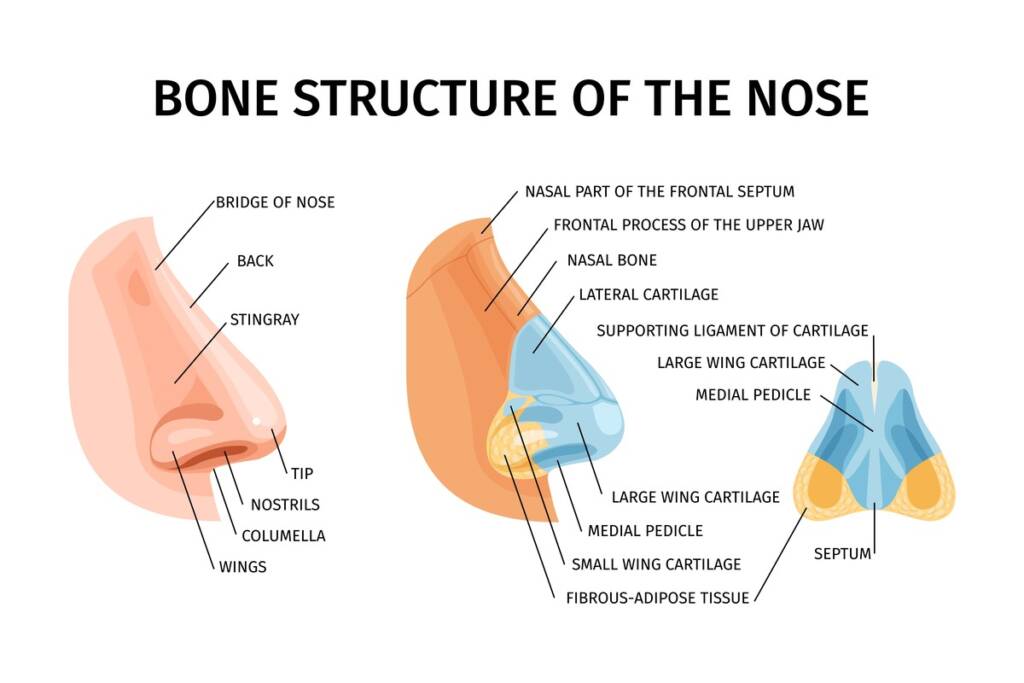
Which parts of the nose can be changed?
A nose job surgery can address nearly every structural component of the nose. Depending on your facial proportions and anatomy, a surgeon can modify:
The nasal bridge: Reducing a prominent bump or building up a flat profile.
The nasal tip: Refining a bulbous, drooping, or overly projected tip by adjusting the lower cartilage.
The nostrils: Narrowing the width of the nostrils or adjusting their symmetry.
The overall size: Altering the length or width of the nose so it balances naturally with other facial features.
Can rhinoplasty address appearance, breathing, or both?
Yes, rhinoplasty can address cosmetic goals, functional breathing issues, or both at the same time. When the focus is purely on appearance, the primary goal is aesthetic harmony. However, many patients also experience restricted airflow due to a deviated septum or enlarged internal nasal structures.
Because Dr. Mustafa Bağlı is European Board Certified in both ENT and Facial Plastic Surgery, his approach inherently prioritizes both aspects. Modifying the external nasal shape will always impact internal airflow. Therefore, a safe and effective operation must preserve or improve nasal function while achieving the desired visual result.
Are rhinoplasty results permanent?
The structural changes made during rhinoplasty surgery are permanent. Once the bone and cartilage have been surgically reshaped, they will not revert to their original form.
However, what rhinoplasty does over the long term is heavily influenced by your body’s natural healing process. Postoperative swelling can take up to a full year, or sometimes longer in patients with thick skin, to completely resolve. Additionally, as you age, the skin and soft tissues of your face will naturally lose elasticity. This can subtly alter the appearance of your nose over decades. Maintaining realistic expectations means understanding that your final result will settle gradually over many months.
Rhinoplasty, septoplasty or septorhinoplasty: which procedure is appropriate?
The appropriate procedure depends entirely on whether your goals are cosmetic, functional, or a combination of both. Determining the right approach requires a precise clinical assessment of your nasal structure and a clear understanding of your personal priorities.
What is the difference between these procedures?
When comparing septoplasty vs rhinoplasty, the distinction lies in the surgical target. Rhinoplasty reshapes the bone and cartilage to modify the external appearance of the nose. In contrast, septoplasty is a purely medical operation. It straightens the nasal septum, the central wall of cartilage dividing your nasal passages, to relieve nasal obstruction and restore healthy nasal airflow. It does not alter how the nose looks from the outside.
For patients seeking nose surgery for breathing and appearance at the same time, the appropriate choice is septorhinoplasty. This combined procedure addresses both aesthetic and functional concerns in a single operation. Understanding the difference between septorhinoplasty vs rhinoplasty is vital. A combined approach ensures that cosmetic changes are built on a structurally sound foundation that supports your airway.
To help you navigate your consultation, this table breaks down the seven core terms you will encounter:
Surgical Term
Primary Focus
External Appearance Change
Internal Breathing Improvement
Rhinoplasty
Aesthetic proportions
Yes
No
Septoplasty
Internal nasal function
No
Yes
Septorhinoplasty
Combined goals
Yes
Yes
Nasal Septum
Central dividing cartilage
N/A
Addressed if deviated
Functional Rhinoplasty
Structural support
Sometimes
Yes
Aesthetic Surgery
Visual enhancement
Yes
Not the primary goal
Nasal Obstruction
Airflow blockage
N/A
Addressed internally
When are breathing concerns assessed?
Breathing concerns must be evaluated during your initial medical consultation, long before any aesthetic decisions are finalized. A thorough examination should identify hidden issues, such as a deviated septum or weakened nasal valves, which could lead to breathing difficulties if left untreated.
Because Dr. Mustafa Bağlı is European Board Certified in both ENT and Facial Plastic Surgery, evaluating nasal function is central to his methodology. Assessing nasal airflow is the first step in his surgical planning. This approach ensures that any underlying functional concerns are resolved during the operation, rather than treated as a separate issue.
What does “nose aesthetics” mean in Turkey?
When researching functional rhinoplasty in Turkey, you will frequently see the phrase “nose aesthetics.” This is a direct translation of the local terminology used by many clinics to describe cosmetic rhinoplasty in Turkey.
While the term highlights the visual aspect of the surgery, patients should ensure that their functional needs are not overshadowed by cosmetic goals. Understanding how rhinoplasty and breathing are connected is essential before making a commitment. True aesthetic surgery must respect and maintain nasal function. A beautifully shaped nose is only considered a successful result if it functions correctly and allows for effortless breathing over a lifetime.
Functional Rhinoplasty and Septorhinoplasty → Functional Rhinoplasty and Septorhinoplasty
What can rhinoplasty realistically change, and what can’t it?
Rhinoplasty can reshape the underlying bone and cartilage of your nose to improve facial proportions and correct structural breathing issues. However, it cannot change your fundamental skin type, erase severe facial asymmetries, or replicate another person’s exact nose.
Establishing realistic rhinoplasty expectations is the most critical step before committing to surgery. Understanding the boundary between what is surgically possible and what is medically limited protects patients from long term disappointment.
What may be achievable?
When assessing what rhinoplasty can change, a surgeon evaluates the structural modifications that your specific anatomy will safely support. Depending on your individual starting point, achievable outcomes typically include:
Reducing a prominent hump on the nasal bridge.
Refining a bulbous, drooping, or poorly defined nasal tip.
Narrowing excessively wide nostrils.
Straightening a deviated septum to improve internal airflow.
Adjusting the overall size of the nose to sit in better balance with your chin and forehead.
These modifications require careful planning. The goal is a proportionate improvement rather than absolute perfection.
What depends on anatomy and healing?
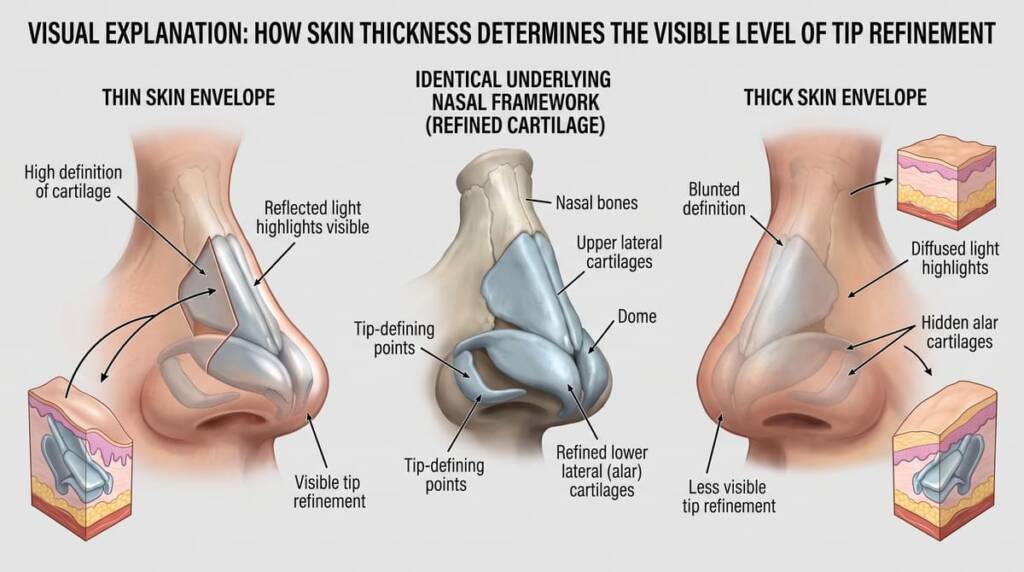
The final outcome of your surgery depends heavily on your unique physical traits and how your body responds to the healing process. While a surgeon can sculpt a highly refined cartilage framework, the overlying skin must shrink and drape smoothly over that new structure.
Skin thickness is one of the most significant limiting factors in rhinoplasty. Patients with thick skin may not see sharply defined nasal tips, as the heavy tissue naturally rounds out the underlying framework. Conversely, very thin skin will show sharp definition but may also reveal minor underlying cartilage irregularities. Additionally, individual scar tissue formation and swelling resolution vary from patient to patient, meaning the exact final contour is partially determined by your body’s biology.
Why no surgeon can guarantee an identical result
No ethical surgeon will guarantee a specific, perfectly matched outcome because the human body is made of living tissue.
Patients often bring reference photos to consultations to communicate their aesthetic preferences. While these images are helpful for understanding your general goals, they cannot serve as a surgical blueprint. Even if a surgeon performed the exact same surgical movements on two different people, the final rhinoplasty results would look distinct. This variation occurs because every patient has a unique combination of bone density, cartilage strength, skin elasticity, and facial muscle movement.
Can rhinoplasty look natural?
Yes, modern surgical techniques prioritize natural rhinoplasty results that complement your existing facial features rather than looking obviously operated on.
International patients frequently ask if rhinoplasty in Turkey can look natural, fearing an overly scooped or artificially narrow appearance. Achieving an unoperated look requires preserving adequate structural support and respecting individual characteristics. Drawing on his background as a European Board Certified ENT and Facial Plastic Surgeon, Dr. Mustafa Bağlı emphasizes a balanced approach. A successful, natural looking outcome should simply draw attention to your eyes and smile rather than drawing attention to the nose itself.
Realistic Expectations
A successful rhinoplasty will improve your nasal shape and function, but it will not resolve underlying personal insecurities or change your overall life circumstances. The most satisfied patients are those who seek a better, more balanced version of their own nose, acknowledge the unpredictability of the healing process, and understand that minor asymmetries are a normal part of all human faces.
Who may be a suitable candidate for rhinoplasty?
A suitable rhinoplasty in Turkey candidate is a healthy adult with fully developed facial bones, realistic aesthetic or functional goals, and a clear understanding of the surgical risks. If you are asking whether you are suitable for rhinoplasty, the answer goes beyond physical health. Emotional readiness is equally critical. Assessing your rhinoplasty eligibility involves looking at both the anatomical possibilities and your psychological motivations for seeking surgery.
What factors are considered during assessment?
A thorough medical assessment evaluates your nasal anatomy, your overall physical health, and your specific reasons for wanting the procedure. To determine who is a good candidate for rhinoplasty, your surgeon will examine several vital elements:
Structural integrity: The inherent strength of your existing cartilage and nasal bones.
Skin quality: How your unique skin thickness will affect the final visible contour and healing timeline.
Internal airway: Identifying any hidden blockages, such as a deviated septum or enlarged turbinates, that require functional correction.
Medical history: Reviewing past surgeries, bleeding tendencies, and current prescriptions.
Dr. Mustafa Bağlı utilizes his background as a European Board Certified ENT and Facial Plastic Surgeon to ensure that any aesthetic modifications will safely support your nasal function. You must be able to safely undergo general anesthesia and commit to the full postoperative care routine.
Is there an appropriate age for rhinoplasty?
The best age for rhinoplasty is after facial growth is entirely complete. For most patients, this occurs around eighteen years of age. Operating before facial development has finished can disrupt natural bone growth and unpredictably alter the final result as the patient matures.
While there is no strict upper age limit, older patients face different considerations. As we age, our skin naturally loses elasticity, which means it may not shrink and drape as smoothly over a newly shaped cartilage framework. Older candidates must have excellent skin quality and no underlying cardiovascular or health conditions that would complicate recovery.
Who may need to postpone surgery?
Patients experiencing temporary health issues, significant life stress, or those taking specific medications should wait before having surgery. For example, active smokers must completely stop using nicotine well in advance of the procedure. Nicotine severely restricts blood flow, which impairs healing and dramatically increases the risk of complications. It is a strict medical requirement to pause nicotine use. Similarly, individuals who are pregnant, nursing, or recovering from another major medical event will need to delay their plans until their physical condition is fully stabilized.
When might rhinoplasty not be appropriate?
“As a surgeon, my primary responsibility is patient safety, which includes knowing when to say no. I frequently advise patients on who should not get rhinoplasty, and I will decline to perform surgery if I believe the operation will not serve the patient’s best interests.
Rhinoplasty is not appropriate for individuals who cannot clearly name what bothers them about their nose. If a patient focuses on microscopic, almost invisible flaws or displays features suggesting body dysmorphic disorder, surgery will not provide the psychological relief they are seeking. I also refuse to operate on anyone acting under external pressure from a partner or family member. Medically, anyone who has taken isotretinoin within the last six to twelve months is disqualified due to the high risk of unpredictable scarring and poor healing. Practically, if you have a wedding or a major social event few weeks away, you simply do not have time to heal.
Finally, I advise against surgery for anyone expecting the operation to dramatically change their personal or professional life.”
Dr Bağlı
Which type of rhinoplasty might be appropriate for your situation?
The appropriate type of rhinoplasty depends on your surgical history, your specific ethnic anatomical traits, your breathing function, and the structural changes required. There are several distinct categories of nose surgery, each utilizing a different surgical approach. Understanding these categories will help you clarify your treatment goals and set realistic expectations during your clinical consultation.
Primary rhinoplasty
A primary procedure is the first time a patient undergoes nose surgery. Because the nasal anatomy has not been altered by previous operations, the cartilage, bone, and tissue are in their natural state. This undisturbed anatomy generally allows for a more predictable healing process. The surgeon focuses on reshaping your original framework to meet your aesthetic and functional goals without the complication of pre-existing surgical scar tissue.
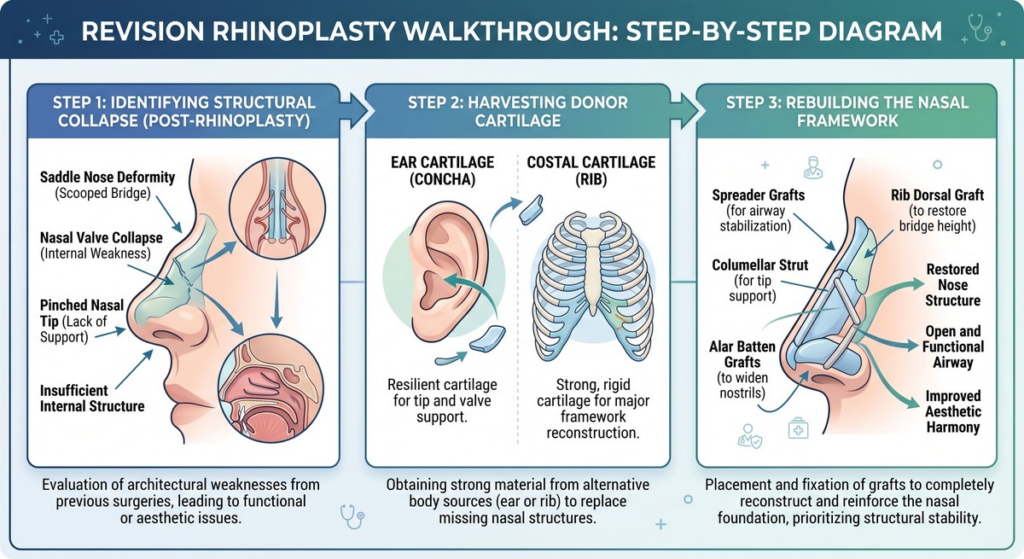
Revision rhinoplasty is performed on patients who have already had at least one previous nasal surgery but require further correction for functional issues or unsatisfactory visual results. A revision case is significantly more complex than a primary procedure. The surgeon must navigate existing scar tissue, diminished blood supply, and weakened cartilage. In many situations, restoring structural support requires harvesting new cartilage from the patient’s ear or rib.
Functional rhinoplasty prioritizes restoring or improving nasal breathing over purely altering external appearance. It targets internal structural blockages, such as a severely deviated septum, collapsed nasal valves, or enlarged turbinates. Given Dr. Mustafa Bağlı’s background as a European Board Certified ENT specialist, evaluating and protecting nasal function is integrated into his approach. A functional procedure ensures that a healthy airway is established and maintained.
Ethnic rhinoplasty focuses on enhancing the nose while preserving the distinctive anatomical characteristics and cultural heritage of the patient. Different ethnic backgrounds present unique structural variations in skin thickness, cartilage strength, and nasal bone width. A successful outcome requires specialized surgical techniques that respect these natural variations, avoiding a standardized or overly westernized result that clashes with your natural facial harmony.
Preservation rhinoplasty is an advanced surgical philosophy. Instead of cutting away the top layer of the nasal bridge to reduce a prominent hump, the surgeon removes cartilage from underneath and lowers the entire natural bridge into a new position. This technique preserves your original nasal dorsum, which can lead to smoother contours and a highly natural appearance. While highly effective, it requires specific anatomical conditions and is not appropriate for every patient.
Non-surgical (filler) rhinoplasty, and what it cannot do
Non-surgical rhinoplasty involves injecting dermal fillers to temporarily disguise minor bumps or smooth out mild asymmetries. It is an office based treatment rather than a surgical operation. While it offers immediate visual changes without a lengthy recovery, patients must understand its strict medical limitations. Filler can only add volume to the nose. It cannot make a nose smaller, narrow wide nostrils, refine a bulbous tip, or fix internal breathing problems. Furthermore, the results fade over several months, and repeated filler injections in the nose carry specific vascular risks that must be carefully managed.
What does ethnic rhinoplasty involve?
Ethnic rhinoplasty involves reshaping the nose while preserving the patient’s unique cultural identity and natural facial harmony. It requires specialized surgical techniques that accommodate distinct anatomical variations in skin thickness and cartilage strength, avoiding a standardized or overly westernized outcome.
Why nasal anatomy and skin characteristics vary
Different ethnic backgrounds present fundamental differences in the underlying structure of the nose. Some patients have highly rigid cartilage and thin skin, while others possess softer cartilage paired with thicker and more sebaceous skin.
When planning an ethnic nose job in Turkey, recognizing these structural realities is vital. Rhinoplasty for thick skin, for example, demands exceptional structural support underneath. If the cartilage framework is not adequately reinforced, the newly shaped tip may lose definition or collapse under the weight of the heavier tissue over time.
Anatomical Feature
Common Variations
Surgical Consideration
Skin Thickness
Thin to highly thick and sebaceous
Thick skin requires stronger underlying cartilage support and takes longer for swelling to resolve.
Cartilage Strength
Firm and rigid to soft and pliable
Soft cartilage often requires grafting to build sufficient structural support for a refined tip.
Nasal Bridge
High and prominent to low and flat
A flat bridge may require cartilage grafting to build height, while a prominent bridge requires careful reduction.
Nasal Base
Narrow to wide nostrils
Adjusting nostril width requires precise techniques to ensure natural breathing and prevent visible scarring.
Why individualised planning matters
Because no two noses share the exact same structural foundation, applying a single surgical template to every patient is unsafe and visually unappealing. Individualised planning ensures that the surgical approach matches the physical reality of the patient’s specific anatomy.
An experienced ethnic rhinoplasty surgeon in Turkey evaluates the internal airway alongside the external shape. Drawing on his experience performing over 3,000 rhinoplasty procedures, Dr. Mustafa Bağlı customizes every operative plan. His dual focus as a European Board Certified ENT and Facial Plastic Surgeon means that modifications designed to enhance your facial identity will always prioritize necessary structural support and protect your breathing function.
How can patients discuss preserving their individual features?
Clear communication is the foundation of a natural ethnic rhinoplasty. During your consultation, explicitly state which traits you wish to keep and which you want to modify.
Bring photographs that reflect your specific background rather than generic ideals that do not match your starting anatomy. It is completely appropriate to tell your surgeon that you want to refine a certain area, such as a bulbous tip, without erasing the overall character of your profile.
What should patients ask during consultation?
Asking the right questions helps you evaluate whether a surgeon understands your specific needs for ethnic rhinoplasty in Istanbul. To ensure you are making an informed decision, ask your surgeon the following questions during your clinical assessment:
How will my specific skin thickness affect the final result and the healing timeline?
What techniques will you use to provide structural support for my nasal cartilage?
Can you show me examples of previous patients who had a similar starting anatomy to mine?
How will these cosmetic changes impact my internal nasal function and breathing?
Complete Guide to Ethnic Rhinoplasty → Complete Guide to Ethnic Rhinoplasty
Is rhinoplasty in Turkey safe?
The safety of rhinoplasty in Turkey is not determined by geography, but by specific medical choices. A safe procedure depends directly on your overall health, the surgeon’s qualifications and experience, the emergency capabilities of the surgical facility, safe anaesthesia arrangements, a thorough preoperative assessment, and structured postoperative care.
Where does the risk actually come from?
When people ask if Turkey is safe for rhinoplasty, the answer requires understanding where complications originate. The risks of rhinoplasty in Turkey rarely come from the location itself. Instead, they arise when patients treat the operation like a holiday, rush the recovery timeline, or prioritize low prices over medical expertise.
Any surgery involving general anaesthesia carries inherent risks, such as infection, bleeding, or adverse medication reactions. In rhinoplasty, there are also specific risks involving compromised nasal function or unsatisfactory aesthetic outcomes. These risks escalate rapidly if a patient bypasses a thorough medical assessment, fails to disclose their complete medical history, or flies home before the initial healing phase is stable.
What can international patients verify before committing?
Before committing to a surgery date, international patients must take responsibility for verifying the medical team. If you are wondering if it is safe to get a nose job in Turkey, you should independently check these specific details:
Exact Medical Credentials: Confirm the doctor’s formal training. For instance, Dr. Mustafa Bağlı is European Board Certified in both ENT and Facial Plastic Surgery, ensuring a rigorous foundation in both airway function and facial aesthetics.
Relevant Surgical Experience: Look for a demonstrated, dedicated focus on nasal surgery. A specialist who has completed over 3,000 rhinoplasty procedures offers a more predictable safety profile than a general plastic surgeon who performs a wide variety of body surgeries.
The Informed Consent Process: Ensure your consultation involves a direct, honest conversation with your surgeon about the limitations and risks related to your specific anatomy, rather than a brief chat with a sales coordinator.
The Recovery Timeline: Confirm that the surgeon mandates a stay of at least seven to ten days to accommodate necessary postoperative care and in-person medical evaluations before you are cleared to fly.
Why do so many international patients choose rhinoplasty in Istanbul?
International patients choose rhinoplasty in Istanbul primarily to access highly focused surgical specialists, accredited hospital infrastructure, and favorable economic conditions. The city has developed into a major global hub for nasal surgery, offering experienced surgical care at a lower total cost than many Western healthcare markets.
Istanbul as a destination for international patients
Istanbul combines geographical accessibility with an extensive private healthcare ecosystem. As an international travel hub, the city provides direct flight connections across Europe, North America, the Middle East, and Central Asia.
Patients travelling abroad for surgery often evaluate multiple countries before choosing a treatment destination. While clinical standards vary between individual providers in any country, general market characteristics differ by region:
Country
Primary Focus and Context
General Cost Structure
International Patient Infrastructure
Turkey
High procedural volume, strong ENT and facial plastic specialization
Moderate, lower operational overhead
Highly developed, full logistical support
United Kingdom
Regulated private clinics, localized domestic care
Strong tradition in comprehensive body and facial aesthetics
Moderate to high
Established regional and international patient base
Access to surgeons with rhinoplasty-focused practices
The high concentration of patients seeking nasal surgery in Istanbul has allowed many specialists to build dedicated, high-volume practices. Unlike general surgeons who divide their time among numerous unrelated procedures, focused specialists perform nose surgery daily.
This routine immersion develops refined surgical judgment. Dr. Mustafa Bağlı, European Board Certified in both ENT and Facial Plastic Surgery with experience across more than 3,000 rhinoplasty procedures, reflects this model of focused practice. For international patients, finding a surgeon with dedicated training in both internal airway mechanics and external nasal structure is a key reason to travel to Istanbul.
Why is rhinoplasty in Turkey less expensive than in the UK or US?
The cost difference between Turkey and countries like the UK or the US is driven by macroeconomic factors rather than medical compromises.
First, the overall cost of living and operational overhead in Turkey is considerably lower. Rents, clinical staffing, facility maintenance, and administrative expenses cost less to maintain. Second, currency exchange dynamics often work heavily in favor of international visitors holding stronger currencies. Third, medical liability and malpractice insurance structures in Turkey differ significantly from the high premiums that drive up surgical fees in the United States and the United Kingdom.
Why lower cost does not automatically mean lower quality
Lower operational costs allow accredited hospitals and surgeons to invest in modern surgical technologies while keeping procedure fees accessible. Many private hospitals in Istanbul maintain modern operating theaters, advanced monitoring systems, and internationally trained medical teams.
A lower fee reflects the local economic environment rather than the skill of the surgical team. However, patients should maintain discernment. Exceptionally low prices that undercut standard market rates can signal compromises in surgical time, facility accreditation, or the quality of postoperative monitoring.
What patients should consider beyond the destination itself
Choosing a city is not the same as choosing a surgeon. While Istanbul has numerous reputable facilities, the quality of care depends on the specific doctor you select.
Before finalizing your plans, prioritize these clinical fundamentals:
Surgeon transparency: Direct communication with the operating doctor rather than non-medical staff.
Facility standards: Verification that the hospital is fully equipped for emergency medical care and general anaesthesia.
Recovery time: Planning an adequate stay of seven to ten days rather than attempting an early flight home.
Functional prioritization: Ensuring your internal breathing structures will be protected alongside cosmetic adjustments.
And the part other guides leave out: the broker layer
Many international patients inadvertently book their surgery through medical tourism agencies and marketing brokers rather than directly with a doctor. These intermediaries often market attractive package deals and assign patients to whichever clinic offers the highest commission.
Working through a third-party broker can create significant risks. You may not know the exact identity or qualifications of your operating surgeon until you arrive in Istanbul. Furthermore, medical accountability becomes fragmented if complications arise. Choosing a surgeon-led practice ensures that your medical history, clinical evaluation, surgical planning, and postoperative care remain entirely in the hands of the physician responsible for your outcome.
[How to Verify Your Surgeon Directly → Guide to Choosing a Rhinoplasty Surgeon]
Why can an ENT background be relevant to rhinoplasty?
An Ear, Nose, and Throat (ENT) background provides a surgeon with specialized, formal training in the complex internal airway and structural mechanics of the nasal passages. This dual perspective is highly relevant because it allows the surgeon to reshape the external appearance of the nose while actively protecting, or directly improving, the patient’s foundational breathing function.
When international patients evaluate an ENT rhinoplasty surgeon in Turkey, they are often seeking assurance that their cosmetic goals will not come at the expense of their physical health. Dr. Mustafa Bağlı approaches this balance through his formal European Board Certification in both ENT and Facial Plastic Surgery. This background ensures that the structural integrity of the nose is treated as the primary framework upon which all aesthetic changes are built.
What does nasal function have to do with rhinoplasty?
Every time a surgeon alters the outside of the nose, the inside is directly affected. Making a nose narrower, reducing a prominent dorsal hump, or refining the nasal tip inherently reduces the internal space available for airflow.
If a surgeon removes too much cartilage to achieve a specific visual result, the remaining structure may become too weak to withstand the natural force of inhalation. Over time, this weakened framework can collapse, leading to chronic nasal obstruction. Understanding the precise relationship between rhinoplasty and breathing ensures that any cosmetic reduction is carefully balanced with necessary structural reinforcement. A visually appealing outcome is only considered successful if the nose functions effortlessly over a lifetime.
What are the internal structures of the nose?
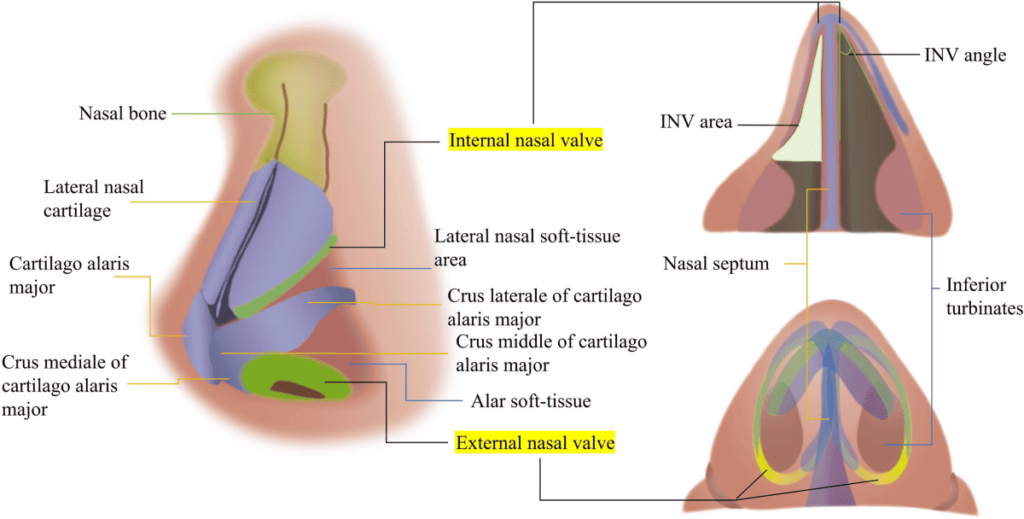
The internal nose is not an empty tube, but a highly complex network of cartilage, bone, and mucosal tissue designed to filter, warm, and direct the air you breathe. To understand rhinoplasty nasal function, patients should be familiar with three primary structures:
The Nasal Septum: The central wall of cartilage and bone that divides the left and right nasal passages. If it is naturally deviated, it restricts airflow and can create external asymmetry.
The Turbinates: Small, bony structures covered in soft tissue along the sidewalls of the airway that regulate air temperature and humidity.
The Internal Nasal Valve: The narrowest point of the nasal airway, located just above the nostrils. Even a single millimeter of structural collapse in this critical area can cause severe breathing difficulties.
When can breathing concerns be assessed alongside aesthetic goals?
Breathing concerns must be evaluated during your very first medical consultation, long before an aesthetic surgical plan is finalized. A safe clinical assessment should never treat the airway as an afterthought.
A dedicated nose surgeon ENT specialist will conduct a thorough internal examination to identify undiagnosed functional concerns, such as a deviated septum or weakened nasal valves. By identifying these issues early, the surgeon can integrate functional corrections seamlessly into the cosmetic procedure. This combined approach ensures that you only undergo a single surgical recovery period and that your aesthetic changes are fully supported by a healthy, reconstructed airway.
Why functional considerations are particularly relevant in revision cases
In revision surgery, the original anatomical support has already been altered. Often, the cartilage has been depleted, weakened, or replaced by dense scar tissue from the primary procedure.
Many patients seeking a revision do so because their initial surgery compromised their airway, leaving them with new, debilitating breathing difficulties. A functional rhinoplasty surgeon in Turkey is particularly relevant in these complex scenarios. Reconstructing a damaged airway often requires advanced techniques, such as harvesting rib cartilage to rebuild the internal nasal valve and stabilize the lateral walls. In revision cases, restoring the functional foundation is an absolute medical necessity before any further aesthetic refinement can be safely achieved.
Surgeon Insight: The Functional Foundation
[Embed Vid with DOCTOR INSIGHT: Dr. Bağlı to provide a brief explanation of how his European Board Certified ENT training dictates his method of evaluating the airway before altering the external framework. The insight should focus strictly on the mechanical necessity of structural support, avoiding comparative claims regarding other surgical specialties.]
How do you choose and verify a rhinoplasty surgeon in Turkey?
Choosing the right surgeon requires looking past polished marketing and evaluating objective medical credentials, dedicated procedural experience, and direct communication. Finding a qualified rhinoplasty surgeon in Turkey is the single most important decision you will make regarding your safety, your aesthetic outcome, and your long term breathing function.
Learning how to choose a rhinoplasty surgeon in Turkey means establishing a structured verification process. Instead of searching for the lowest price or the most popular social media account, international patients should evaluate surgeons using clinical standards, verified board certifications, and direct surgical accountability.
Why social media popularity is not enough
Social media platforms have transformed medical marketing, but an impressive follower count is not proof of surgical skill. Algorithms reward high production video, dramatic lighting, and aggressive promotional campaigns rather than patient safety or technical precision.
Many photos published online showcase immediate on the table results taken right after the final stitch is placed. These images do not reflect the true outcome. They reveal nothing about how the nose will heal once swelling resolves, whether the internal cartilage framework will remain stable, or whether the patient will experience chronic breathing difficulties one or two years later. When evaluating a rhinoplasty surgeon in Istanbul, rely on verified medical credentials and documented long term outcomes rather than viral popularity.
Is the surgeon licensed to practise, and in which specialty?
Every international patient must confirm that their prospective doctor holds an active medical license and formal specialization in facial surgery. In Turkey, rhinoplasty is primarily performed by two surgical specialties: Otorhinolaryngology (Ear, Nose, and Throat or ENT) and Plastic, Reconstructive, and Aesthetic Surgery.
To verify a surgeon in Turkey, you should confirm their professional standing with official medical regulatory bodies. Board certifications provide independent validation of advanced training and peer reviewed competence. For example, Dr. Mustafa Bağlı holds European Board Certification in both ENT and Facial Plastic Surgery. This dual qualification confirms formal training in the delicate internal mechanics of the airway as well as the aesthetic proportions of the face.
Key credentials to confirm before booking include:
Graduation from an accredited medical faculty and recognized residency program.
Official registration with the Turkish Ministry of Health.
Membership in recognized national and international specialty associations.
Specialized board certifications in ENT or Plastic Surgery.
Why relevant rhinoplasty experience matters
Rhinoplasty is widely recognized as one of the most complex procedures in aesthetic surgery because every millimeter of structural adjustment impacts both appearance and airflow. A surgeon who performs a broad range of general body procedures may only operate on a few noses each month, which limits their exposure to rare anatomical variations.
A dedicated rhinoplasty surgeon in Turkey focuses their practice primarily on nasal anatomy. This consistent surgical volume builds the refined technical skill necessary to handle complex structural challenges, such as weak cartilage frameworks or thick, inelastic skin. Having performed more than 3,000 rhinoplasty procedures, Dr. Mustafa Bağlı approaches each case with deep familiarity with both primary modifications and complex structural reconstructions.
Who will actually perform your surgery?
In some high volume commercial clinics, patients are attracted by the reputation of a senior doctor, only to discover that junior associates or assistants perform significant parts of the operation. This practice creates severe risks for international patients who cannot easily monitor clinical handoffs.
You have the right to absolute clarity regarding surgical identity. Ask directly who will perform each phase of the procedure, from the initial incision to the internal structural grafting and final skin closure. The surgeon you consult with must be the individual holding the instruments in the operating room.
Have you spoken directly with the surgeon, or to a salesperson?
A major warning sign in medical travel is communicating solely with sales coordinators or booking agents who have no medical training. These representatives often work on commission and may minimize surgical risks, promise unrealistic results, or pressure you to place an immediate financial deposit.
A responsible medical evaluation requires direct communication with the operating physician. During your clinical consultation, your doctor must:
Examine your internal nasal structures and evaluate your breathing history.
Discuss the specific limitations imposed by your skin thickness and facial bone structure.
Explain the potential surgical risks and complications relevant to your anatomy.
Provide a clear, individualized surgical plan rather than generic package promises.
Why reviewing cases similar to your anatomy is useful
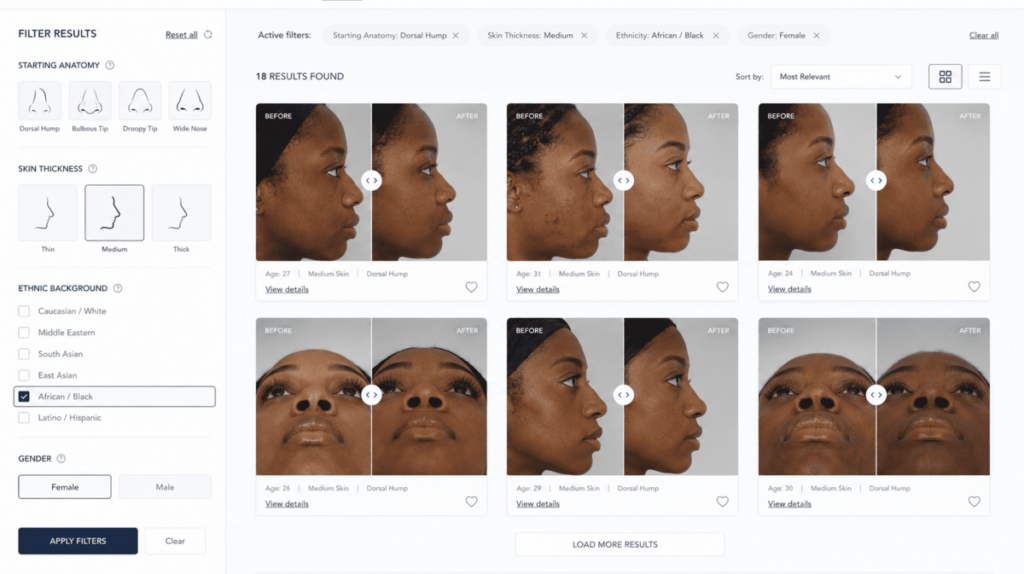
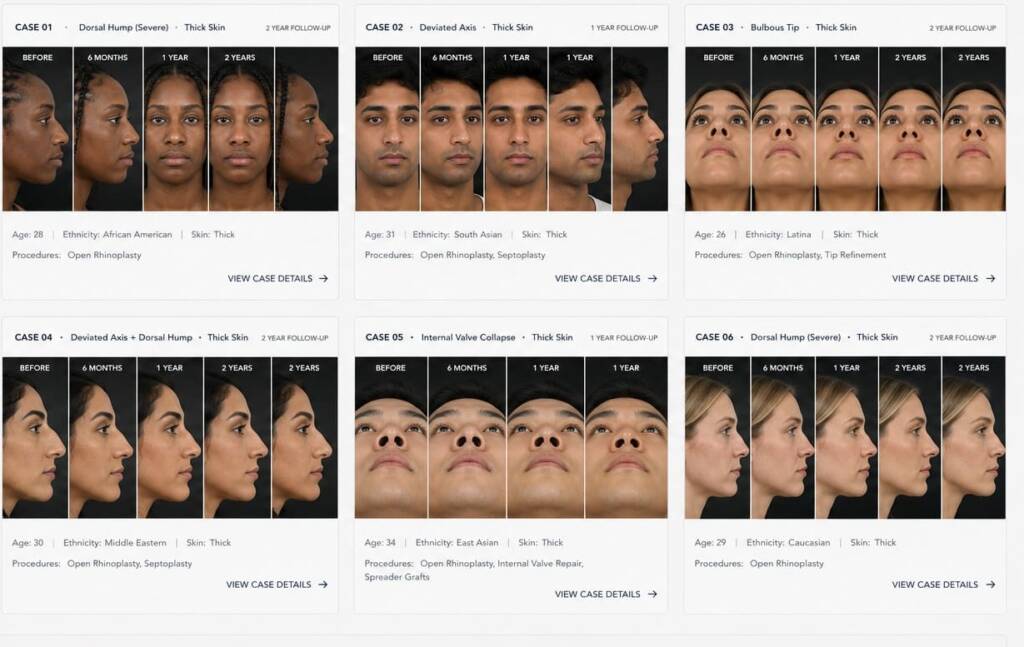
Examining before and after photographs is a valuable part of your research, provided you look at the right cases. Reviewing dramatic transformations on patients with completely different facial features, skin types, and bone structures offers little insight into what is achievable for your own nose.
Ask to see documented results from patients who shared your specific starting anatomy, such as a severe dorsal hump, a deviated axis, a bulbous tip, or thick sebaceous skin. Pay close attention to consistency across multiple angles and look for long term postoperative photographs taken at six months, one year, or two years after surgery.
What indemnity and revision policy are in place?
Even under the care of highly skilled specialists, rhinoplasty carries a recognized revision rate worldwide due to the natural unpredictability of human healing and scar tissue formation. A trustworthy medical practice will discuss this reality transparently before you travel.
Before committing, ask clear questions about the clinic’s revision policy:
How are surgical and hospital fees handled if a secondary procedure is medically indicated?
What is the recommended timeline before considering any corrective touch up?
What medical indemnity and professional liability protections are in place for international patients?
Where should you look for independent reviews?
Do not rely exclusively on testimonials published on clinic websites or promotional video interviews organized by agencies. Seek out independent, third party platforms where patients share unedited, long term accounts of their surgical journeys.
Look for detailed written narratives on independent healthcare forums, Google reviews, and patient community platforms where individuals document their experiences across the entire recovery period. Pay attention to how the surgical team responded when a patient experienced unexpected swelling, healing concerns, or minor complications. A clinic’s commitment to patient care is best measured by how thoroughly they support their patients after the surgery is complete.
[Complete Verification Checklist → How to Verify Your Surgeon’s Credentials]
How do you spot a rhinoplasty clinic you should avoid?
You can spot a rhinoplasty clinic you should avoid by watching for aggressive sales tactics, hidden surgeon identities, and promises of guaranteed perfection. A safe medical practice prioritizes a thorough clinical evaluation over immediate financial deposits and ensures you speak directly with the operating doctor before making any commitments.
Warning signs before paying a deposit
The earliest red flags usually appear during your initial communication. If a clinic relies on urgency to secure a booking, you should proceed with extreme caution. Unsafe clinics often use artificial deadlines, telling patients that a special price will expire within 24 hours or that they must pay a deposit before seeing a surgical plan. Medical decisions require time and careful thought. A reputable clinic will give you the space to consider your options without applying financial pressure.
Unrealistic promises
Every surgical procedure has strict medical and anatomical limitations. If a representative tells you they can perfectly replicate a celebrity photo or completely ignore your natural skin thickness, they are prioritizing a sale over your safety. Healing is a highly individual process. Ethical surgeons are honest about what cannot be achieved and will readily explain the boundaries of your specific anatomy.
When the surgeon’s identity is unclear
One of the most significant risks for international patients is booking a procedure without knowing exactly who will perform it. Many medical tourism agencies sell travel packages without confirming the operating doctor until you arrive in Istanbul. In other cases, a clinic might use the name of a famous senior surgeon to attract patients, but delegate the actual operation to junior staff. You have an absolute right to know the exact identity and credentials of your surgeon from the very first conversation.
Why guaranteed results are a red flag
No responsible medical professional will ever guarantee a specific physical outcome. Rhinoplasty involves altering living tissue, bone, and cartilage. How your body heals, manages swelling, and forms scar tissue will always introduce a degree of unpredictability. When a clinic promises a guaranteed result or claims their technique is completely without risk, they are violating basic medical ethics.
What a transparent practice provides instead
Instead of sales pitches and guarantees, a trustworthy practice provides clear medical assessments. A clinic led by a surgeon focuses entirely on informed consent. For example, drawing on his experience as a European Board Certified ENT and Facial Plastic Surgeon, Dr. Mustafa Bağlı ensures patients understand both the aesthetic possibilities and the functional realities of their operation. A transparent practice will provide a detailed evaluation, discuss potential complications openly, and ensure you are fully prepared for the realities of recovery.
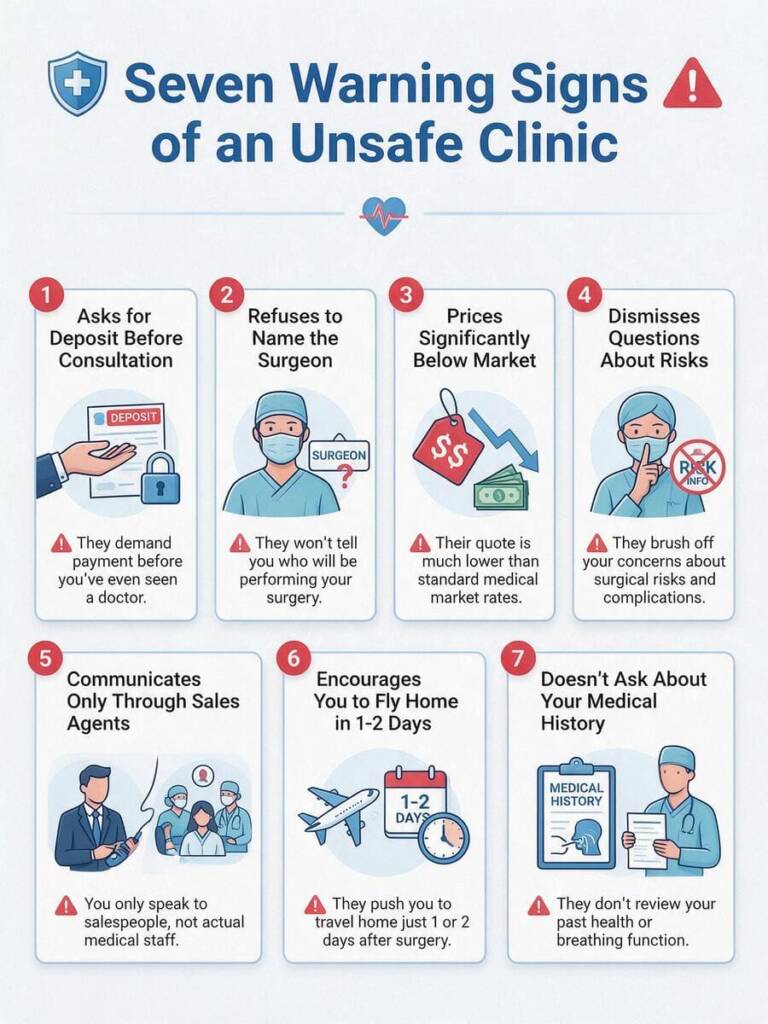
Seven Warning Signs
Pushing for a deposit before a medical consultation.
Refusing to name the specific operating surgeon.
Offering prices significantly below the standard medical market rate.
Dismissing questions about surgical risks or complications.
Communicating only through sales agents rather than medical staff.
Encouraging you to fly home after only one or two days.
Failing to ask about your past medical history or breathing function.
Should you book through an agency, a hospital, or directly with a surgeon?
You can book rhinoplasty in Turkey through a medical tourism agency, a large hospital, or directly with a private surgical practice. Booking directly with a surgeon provides the highest level of medical transparency and continuity of care. Agencies offer logistical convenience but often obscure the doctor’s identity, while hospitals provide strong infrastructure but may assign you to any available staff physician.
Booking through a medical tourism agency
Agencies and medical tourism brokers handle travel, accommodation, and airport transfers. This logistical support appeals to many international patients navigating an unfamiliar city. However, a rhinoplasty agency in Turkey operates as a middleman. They often direct patients to the clinic offering the highest commission rather than the best clinical fit.
The primary risk here is fragmented communication. You frequently negotiate your procedure with a sales coordinator rather than the doctor responsible for your face. Because your medical records and requests must pass through a non medical representative, this route increases the risk of critical miscommunication regarding your breathing function and your aesthetic goals.
Booking through a hospital
When comparing a hospital versus a private surgeon route, large private hospitals offer robust medical infrastructure and emergency safety nets. You book directly with the institution, which usually manages its own international patient department.
The drawback is a potential lack of personalized choice. The hospital may assign your case to an available staff surgeon rather than allowing you to select a dedicated specialist whose specific techniques match your anatomical needs. Additionally, postoperative communication can feel impersonal. If you require long term support after returning to your home country, you may find yourself communicating with a rotating staff of administrative coordinators rather than the physician who performed the operation.
Booking directly with a surgeon’s practice
To book directly with a surgeon in Turkey means establishing a direct medical relationship from the very first consultation. In a practice led by a surgeon, you know exactly who is evaluating your anatomy, planning your procedure, and managing your recovery.
Dr. Mustafa Bağlı, drawing on his experience as a European Board Certified ENT and Facial Plastic Surgeon, operates on this model to ensure absolute continuity of care. This direct route removes the broker entirely. When you communicate with a dedicated specialist, the medical responsibility rests solely with them, ensuring all planning focuses on your medical safety rather than a sales quota.
Questions to ask regardless of which route you choose
Whether you use a medical tourism agency in Turkey or contact a clinic yourself, you must protect your health by asking clear, direct questions before making any financial commitment. Always verify the following details to ensure a safe surgical experience:
Who is the specific surgeon performing the operation, and what are their exact board certifications?
Will I have a detailed video consultation or an in person meeting with the operating doctor before paying a deposit?
Will all my postoperative appointments be conducted by the surgeon or by a separate treatment coordinator?
How much does rhinoplasty in Turkey cost in 2026?
In 2026, the general market cost for rhinoplasty in Turkey ranges from $3,000 to $8,500. For international patients consulting with Dr. Mustafa Bağlı, all inclusive surgical packages typically fall between $4,500 and $5,000 USD. The final quotation always depends on your specific anatomical requirements and whether you need a primary or revision procedure.
What factors influence the cost?
The price of your surgery is determined by several core medical and logistical elements. The surgeon’s level of dedicated expertise is a major factor, as highly specialized doctors charge differently than general practitioners. The hospital facility also impacts the final price, with fully accredited medical centers costing more than smaller private clinics. Finally, the complexity of your anatomical needs, such as correcting severe breathing issues alongside aesthetic changes, will directly shape the total surgical fee.
Primary versus revision rhinoplasty costs
A primary rhinoplasty is performed on a nose that has never been operated on before. Because the internal structures are in their natural state, the surgery is more predictable and takes less time.
Revision rhinoplasty is significantly more expensive because it is much more complex. The surgeon must navigate existing scar tissue, compromised blood supply, and weakened cartilage. Frequently, a revision requires harvesting new cartilage from the patient’s rib or ear to rebuild the nasal framework. This advanced reconstruction demands greater technical skill and a much longer operating time, which naturally increases the surgical and hospital fees.
What should a complete quote include?
Medical tourism packages can be confusing if you do not know what you are paying for. A transparent quotation should break down exactly what is covered and what you must pay for out of pocket.
One overnight stay in a private room with nursing care
Extra nights requested for personal comfort
Preoperative Care
Blood tests, basic health screenings, physical examinations
Specialist clearances for pre existing conditions
Postoperative Care
Prescribed medications, nasal splints, follow up visits
Additional cosmetic treatments or wellness therapies
Logistics
VIP airport transfers, hotel accommodation for recovery
International flights, travel insurance, daily meals
How does rhinoplasty in Turkey compare with UK and US prices?
International patients often travel because local healthcare markets price aesthetic surgery out of reach. While precise fees vary by individual surgeon, this table provides a general baseline for average global prices in 2026:
Destination Country
General 2026 Price Range
Primary Market Focus
Turkey
$3,000 to $8,500
High volume facial specialization, all inclusive packages
Comprehensive aesthetic and body surgery tradition
Why prices vary significantly
Within Istanbul itself, you will encounter a wide spectrum of price quotes. This variation happens for three distinct reasons.
First, the broker layer adds hidden markups. If you book through a medical tourism agency, their commission is built into your quote. Second, the clinic tier matters. Surgeries performed in internationally accredited hospitals cost more than those done in standard outpatient facilities. Third, surgical experience commands a premium. A dedicated facial plastic surgeon with a verifiable history of successful outcomes will not offer the same discount prices as a newly qualified doctor attempting to build a patient portfolio.
Why the cheapest option is not necessarily the best value
Choosing your surgeon based entirely on the lowest available price introduces severe medical risks. Deeply discounted packages often rely on cutting corners to maintain profitability.
A clinic offering an unusually low fee might rush the preoperative assessment, limit your access to the operating doctor, or use a facility lacking emergency intensive care support. If a cheap surgery results in compromised breathing or an unnatural appearance, the subsequent revision procedure will cost far more physically, emotionally, and financially than investing in an experienced specialist the first time. The highest value in rhinoplasty is achieving a safe, permanent result that you never have to fix.
Rhinoplasty Cost in Turkey → Rhinoplasty Cost in Turkey
What costs may not be included in your quote?
When reviewing a rhinoplasty quote in Turkey, the base surgical fee rarely covers your entire financial commitment. While most clinic packages include the operation, hospital stay, and local transfers, patients must personally budget for international flights, extended hotel stays, specialized outpatient medications, and potential medical insurance gaps.
Uncovering the hidden costs of rhinoplasty in Turkey early protects you from financial stress during your recovery. Knowing exactly what you will pay out of pocket is a vital part of planning a safe surgical journey.
Travel and accommodation
While you might know what is included in rhinoplasty Turkey medical packages, your personal travel is almost always separate. You are responsible for booking and financing your international flights. Furthermore, if you choose to bring a companion or wish to extend your recovery period beyond the standard seven to ten days, you will need to pay for the extra hotel nights, daily meals, and general living expenses. Rhinoplasty travel costs Turkey can vary greatly depending on the season and your lifestyle choices.
Medication and additional medical needs
Your hospital fee generally covers the anesthesia and intravenous medications used during your operation. However, postoperative prescriptions for oral antibiotics, pain relief, and specialized nasal care ointments are often purchased separately at a local pharmacy. Additionally, if your preoperative blood tests reveal a condition requiring a separate specialist consultation before you are cleared for surgery, this extra medical evaluation is not typically covered in your base package.
Additional procedures
A rhinoplasty quote in Turkey applies exclusively to the agreed upon surgical plan. If you decide to add another treatment during your visit, you will face extra costs since rhinoplasty Turkey clinics must charge for the additional time and materials. Similarly, if a complex functional airway repair requires harvesting rib cartilage to rebuild the nose, this significantly extends the operating room time and will increase the final surgical fee.
Insurance, and what it does not cover
Standard travel insurance rarely covers complications arising from elective cosmetic surgery. While some specialized medical tourism insurance policies exist, they must be purchased separately. If you experience a rare complication that requires an extended hospital stay or additional emergency care, your regular health insurance from your home country will almost certainly deny the claim because the original procedure was elective and performed abroad.
What should you ask for in writing?
Before you travel, request an itemized document detailing exactly what your rhinoplasty Turkey package includes. This protects you from unexpected bills and ensures you and the clinic share the same expectations. A transparent practice, like that of Dr. Mustafa Bağlı, will provide a detailed financial breakdown after your clinical assessment so you fully understand your total commitment before paying any deposit.
Quote Checklist
Ask your clinic to confirm these details in writing before you book your surgery:
Are the surgeon fee and anesthesiologist fee fully included?
How many nights in the hospital and the hotel are covered?
Are preoperative blood tests and medical consultations part of the price?
Are local VIP airport transfers provided?
Who pays for the postoperative pharmacy medications and nasal splints?
Open or closed, preservation or structural: which approach may suit your nose?
The appropriate surgical approach depends entirely on your unique nasal anatomy and the complexity of the changes required. Open and closed describe where the incisions are made, while preservation and structural describe how the bone and cartilage are managed. The choice is a medical decision based on visibility and structural needs, not a trend.
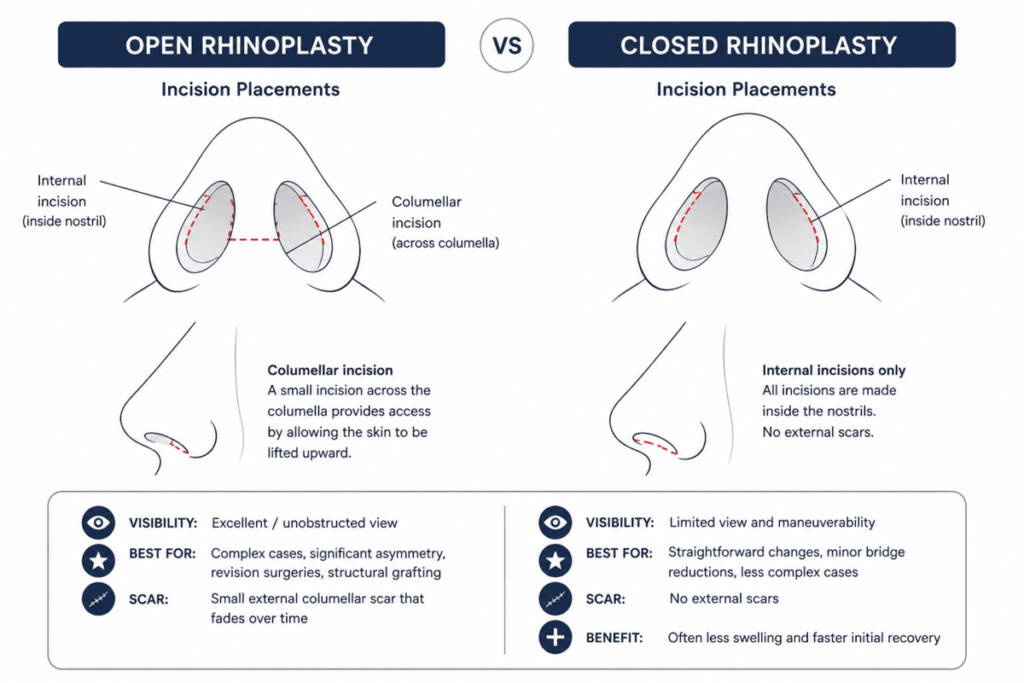
What is open rhinoplasty?
In an open rhinoplasty, the surgeon makes a small incision across the columella, the narrow strip of tissue separating the nostrils, in addition to incisions inside the nose. This allows the skin to be lifted upward, providing a completely unobstructed view of the underlying cartilage and bone.
This direct visibility makes the open approach highly effective for complex cases, significant asymmetry, and revision surgeries where precise structural grafting is required. While it does leave a small external mark, the columellar scar typically heals remarkably well and fades to become nearly invisible over time.
What is closed rhinoplasty?
A closed rhinoplasty involves making all surgical incisions entirely inside the nostrils. Because the skin is not lifted, there are absolutely no external scars.
This technique often results in slightly less postoperative swelling and a faster initial recovery. However, the surgeon must work with limited visibility and maneuverability. Therefore, the closed approach is generally best suited for patients requiring straightforward modifications, such as reducing a minor bridge bump, rather than extensive nasal tip reconstruction.
What is preservation rhinoplasty?
Preservation rhinoplasty is a surgical philosophy focused on maintaining as much of your natural nasal structure as possible. Instead of shaving down the top of the nasal bridge to remove a hump, the surgeon removes cartilage from underneath and lowers the entire natural bridge into its new position.
This technique preserves the smooth, natural contour of the nasal dorsum. It is an excellent option for patients with a strong, natural bridge who want to avoid an operated appearance. However, it requires specific anatomical conditions to be successful and may not be appropriate for severely deviated noses.
What is structural rhinoplasty?
Structural rhinoplasty involves fundamentally rebuilding the framework of the nose to ensure long term stability. The surgeon selectively removes, reshapes, and reinforces the cartilage and bone using precise grafting techniques, often utilizing cartilage taken from the nasal septum.
This approach is essential for patients with weak natural cartilage, thick skin that requires strong underlying support, or those undergoing a complex revision surgery. The primary goal of a structural approach is to create a robust, reinforced foundation that will not collapse as the swelling resolves and the healing process unfolds over many months.
Why there is no universally “best” technique
Patients frequently research the best rhinoplasty technique online, hoping to request a specific method during their consultation. However, surgical approaches are not interchangeable consumer products. They are specialized medical tools designed for specific anatomical challenges.
A closed preservation approach might yield a beautiful, natural result for a patient with thin skin and a minor dorsal hump. Yet, applying that exact same technique to a patient with heavy sebaceous skin and weak cartilage could lead to structural collapse and breathing difficulties.
Drawing on his experience of over 3,000 rhinoplasty procedures, Dr. Mustafa Bağlı selects the exact technique that matches your physical reality. As a European Board Certified ENT and Facial Plastic Surgeon, his priority is never to force a trendy technique onto a patient, but to utilize the specific approach that will safely achieve your aesthetic goals while protecting your airway.
[A brief, surgeon to camera video where Dr. Bağlı explains how he evaluates a patient’s anatomy to choose between open and closed approaches, focusing on medical reasoning rather than promoting one technique over the other.]
[Open vs Closed Rhinoplasty → Open vs Closed Rhinoplasty]
What is piezo or ultrasonic rhinoplasty?
Piezo or ultrasonic rhinoplasty is a surgical technique that uses high frequency sound waves to reshape the nasal bones. Instead of using traditional manual tools to break the bone, the surgeon uses precise ultrasonic vibrations to sculpt it. This method cuts hard bone while leaving the surrounding soft tissue, cartilage, and blood vessels completely intact.
How does ultrasonic technology work?
Ultrasonic rhinoplasty relies on specialized equipment that generates rapid microvibrations. When applied to the nasal bone, these vibrations gently polish or cut the hard structural framework. Because the device is specifically calibrated to interact only with bone density, it will not cut through softer materials. This selective cutting helps protect the delicate internal lining of the nose and the overlying skin.
What role can piezo instruments play?
For international patients traveling for piezo rhinoplasty Turkey clinics often highlight this technology for its precision. Surgeons use these instruments to smooth severe dorsal humps, narrow wide nasal bones, or correct structural asymmetry. By polishing the bone rather than fracturing it, the surgeon gains greater control over the exact contour of the nasal bridge. This control frequently results in less postoperative bruising, reduced swelling, and a smoother initial healing phase.
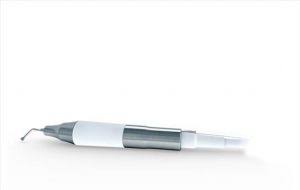
Piezo Device
Does piezo automatically produce better results?
No surgical technology can automatically guarantee a perfect outcome. While an ultrasonic nose job significantly reduces trauma to the surrounding tissues, the final shape of your nose depends entirely on the human hands guiding the instrument. Piezo is simply a highly refined tool. It cannot compensate for poor preoperative planning, a lack of anatomical understanding, or improper management of the underlying cartilage framework.
Why technology is only one part of surgical planning
Successful rhinoplasty requires balancing bone modification with cartilage support and airway management. Ultrasonic instruments only address the bone. They do not help reshape the nasal tip, strengthen the internal valves, or correct a severely deviated septum.
Drawing on his experience performing over 3,000 procedures, Dr. Mustafa Bağlı evaluates the entire nasal structure. As a European Board Certified ENT and Facial Plastic Surgeon, he understands that advanced tools must be paired with comprehensive anatomical expertise. A beautiful and functional result comes from the surgeon recognizing exactly how much structural support your specific airway requires, rather than just relying on the newest equipment.
Laser rhinoplasty as a marketing term
You may also see advertisements for “laser rhinoplasty” online, but patients should know that lasers cannot cut or reshape nasal bone and cartilage, making this phrase a misleading marketing tactic rather than a genuine surgical technique.
[ Piezo Rhinoplasty → Piezo Rhinoplasty]
Where does cartilage used in rhinoplasty come from?
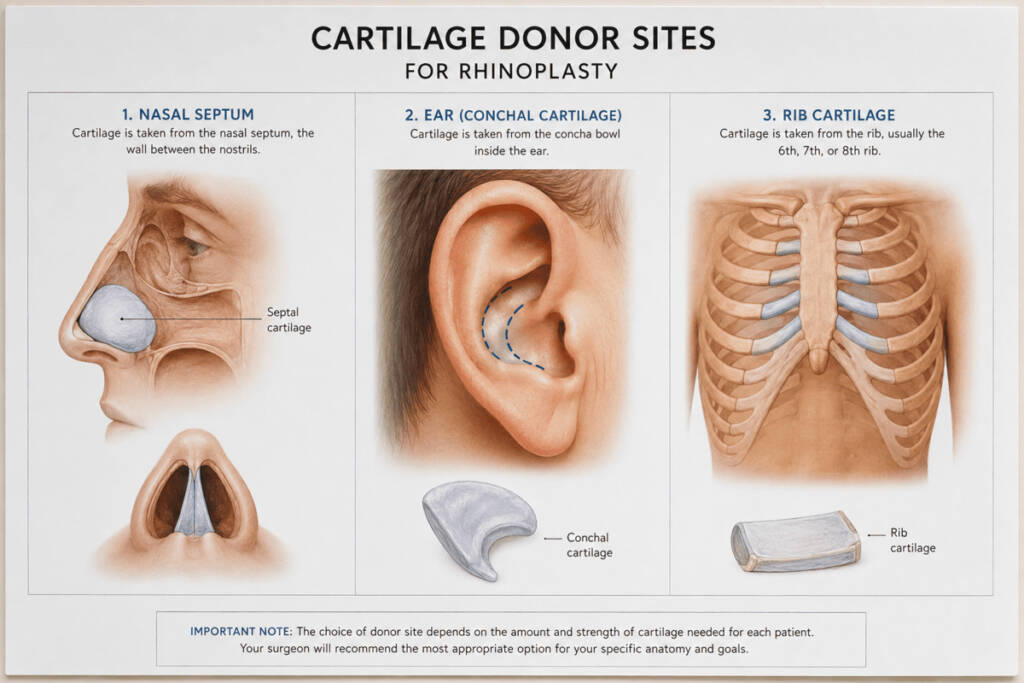
A rhinoplasty cartilage graft is typically harvested directly from your own body to build essential structural support or refine the shape of your nose. Surgeons primarily rely on three specific donor sites: the nasal septum, the ear, or the rib, depending on the volume and strength of cartilage required for your specific anatomy.
Septal cartilage
For most primary procedures, the nasal septum is the preferred donor site. This cartilage forms the central dividing wall inside your nose. Because it is naturally straight and rigid, it provides excellent structural support for the nasal bridge and tip. A septal cartilage rhinoplasty is highly efficient because the surgeon harvests the material from the exact same area they are already operating on, meaning no additional incisions are required on other parts of your body.
Ear cartilage
When the septum does not provide enough material, a surgeon may harvest tissue from your ear. Ear cartilage is naturally curved and much softer than septal cartilage. This flexibility makes an ear cartilage rhinoplasty an excellent option for softening or reshaping the nasal tip. However, because it lacks rigid strength, it is rarely used to reconstruct the straight supporting pillars of the nasal bridge. The incision is typically hidden discreetly in the natural crease behind the ear.
Rib cartilage
Rib cartilage is utilized when a patient requires a massive amount of strong, straight cartilage. This is most common in complex reconstruction cases or severe trauma. A rib cartilage rhinoplasty provides an abundant supply of robust material necessary to completely rebuild a collapsed nasal framework.
Medical literature, including data from the Journal of the American Medical Association, notes that rhinoplasty grafts using rib cartilage carry the highest overall revision rate at approximately 21.5 percent. Patients must understand that this statistic does not indicate a failing of the rib material itself. Instead, it reflects the extreme complexity of the noses that require rib grafts in the first place, as these are often the most severely damaged and challenging cases a surgeon will face.
When grafting may be considered
Grafting is considered whenever your natural nasal framework is too weak or too small to support the desired cosmetic or functional changes over the long term. This is especially critical in revision surgeries where previous operations have already depleted the original cartilage. Additionally, a cartilage graft rhinoplasty plays a vital role for patients seeking to build up a flat nasal bridge or those with thicker skin who require strong underlying projection to ensure the new nasal shape remains defined and structurally sound.
Drawing on his experience of over 3,000 surgeries, Dr. Mustafa Bağlı evaluates your grafting needs during your very first consultation. As a European Board Certified ENT and Facial Plastic Surgeon, he views cartilage grafting not just as a tool for aesthetic refinement, but as a mandatory requirement for protecting your nasal airway against future collapse.
How should you prepare before travelling to Turkey for rhinoplasty?
Preparing for your surgical journey requires organizing your complete medical background, arranging a preliminary visual assessment, adjusting your lifestyle habits, and finalizing your travel logistics. Proper preparation ensures your safety and allows your surgeon to create an accurate treatment plan before you ever board a flight.
Preparing your medical history
Before you travel, you must compile a comprehensive record of your health. This record must include previous surgeries, chronic conditions, known allergies, and any history of breathing difficulties. Transparency is critical for your safety under general anesthesia. Do not omit any details, even if they seem entirely unrelated to your nose. Your surgical team relies on this information to anticipate and prevent potential medical complications.
Sharing photographs for preliminary assessment
International patients typically undergo an initial online evaluation. To receive an accurate preliminary assessment, you need to provide clear, well lit photographs. Take these pictures against a plain background from multiple angles: looking straight on, both side profiles, and a view from below showing your nostrils. These specific angles allow your surgeon to evaluate your structural symmetry, cartilage strength, and skin thickness before you commit to travelling.
Questions to prepare for your consultation
Your consultation is your opportunity to understand the medical realities of your procedure. Write down your questions in advance so you do not forget them during the conversation. You should ask about the specific surgical techniques your anatomy requires, the functional breathing improvements planned, and the exact steps of your postoperative care. Engaging directly with Dr. Mustafa Bağlı ensures you receive answers grounded in his European Board Certified ENT and facial plastic surgery experience, rather than generic promises from a sales coordinator.
Medication, supplements and smoking, four weeks out
Four weeks before your surgery date, you must strictly adjust certain physical habits. Smoking and all nicotine products must be stopped completely. Nicotine severely restricts blood flow, which impairs healing and drastically increases the risk of tissue death and infection. Additionally, you must pause all blood thinning medications, herbal supplements, and daily vitamins, as these can cause dangerous bleeding during the operation. Always clear your current prescriptions with your medical team.
Travel planning and accommodation
When travelling to Turkey for rhinoplasty, plan to stay in Istanbul for a minimum of seven to ten days. Your body needs a calm environment to begin the healing process, and your surgeon must remove your internal splints and officially clear you for air travel. Choose a comfortable hotel close to the clinic or hospital to minimize physical exertion and travel stress during your early recovery days.
Setting realistic expectations before travelling
The most important step in your rhinoplasty Turkey preparation is mental readiness. Understand that the surgical process involves accepting the natural unpredictability of human healing. You will experience visible swelling and bruising, and the final contour of your nose will take up to a full year, or sometimes longer, to completely settle. Approaching your surgery with patience and realistic aesthetic goals is the best way to ensure long term satisfaction.
What does a week of rhinoplasty in Istanbul typically look like?
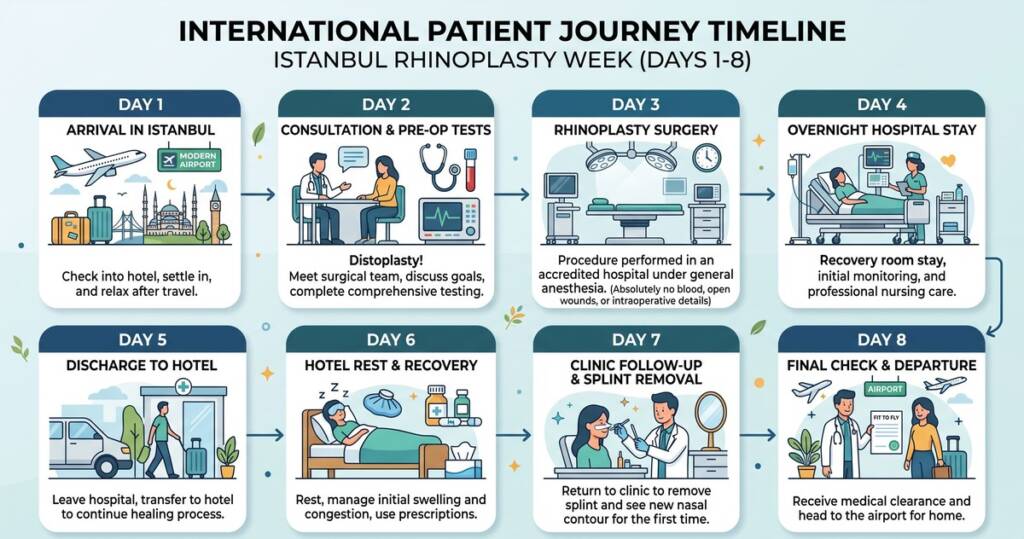
A typical rhinoplasty in Istanbul recovery timeline spans seven to ten days. Your week begins with an in person medical consultation and comprehensive preoperative testing. The surgery takes place on the following day, followed by an overnight hospital stay. You will then spend several days resting at your hotel before returning to the clinic for splint removal and final medical clearance to fly home safely.
Arrival and initial consultation
When you arrive for your rhinoplasty Turkey trip, your first major milestone is the initial consultation. This is your opportunity to meet your surgical team in person. During this appointment, the focus shifts entirely from travel logistics to medical evaluation. You will sit down with your operating doctor to review your complete medical history, discuss your breathing function, and clarify your aesthetic goals in detail. You will also undergo standard preoperative health screenings, such as blood tests and an electrocardiogram, to ensure your body is fully prepared for general anaesthesia.
Assessment and surgical planning, including the right to change your mind
A thorough assessment involves a detailed physical examination of your external facial proportions and your internal nasal airway. Dr. Mustafa Bağlı utilizes his European Board Certified ENT and Facial Plastic Surgery training to ensure the proposed aesthetic changes will safely support your breathing. He will walk you through a customized surgical plan based on your unique skin thickness and cartilage strength.
Most importantly, you retain absolute control over your body. Even after arriving in Istanbul and completing your physical assessment, you have the right to change your mind. A trustworthy medical practice will never pressure you to proceed if you feel unready, anxious, or uncomfortable with the proposed surgical plan.
Surgery day: duration, anaesthesia, and whether it hurts
On the day of your operation, you will be admitted to a fully equipped, accredited hospital. The procedure is performed under general anaesthesia administered by a specialist anesthesiologist, meaning you will be completely asleep and feel absolutely nothing during the operation. Depending on whether you require a primary procedure or a complex revision, the surgery usually lasts between two and four hours.
Patients frequently ask about pain. Surprisingly, rhinoplasty is rarely described as a painful experience. When you wake up in the recovery room, you will most likely experience a sensation of heavy pressure and profound nasal congestion rather than sharp, acute pain.
The first few days of recovery
After waking up, you will spend one night in the hospital under the close monitoring of dedicated nursing staff. The next morning, once your surgeon evaluates your condition, you will be discharged to your hotel.
The first two to three days are generally the most uncomfortable part of the rhinoplasty patient journey Istanbul offers. You can expect significant swelling around your eyes, mild bruising, and a persistent feeling of being congested, very similar to having a severe head cold. Resting with your head elevated on extra pillows, taking your prescribed medications on schedule, eating soft foods, and staying hydrated are your only responsibilities during this critical early phase.
Follow up and splint removal
Around five to seven days after your surgery, you will return to the clinic for your most anticipated appointment. During this follow up visit, your surgeon will gently remove the external protective splint and any silicone airway tubes placed inside the nostrils. Modern clinics no longer use the long yards of painful cotton packing from decades past, making this removal process entirely tolerable.
Removing the splint does not hurt, though it may feel slightly strange and highly sensitive to the touch. This is the first time you will see your new nasal contour, but it is crucial to remember that your nose will still be significantly swollen. The shape you see on splint removal day is only the beginning of a healing process that will continue refining over the next twelve to eighteen months.
Preparing to travel home, and when flying is safe
Knowing how long stay in Turkey after rhinoplasty is medically necessary is a vital part of your initial planning. You should never attempt to fly home immediately after surgery. The cabin pressure changes inside an aircraft can cause severe pain, bleeding, and increased swelling if your healing tissues have not sufficiently stabilized.
Dr. Bağlı requires international patients to remain in Istanbul for a minimum of seven to eight days. Once the splint is removed and he completes a final physical examination, you will receive a fit to fly certificate and official medical clearance. Only then is it truly safe to head to the airport and conclude your medical journey.
[Postoperative Care Guide → What to Expect During Rhinoplasty Recovery]
How long does rhinoplasty recovery take?
The initial rhinoplasty recovery takes seven to ten days, but complete healing is a much longer process. While the most visible bruising and swelling subside within four to six weeks, it takes twelve to eighteen months for the internal tissues to fully settle and reveal your permanent nasal contour.
Understanding the rhinoplasty recovery timeline helps you plan your travel, your time off work, and your mental adjustment to your new appearance.
The first week
The first seven days are the most restrictive phase of your nose job recovery. You will wear an external protective splint on your nasal bridge and silicone tubes inside your airway to support the healing tissues. You will experience significant nasal congestion, similar to a severe head cold, forcing you to breathe primarily through your mouth.
During this week, swelling and bruising around your eyes will peak, usually around the third day, before gradually beginning to fade. Your primary job is resting with your head elevated, taking your prescribed medications, and avoiding any physical strain. By the end of this week, your surgeon will remove the splint and internal tubes.
Weeks 2 to 6
This phase is often called the social recovery period. Once the splint is removed, you will see the new shape of your nose, but it will still appear noticeably swollen and puffy.
As you progress through your rhinoplasty recovery week by week, the swelling will steadily decrease. The bruising around your eyes typically vanishes completely by the end of the second week. By week six, the majority of the noticeable swelling will have resolved, and your nose will look completely natural to friends and coworkers, even though it will still feel stiff to your own touch.
Returning to work and daily activities
Most patients feel comfortable returning to a desk job or normal social routines ten to fourteen days after surgery. By this point, the external splint is gone, and any residual bruising can easily be covered with light makeup. However, if your profession involves heavy lifting, strenuous physical labor, or a high risk of facial impact, you must take at least four to six weeks away from those specific duties to protect your vulnerable nasal bones.
Exercise and physical activity
Properly managing your physical activity is crucial for a safe rhinoplasty swelling timeline.
First two weeks: Limit activity to gentle, short walks to promote healthy blood circulation.
Weeks three to four: You may resume light cardiovascular exercise, such as stationary cycling, keeping your heart rate low.
Weeks four to six: You can gradually reintroduce weightlifting and running.
Six months: You must strictly avoid all contact sports or activities with a risk of facial injury for a minimum of six months while the bone completely hardens.
Wearing glasses after rhinoplasty
You cannot rest heavy eyeglasses or sunglasses on your nasal bridge for four to six weeks after surgery. The underlying bones have been surgically altered and are actively fusing back together. The constant weight of glasses can create permanent indentations in the healing bone. If you rely on prescription lenses, you must switch to contact lenses or use medical tape to suspend your glasses directly from your forehead.
When will you see the final result?
Patience is a medical requirement. You will see a beautiful improvement when the splint comes off, but that is not your final result. The skin and soft tissues require time to shrink and drape tightly over the newly shaped cartilage.
The upper bridge loses its swelling relatively quickly, but the nasal tip is the thickest part of the nose and holds onto fluid the longest. Patients with thin skin may see their final contour near the twelve month mark. Patients with thicker, more sebaceous skin may need up to eighteen months for the tip to completely refine.
What surprises people
“In my experience performing over 3,000 rhinoplasty procedures, patients are rarely surprised by the physical discomfort, which is usually quite mild. Instead, they are surprised by the sensory and emotional changes.
First, the tip of the nose will feel completely numb and stiff for several months, which is a normal part of nerve regeneration. Second, swelling is rarely perfectly symmetrical. One side of your nose may stay swollen longer than the other, creating temporary, minor asymmetry that resolves on its own. Finally, adjusting to your new reflection takes psychological time. Even when the surgical result is exactly what you requested, your brain needs several weeks to adapt to the new facial harmony looking back from the mirror.”
After flying home, your recovery transitions to a structured remote care phase. Proper rhinoplasty aftercare after travelling home requires leaving the clinic with your complete medical records, following a scheduled timeline of virtual checkups with your surgeon, and having a local medical professional aware of your surgery.
What information should you leave with?
Before heading to the airport, your clinic must provide you with specific medical documentation. You should leave with a detailed operative report explaining exactly what surgical techniques were performed and what cartilage grafts were utilized.
You will also need a formal fit to fly certificate clearing you for air travel. Finally, ensure you have a clearly written list of postoperative instructions and the direct emergency contact details for your surgical team. Having these documents physical and translated ensures any local doctor can immediately understand your medical situation.
How does follow-up work after rhinoplasty in Istanbul, once you’re home?
Continuity of care is essential for international patients. Your follow-up after rhinoplasty in Turkey shifts to secure video consultations and photographic assessments. Dr. Mustafa Bağlı evaluates these visual updates to monitor how your swelling is resolving and to ensure your internal airway is healing correctly.
To ensure your recovery stays on track, international patients typically follow a standardized remote evaluation schedule:
Recovery Milestone
Assessment Method
Primary Clinical Focus
Month 1
Video consultation and photos
Checking initial swelling reduction and internal airway clearing.
Month 3
Photo assessment
Evaluating early tip refinement and bone stability.
Month 6
Video consultation and photos
Monitoring scar tissue maturation and functional breathing.
Month 12
Comprehensive video review
Final assessment of aesthetic symmetry and permanent structural support.
What should you do if you have concerns after returning home?
If you experience unexpected symptoms such as a sudden increase in temperature, unusual bleeding, or severe pain, you must contact your Istanbul surgical team immediately. They will assess your symptoms virtually to determine if you are experiencing normal healing fluctuations or a genuine medical issue.
For most routine healing anxieties, a quick message to your surgeon provides immediate reassurance. However, if urgent physical intervention is required, your surgical team will advise you to seek immediate physical care from a local medical provider.
Why aftercare arrangements should be agreed before surgery
The most common criticism of international surgery is a lack of postoperative support. High quality rhinoplasty aftercare international patients rely on should never be an afterthought.
You must agree on exactly how and when you will communicate with your doctor. Knowing exactly who will answer your questions three months down the line removes the anxiety of feeling abandoned once you leave the hospital. A reputable surgeon led practice maintains long term communication because your final result takes over a year to fully materialize.
What are the risks of rhinoplasty?
Every surgical procedure involves inherent medical risks. The risks of rhinoplasty range from normal temporary side effects, such as expected swelling and bruising, to genuine medical complications like infection or compromised breathing. Understanding these risks is a mandatory part of providing informed consent and ensures you are fully prepared for the realities of the recovery process.
Common parts of the healing process
Many patients confuse normal healing symptoms with surgical complications. Rhinoplasty side effects are temporary physical reactions that every patient will experience. You can expect significant swelling around the nasal tip and bridge, bruising under the eyes, and a feeling of heavy nasal congestion that mimics a severe cold. Furthermore, the tip of your nose will likely feel stiff and completely numb for several months as the sensory nerves slowly regenerate. These are standard parts of the healing journey.
Possible complications
Genuine rhinoplasty complications require medical evaluation and management. While rare when performed by a qualified specialist, potential issues include:
Infection: A localized infection in the surgical area requiring antibiotic treatment.
Bleeding: Excessive postoperative bleeding that may require medical intervention.
Aesthetic Dissatisfaction: Unfavorable healing that results in visible asymmetry, contour irregularities, or unexpected scarring.
Functional Impairment: New breathing difficulties caused by internal swelling or inadequate structural support.
Risk Category
Expected Frequency
Typical Medical Management
Swelling and Bruising
Universal
Head elevation, cold compresses, time
Temporary Numbness
Highly Common
Patience during nerve regeneration
Infection
Rare
Oral or intravenous antibiotics
Excessive Bleeding
Rare
Nasal packing, medication, or minor cautery
Breathing Difficulties
Variable
Saline rinses, topical sprays, or structural revision if permanent
Less common but serious risks
In highly unusual cases, patients may experience severe complications. These include a septal perforation, which is a hole in the central cartilage dividing the nasal passages. Another severe risk is skin necrosis, where the skin tissue dies due to a compromised blood supply. This risk is dramatically higher in patients who use nicotine products. Finally, severe airway collapse can occur if too much supporting cartilage is removed during the operation without proper reinforcement.
How often do patients need revision surgery?
Because the nose is formed of living tissue that heals unpredictably, a certain percentage of patients will require a secondary operation to correct aesthetic or functional issues.
The rhinoplasty revision rate is well documented in medical literature. A comprehensive 2016 study published in JAMA Facial Plastic Surgery, analyzing 175,842 patients, quantified these rates precisely. The study found an overall revision rate of 3.3 percent. However, this number shifts based on the complexity of the case:
7.9 percent for purely cosmetic primary cases.
11.0 percent for secondary (revision) cases.
21.5 percent for complex cases requiring a rib graft.
It is vital to understand that the higher rate for rib graft procedures does not indicate a flaw in the cartilage itself. Instead, it reflects the extreme difficulty of those specific cases, as rib grafts are generally reserved for severely traumatized or heavily scarred noses.
Why individual risk varies between patients
Your individual risk profile is entirely unique. A patient with thick skin, weak cartilage, and a history of smoking faces a significantly higher risk of complications than a healthy non smoker with strong structural anatomy.
The experience of your surgeon is the primary factor in mitigating these risks. Dr. Mustafa Bağlı utilizes his European Board Certified ENT background to assess your specific anatomical vulnerabilities before surgery. By prioritizing the structural integrity of your internal airway, he minimizes the risk of long term breathing complications and ensures the external aesthetic changes are safely supported.
When should patients contact their medical team?
Clear communication is your best defense against complications. After returning to your hotel or flying home, you must contact your medical team immediately if you experience any abnormal symptoms. Warning signs include a sudden fever, heavy bleeding that does not stop with gentle pressure, severe pain that your prescribed medication cannot control, or unexpected visual changes. A transparent medical practice will provide direct emergency contact numbers and encourage you to reach out whenever you have a medical concern.
[Rhinoplasty Risks and Safety → Rhinoplasty Risks and Safety]
What if you are unhappy with a previous rhinoplasty?
If you are unhappy with a previous rhinoplasty, a secondary procedure can often correct functional problems and aesthetic concerns. However, revision rhinoplasty in Turkey requires highly specialized surgical skills to safely navigate altered anatomy. Patients must undergo a comprehensive medical evaluation and allow sufficient healing time before attempting to reconstruct a previously operated nose.
Dealing with a failed rhinoplasty is emotionally draining. Many international patients travel to Istanbul seeking a specialist to fix what went wrong during their initial surgery. Making an informed decision for your next step means understanding exactly how a secondary procedure differs from your first experience.
Why revision rhinoplasty is different
A primary surgery is performed on undisturbed natural tissue. The bone is intact, the cartilage is untouched, and the skin envelope is healthy. In contrast, a secondary rhinoplasty deals with unpredictable scar tissue and missing anatomical structures resulting from previous surgical work.
The original structural support has already been changed or permanently removed. Therefore, the surgeon is not simply reshaping existing cartilage. They are often forced to completely rebuild a damaged foundation. This fundamental shift from simple reshaping to complex reconstruction makes revision cases uniquely challenging and highly specialized.
How long might patients need to wait?
If you want to know when to get revision rhinoplasty, patience is your primary medical requirement. Surgeons universally advise waiting a minimum of twelve to eighteen months after your previous surgery before attempting any further corrections.
This waiting period is an absolute necessity for your safety. It takes a full year for deep internal swelling to resolve, for new blood vessels to stabilize, and for dense scar tissue to soften. Operating on a nose before it has completely healed dramatically increases the risk of severe complications, excessive scarring, and permanent tissue damage.
Why revision cases can be more complex
A revision nose job Turkey involves navigating a compromised skin envelope and a significantly reduced blood supply. Because the original septal cartilage was likely removed or altered during the first operation, the surgeon must find new building materials to recreate your nasal support system.
This frequently requires cartilage grafting from your ear or rib to reconstruct the structural framework. Managing this level of surgical complexity requires an expert understanding of internal airway mechanics. Drawing on his background as a European Board Certified ENT and Facial Plastic Surgeon, Dr. Mustafa Bağlı approaches these cases by prioritizing structural stability. Having performed over 3,000 rhinoplasty procedures, he understands that aesthetic improvements in a revision case will only last if the underlying functional foundation is thoroughly reinforced.
What are the commonest reasons a nose job needs redoing?
Patients seek a revision rhinoplasty Istanbul specialist for a variety of valid medical and cosmetic reasons. The most frequent issues stem from either overly aggressive surgical techniques used in the past or unpredictable individual healing responses.
Common reasons for a secondary procedure include:
New breathing difficulties caused by internal valve collapse or an untreated deviated septum.
An overly scooped nasal bridge resulting from the removal of too much supporting bone.
A pinched or asymmetrical nasal tip caused by weakened cartilage support.
Thick scar tissue that has healed unevenly and permanently distorted the final external shape.
What factors are assessed before considering revision?
Before accepting a revision case, a surgeon must conduct a highly detailed physical evaluation. They need to determine if your body can safely withstand another operation and if your specific goals are anatomically possible.
During this assessment, the doctor will evaluate your skin elasticity to see if it can safely stretch over a newly constructed framework. They will check your internal airway health to identify hidden functional blockages. Crucially, they will assess the availability of donor cartilage to ensure there is enough strong material available in your body to perform the necessary reconstruction safely.
When might revision not be immediately appropriate?
Not every patient is a safe candidate for a secondary operation. A responsible surgeon will decline to perform a revision if the risks to your physical health outweigh the potential cosmetic benefits.
A revision is not appropriate if your skin tissue is too thin, severely scarred, or too damaged to survive another surgical elevation. It is also not advised if your primary concern revolves around minor, temporary swelling while you are still within the first year of your healing period. Finally, surgery will be postponed or declined if a patient holds unrealistic expectations of absolute perfection, as the medical goal of a revision is significant structural improvement rather than achieving a flawless ideal.
[Understand your options for secondary surgery → Revision Rhinoplasty]
How should you evaluate rhinoplasty before and after photos?
Evaluating rhinoplasty before and after photos requires looking past initial visual appeal. To make an informed decision, you should actively look for patients with your specific starting anatomy, check multiple angles, verify how much time has passed since the surgery, and look for consistent results rather than a single perfect image.
Why similar anatomy matters
A nose job before and after picture is only useful if the patient started with a nose structurally similar to yours. If you have thick skin and a wide nasal base, looking at the results of a patient with thin skin and a minor bridge bump will not help you set realistic expectations. Always ask to review cases where the patient’s facial structure, cartilage strength, and skin thickness mirror your own.
Why multiple angles are important
A profile view only shows the bridge of the nose. It hides asymmetries, nostril width, and how the tip aligns with the rest of the face. To properly evaluate rhinoplasty results photos, you must see the patient from the front, the side, and the base looking up at the nostrils. If a clinic only shows side profiles, they are hiding the most complex and critical parts of the surgical work.
Why healing time matters
When looking at rhinoplasty healing before and after images, the timeline is critical. Pictures taken one week after surgery or directly on the operating table reveal very little about the final permanent result. Swelling distorts the shape for many months. A transparent surgeon will show you photos taken at six months, twelve months, and even two years postoperatively. This proves that the structural support holds up over time and that the airway remains stable as the skin shrinks.
Why social media images do not tell the whole story
Social media is designed for marketing rather than medical education. Platforms favor heavily edited images, strategic ring lighting, and immediate reveals. These conditions blur the skin and hide minor imperfections that naturally exist in real life. When you learn how to evaluate rhinoplasty before and after photos properly, you realize that unedited clinical photographs taken against a plain background under bright medical lighting are the only true measure of a surgical outcome.
What consistency tells you about a surgeon’s work
Anyone can produce one excellent result. True medical expertise is demonstrated through consistency. You want to see dozens of cases where the outcomes look natural, balanced, and structurally sound. Having performed over 3,000 rhinoplasty procedures, Dr. Mustafa Bağlı emphasizes that a reliable portfolio should demonstrate a clear ability to handle diverse anatomical challenges safely and consistently over many years.
Selected rhinoplasty cases
Reviewing rhinoplasty before and after Turkey patient galleries is a vital part of your medical research. The clinical photographs below present actual Istanbul rhinoplasty results from Dr. Mustafa Bağlı. To ensure complete transparency, every image follows strict medical capture standards. All photographs are completely unaltered, taken under matched lighting conditions, and display visible postoperative dates.
Every individual provided standardized written consent for their clinical images to be shared. Public interactions and comments are disabled on these galleries to respect patient privacy. Furthermore, we strictly exclude graphic surgical images. Please remember that these photographs serve an educational purpose only, and results may vary from person to person based on unique anatomy and individual healing responses.
Primary cases
Primary rhinoplasty involves operating on a nose that has never undergone surgery. These rhinoplasty patient results demonstrate structural changes made to natural bone and cartilage. When evaluating this section, look for patients who share your original nasal shape and skin thickness to help set realistic expectations.
Revision cases
A revision procedure corrects complications from a previous surgery performed elsewhere. These specific images highlight complex anatomical reconstruction. They frequently showcase how depleted cartilage is rebuilt using specialized grafts to restore structural support and facial balance.
Cases involving functional considerations
A comprehensive nose job Turkey before and after portfolio must demonstrate more than cosmetic improvement. Because Dr. Bağlı is a European Board Certified ENT specialist, functional preservation is central to his surgical planning. These selected cases highlight patients who required simultaneous correction of breathing difficulties, such as a deviated septum, alongside their external cosmetic refinement.
[View the Full Rhinoplasty Gallery → View the Full Rhinoplasty Gallery]
How does Dr. Mustafa Bağlı approach rhinoplasty?
Dr. Mustafa Bağlı approaches rhinoplasty by treating the nose as a complex, living structure rather than a simple cosmetic feature. His methodology relies on detailed preoperative assessment, prioritizing long term breathing function alongside natural visual refinement. The focus is on creating a balanced outcome that ages safely with the patient over time.
Individualised surgical planning
There is no standard template in Dr. Bağlı’s practice. Having performed over 3,000 rhinoplasty procedures, he understands that applying a single surgical technique to every patient eventually leads to structural failure. Every operation begins with a custom surgical plan engineered specifically for the patient’s unique cartilage strength, skin thickness, and individual healing capacity.
Considering nasal anatomy and facial proportions
A successful surgical outcome does not draw attention to itself. Instead, it brings harmony to the entire face. During the clinical evaluation, Dr. Bağlı analyzes how the nasal bridge and tip relate to your chin, forehead, and jawline. The surgical goal is to calculate the precise structural modifications that will look completely natural within the context of your specific facial architecture.
Assessing aesthetic and functional concerns
Because he is European Board Certified in both ENT and Facial Plastic Surgery, Dr. Bağlı views aesthetics and internal function as inseparable. A beautiful profile means very little if the patient cannot breathe properly. Every consultation includes a thorough examination of the internal airway to identify deviated septums or weak nasal valves, ensuring that cosmetic changes never compromise your respiratory health.
Discussing realistic expectations
Complete honesty during the consultation protects the patient during the recovery process. Dr. Bağlı engages in highly transparent conversations about what surgery can and cannot achieve. Patients receive clear guidance regarding postoperative swelling, scar tissue maturation, and the firm physical limits imposed by their original anatomy.
Why one nose does not suit every face
Patients often bring reference photos of specific noses they admire, but attempting to force a specific shape onto a completely different facial structure is both visually jarring and medically unsafe. A highly narrowed bridge might look appropriate on one patient but appear entirely artificial on someone with a strong jawline and thick skin. Dr. Bağlı focuses on refining your existing features rather than erasing your natural identity.
About Dr. Mustafa Bağlı
Dr. Mustafa Bağlı is a specialized ENT and facial plastic surgeon in Istanbul focusing exclusively on rhinoplasty and facial aesthetics. His medical practice operates on a fundamental principle: every aesthetic modification must actively protect or improve the internal respiratory function of the patient.
With a comprehensive background in Otorhinolaryngology, commonly known as Ear, Nose, and Throat surgery, Dr. Bağlı possesses an advanced understanding of the delicate internal airway. This dedicated ENT training allows him to correct complex functional problems, such as a deviated septum or weakened nasal valves, simultaneously with cosmetic refinement. By integrating these two distinct medical disciplines, he ensures that international patients receive an aesthetically balanced result that supports effortless lifelong breathing.
His surgical proficiency is independently validated by rigorous international credentials. Dr. Bağlı holds European Board Certification in both ENT and Facial Plastic Surgery. This dual certification requires specialists to demonstrate exceptional clinical knowledge, ethical patient care, and technical precision before an independent medical board.
Operating his dedicated practice in Istanbul, Dr. Bağlı has successfully performed over 3,000 rhinoplasty procedures. This extensive surgical volume provides him with the deep practical experience required to safely manage highly complex primary operations and challenging revision cases. Unlike high volume commercial clinics, his practice is entirely surgeon led. Dr. Bağlı personally conducts every anatomical assessment, designs every customized surgical plan, and manages the postoperative care for all his patients.
International patients travelling to see a Mustafa Bağlı rhinoplasty surgeon expect transparency and direct medical accountability. He ensures that every patient understands their unique anatomical limitations and realistic aesthetic possibilities before they ever agree to surgery.
Every face is unique, and a successful surgical outcome begins with a thorough, individualized assessment. During an online rhinoplasty consultation or an in person evaluation, Dr. Mustafa Bağlı will carefully examine your specific nasal anatomy. As a European Board Certified ENT and Facial Plastic Surgeon, he prioritizes understanding both your aesthetic goals and your functional breathing concerns. This dual focus ensures that any cosmetic changes actively protect or improve the internal airway.
The purpose of a rhinoplasty assessment Istanbul patients undergo is to align your desires with medical reality. Dr. Bağlı will discuss your expectations transparently, explaining exactly what is anatomically possible for your specific skin type and cartilage strength. You will receive an honest medical opinion regarding your treatment options. Crucially, if your goals carry unnecessary risks or if the safest medical advice is not to have surgery at all, he will tell you directly.
If you are ready to consult a rhinoplasty surgeon Istanbul specialist for a clear and pressure free evaluation, you can begin the process today.
Frequently asked questions about rhinoplasty in Turkey
Is rhinoplasty in Turkey safe?
Yes, rhinoplasty in Turkey is highly safe when performed by a fully qualified, board certified specialist operating in an accredited hospital facility. Your personal safety depends directly on choosing a surgeon who conducts a comprehensive preoperative medical evaluation and prioritizes your long term airway function over simple cosmetic changes.
How much does it cost?
In 2026, the general market price ranges from $3,000 to $8,500 USD. For international patients consulting with Dr. Mustafa Bağlı, comprehensive surgical packages typically fall between $4,500 and $5,000 USD. The exact final quotation depends heavily on whether your anatomy requires a primary operation or a highly complex revision procedure.
[Internal Link Opportunity: Rhinoplasty Cost in Turkey to How much does rhinoplasty in Turkey cost in 2026]
How long should I stay in Istanbul?
You must plan to stay in Istanbul for a minimum of seven to ten days. This mandatory timeframe gives your body a safe environment to begin the early healing process, allows your surgeon to remove your internal splints, and ensures you receive official medical clearance before you travel.
Is it painful?
Rhinoplasty is rarely described as a painful experience. Most patients report a sensation of heavy pressure and profound nasal congestion that mimics a severe head cold, rather than sharp or acute pain. Your medical team will provide prescribed pain relief to manage any mild discomfort during the first few days of recovery.
When can I fly home?
You can safely board an aircraft after your surgeon removes your nasal splints and issues a formal fit to fly certificate. This typically occurs seven to eight days after your operation. Flying sooner is medically dangerous, as the cabin pressure changes can trigger severe swelling and unexpected bleeding.
When will I see the final result?
You will notice a beautiful improvement immediately after your splint is removed on day seven, but this is not the final result. The permanent, fully refined contour of your nose will take twelve to eighteen months to emerge as the deep internal swelling completely subsides and the skin shrinks to fit the new framework.
Open versus closed?
An open approach utilizes a tiny external incision between the nostrils, providing the surgeon with maximum visibility for complex structural reconstructions. A closed approach keeps all incisions hidden entirely inside the nostrils, making it ideal for minor, straightforward adjustments. The appropriate medical choice depends entirely on your specific anatomical requirements.
What is piezo rhinoplasty?
Piezo rhinoplasty is an advanced surgical method utilizing specialized ultrasonic instruments to reshape the nasal bones with high frequency microvibrations. This technology allows surgeons to precisely polish the bone while leaving the surrounding soft tissues unharmed, which often leads to reduced bruising and a visually smoother early recovery phase.
Can rhinoplasty address breathing concerns?
Yes, a functional rhinoplasty corrects internal breathing issues at the exact same time as external aesthetic changes. Because Dr. Bağlı holds European Board Certification in ENT surgery, he routinely corrects deviated septums and reinforces collapsing nasal valves during cosmetic procedures to ensure your new nose functions effortlessly.
How long before revision?
If you require a secondary procedure, you must wait a minimum of twelve to eighteen months after your initial surgery. Attempting a revision operation sooner is highly unsafe because the tissues are still actively healing, internal swelling distorts the anatomy, and the blood supply remains vulnerable to permanent damage.
Will there be a visible scar?
If your surgeon utilizes a closed technique, there are absolutely no external scars. If your anatomy requires an open approach, a tiny incision is made across the columella, the skin separating your nostrils. This small mark typically heals exceptionally well and fades until it becomes virtually invisible to the naked eye.
Can it be done under local anaesthesia?
No, modern rhinoplasty is almost exclusively performed under general anaesthesia to guarantee your absolute safety and comfort. General anaesthesia protects your airway from blood during the delicate operation and ensures you are completely asleep, feeling absolutely nothing while the surgeon performs the procedure.
Am I too old?
There is no strict upper age limit for nasal surgery, provided you are in excellent overall health. The primary medical determining factors are your cardiovascular fitness for general anaesthesia and the natural elasticity of your skin, both of which your surgeon will evaluate thoroughly during your initial consultation.
What if I don’t like the result?
If you are concerned about your result, you must exercise patience and allow a full twelve to eighteen months for the swelling to completely resolve. If genuine structural irregularities or aesthetic concerns remain after the healing process is entirely finished, you can consult your surgeon about the possibility of a revision procedure.
Does insurance cover rhinoplasty in Turkey?
Standard domestic health insurance rarely covers cosmetic procedures performed in a foreign country. If your surgery includes a strictly functional medical repair, such as fixing a breathing obstruction, you must speak directly with your insurance provider before travelling. The vast majority of international patients pay for their procedure out of pocket.
Can I wear glasses?
You must avoid resting prescription eyeglasses or heavy sunglasses on your nasal bridge for at least four to six weeks following your operation. The reshaped nasal bones are actively fusing back together, and constant weight can cause permanent indentations. You will need to wear contact lenses or securely tape your glasses to your forehead.
When can I exercise?
You can resume light, gentle walking immediately to promote healthy blood circulation. However, you must avoid elevated heart rates and cardiovascular strain for three to four weeks. Heavy weightlifting can slowly resume after six weeks, but you must strictly avoid all contact sports for a minimum of six full months.
Do I need someone to travel with me?
Bringing a friend or family member provides excellent emotional support, but it is not a medical necessity. High quality surgeon led practices provide VIP airport transfers, dedicated hospital nursing staff, and accessible medical coordinators who ensure you are safely guided through every single step of your week in Istanbul.
How do I know the surgeon I consult is the one operating?
You must demand explicit verbal and written confirmation during your very first clinical consultation. When you book directly with a dedicated private practice, rather than an anonymous medical tourism broker, you guarantee that the specialist evaluating your face is the exact same doctor holding the instruments in the operating room.
Is there a best time of year?
There is no medically superior season for scheduling your surgery. Winter recovery allows you to comfortably hide early swelling under thick scarves and stay indoors. Conversely, summer recovery is perfectly safe but requires strict daily sun protection to prevent your healing skin from developing permanent dark pigmentation issues.
Medical review, sources and transparency
To ensure the highest standard of patient education, all clinical information on this page has been comprehensively reviewed for medical accuracy by Dr. Mustafa Bağlı. Dr. Bağlı is a European Board Certified ENT and Facial Plastic Surgeon operating a dedicated private practice in Istanbul, drawing on clinical experience from over 3,000 surgical procedures.
Review and update schedule
Last medically reviewed: September 2, 2026
Last updated: September 2, 2026
Clinical sources
Our commitment to transparency means grounding our claims in verified medical literature rather than marketing promises. The data regarding surgical risks and secondary procedures references peer reviewed clinical studies, specifically:
Spataro, E. et al. “Objective Analysis of Revision Rhinoplasty Rates and Associated Factors.” JAMA Facial Plastic Surgery, 2016. This comprehensive study analyzed 175,842 patients to establish the quantified revision rates utilized in our safety guidelines.
Medical disclaimer
The information provided on this page is strictly for educational and research purposes. It is designed to support, not replace, the relationship that exists between a patient and their physician. Online medical content cannot diagnose your condition, predict your individual healing response, or determine your suitability for surgery. Because every patient possesses entirely unique nasal anatomy and medical history, you must complete a formal clinical assessment before making any surgical decisions.