

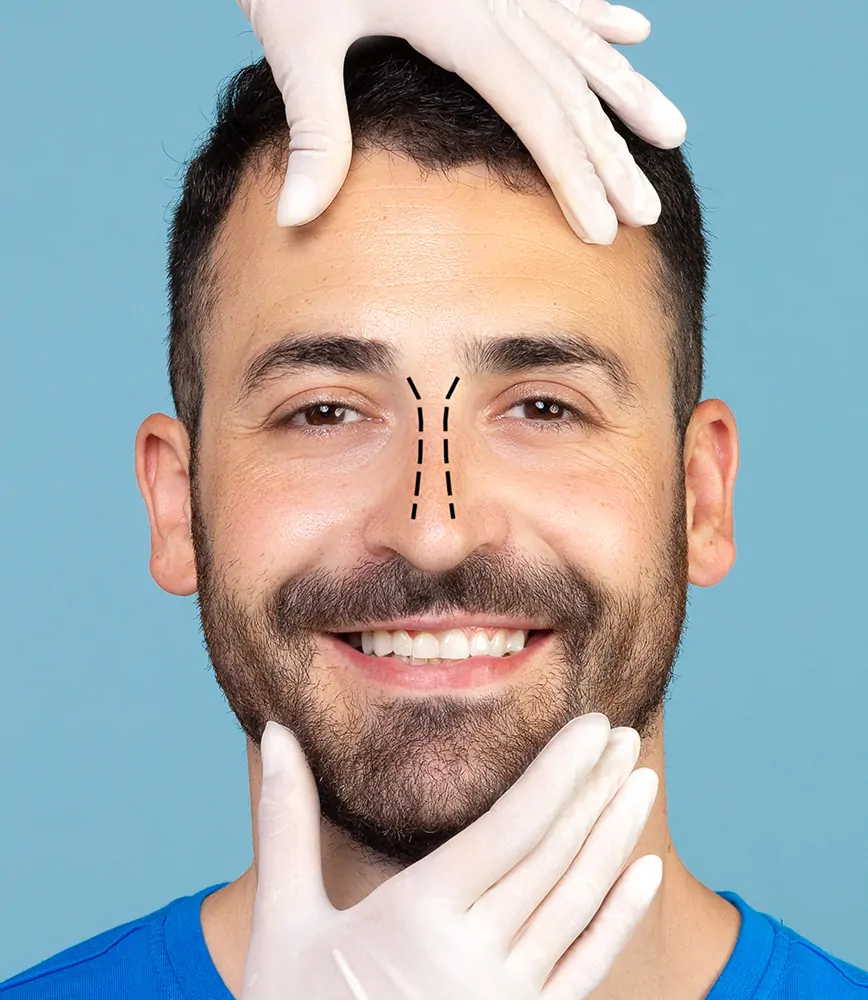
Expert Revision Rhinoplasty for Enhanced Results
Revision rhinoplasty is a correction procedure performed when the desired results are not obtained in the first nose surgery. Since this correction is performed for the second time, it is also referred to as secondary rhinoplasty, and if it’s the third time the surgery is called tertiary rhinoplasty so on. It is applied to correct the functional and aesthetic defects that occur as a result of the first surgery.
Basically, defects in the nasal structure due to congenital or accidental reasons cause aesthetic and functional discomfort to the person. Fortunately, it is possible to correct these problems with rhinoplasty. However, not every rhinoplasty procedure may give successful results for everyone. Therefore, the person may experience functional or aesthetic dissatisfaction even after rhinoplasty. This is where revision rhinoplasty comes into play.
With revision rhinoplasty, it is possible to correct these post-rhinoplasty defects. As a matter of fact, revision rhinoplasty is a bit confusing because it is a secondary surgery. However, it is possible to correct this confusion by having knowledge about its specific application steps and tricks.
In this article, we will explore what revision rhinoplasty is, how it works, how long it takes, who is suitable for this procedure, and details about the healing process.
What is Revision Rhinoplasty?
insufficient or unsatisfying. Rhinoplasty (nose aesthetics) results may not be satisfying in some cases. A second surgery is required to improve and correct the unsatisfactory rhinoplasty results. This correction surgery is called revision rhinoplasty.
Although revision rhinoplasty is often confused with touch-up surgery, the two are different from each other. In retouching surgery, minor problems that occur after the first surgery are corrected and are not serious. However, revision rhinoplasty is the repetition of the procedure to correct the results of a previous operation. Therefore, it is a more serious operation and requires high precision.
Revision rhinoplasty is a procedure required in approximately 7-15% of rhinoplasties. In addition, there may be many reasons behind this correction procedure. These reasons include nasal trauma, functional problems, healing problems, the patient’s unrealistic expectations, and the first surgeon’s overly ambitious goals.
It is usually performed between 9-12 months when the results of the first operation are fully clear.The technique in the correction process is determined according to whether the first operation was open or closed. If the first operation is open, the correction is also open. In addition, the correction process is generally more difficult and complicated than the first operation. Because in the first operation, skin tissue and tissue quality deteriorate. Therefore, it is critical to get help from an experienced specialist in revision rhinoplasty to get successful results.
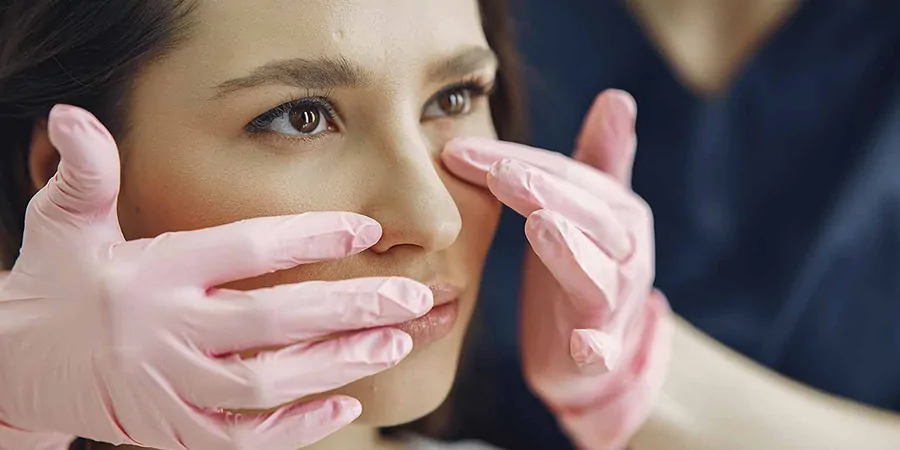
How Does Revision Rhinoplasty Work?
The techniques used in revision rhinoplasty differ according to the patient’s nasal anatomy and expectations. Which technique will be used is determined by what was used in the first operation, the existing problems, and the patient’s expectations. Therefore, the first examination is extremely important to determine the problems and techniques.
Revision rhinoplasty includes a wide spectrum of procedures, ranging from simple changes to complex rebuilding of the nasal skeleton. It is generally divided into two categories: the first involves minor corrections for patients who are generally satisfied with the results of their initial surgery, while the second involves major revisions for those with significant deformities following the first surgery.
During the first examination, the existing problems are determined and a plan is made for the surgery. If the problems can be solved with a simple revision, minor revision is performed. The procedure time is much shorter in this case in comparison with major revision. In addition, according to some experts, minor revision is a retouching procedure. According to others, it is a surgical procedure different from retouching.
A minor or major revision is usually performed under general anesthesia. The duration and difficulty of the procedure depend on how complex it is. In addition, timing is critical in both revision procedures. It is usually not recommended before 6 months to 1 year after the full healing of the first operation. However, there are some exceptions that the specialist may consider appropriate even immediately after the first rhinoplasty procedure.
In some cases, the surgeon wants to intervene immediately in nasal defects that are noticed early after the first rhinoplasty. For example, after rhinoplasty, where the nose is made much smaller than it should be, it may prefer to be revised before the connective tissue develops and adhesions form.
How Long Does Revision Rhinoplasty Take?
Even if everything is planned and applied perfectly there is still some chance for a rhinoplasty patient to need a revision surgery. In this case first question is whether this surgery should be held by the first surgeon or another one.
For some, the procedure performed by the specialist who performed the initial surgeon should correct the nose because of the knowledge of techniques applied in the first surgery. However, the generally accepted opinion is that regardless of who performs the first rhinoplasty, the second revision procedure should be performed by a revision rhinoplasty specialist.
Revision rhinoplasty is generally more difficult than the first surgery because the tissue areas are narrowed after the first rhinoplasty. Therefore, it is an aesthetic procedure that requires maximum precision and experience. In general, the procedure is difficult due to the formation of granulation tissue and the use of septum cartilage structure in the first operation. If there is not enough amount of septal cartilage for revision, the surgeon might harvest rib or ear cartilage in order to reconstruct the nose. It is essential for the specialist to carry out the procedure patiently and with the awareness that these difficulties will occur.
The duration of revision rhinoplasty varies depending on whether it is minor or major. While the minor revision procedure usually takes between 30-40 minutes, the procedure time in major cases is 3-6 hours on average. The times depend entirely on how complex the procedure is. At the same time, the surgeon’s experience in revision rhinoplasty is also a determining factor in duration.
In summary, the problems encountered in this correction process have a direct effect on the duration. Mostly, problems such as excessive scarring outside or inside the nose, soft tissue and skin problems, defects in the dorsum of the nose, continued deviation, curved nose, and reverse V-shaped appearance in the middle part are corrected. Correction of one or more problems, of course, closely affects the duration.
Am I Suitable for Revision Rhinoplasty?
Revision rhinoplasty, which is applied to patients who are not satisfied with the results of the first rhinoplasty, is not suitable for some people in some cases. Although the patient’s health conditions were suitable for the first aesthetic operation, they might not be suitable for the second. Therefore, after the controls made by the specialist, it should be determined whether the patient is suitable for this correction aesthetics. If appropriate, a treatment plan is made.
The criteria for suitable patients for revision rhinoplasty are as follows:
- Those who have undergone rhinoplasty surgery and whose health condition is suitable for the second operation.
- People over 18 years of age with complete bone development.
- Those who do not have unrealistic expectations.
- Patients 1 year after the first surgery and are not satisfied with their condition.
- Those who are approved by the specialist that the person need a second surgical procedure. Because in some cases, an issue that concerns patients may not require intervention by a specialist. In that case by mutual agreement, it may not be necessary to perform this correction procedure.
- Those who are psychologically suitable for the second aesthetic operation. Patients with Body Dysmorphic disease(BDM) will not be satisfied with aesthetic surgeries regardless of than outcome, in these patients revision rhinoplasty is not recommended.
- Those who have the nasal tissue and cartilage required or have permission to harvest rib/ear cartilage or accept to use cadaveric cartilage for the second surgery.
It is very important to wait for one year after the first surgery to see complete healing of the nose and scar areas. If the secondary surgery is performed too early that might not give the desired result because swellings may camouflage some problems that can not be seen yet but eventually will need to be corrected. Therefore, it may cause unsatisfied results even after secondary surgery.
If there is a change in general health conditions of the patient after primary rhinoplasty that may also be an obstacle for surgery. Diseases such as blood pressure, heart disease, diabetes, wound healing problems and cancer, are contraindications for revision rhinoplasty(these patients are not suitable for surgery).In addition, pregnancy, breastfeeding, and mental health disorders (at a level that a person cannot make their own decision) also constitute an obstacle for secondary rhinoplasty.
What is the Recovery Process After Revision Rhinoplasty?
The recovery process after revision rhinoplasty varies just like other aesthetic operations. The patient’s condition, the complexity of the operation, the surgeon’s expertise, and the techniques used are among the factors that affect the duration. In addition, whether there are minor or major interventions also has an important role in the healing process.
In minor invasive procedures with simple corrections, side effects are minimal and recovery is extremely fast. In major invasive procedures, recovery is slower because more serious and complex correction is performed and swelling and bruisings are more likely to happen in this case.
The first days after secondary rhinoplasty are extremely important for successful and permanent results. Therefore, it should be carried out meticulously. It may be necessary to use plaster and splints to maintain the shape of the nose during the procedure. These play an important role in supporting the healing process.
It is quite natural to experience swelling, bruising, and color changes in the first week after the procedure. These side effects usually dissolve in the first week. Ice application and keeping the head elevated are beneficial in alleviating these complaints. In addition, the use of painkillers prescribed by the specialist also plays an important role in relief, if there is a sensation of pain.
After revision rhinoplasty, which is usually performed with the dissolving suture method, maximum attention should be paid to wound care. In addition, direct exposure to the sun, excessive fatigue, sweating, entering the sauna and pool, and doing heavy exercises should be avoided in the first weeks. In this way, the new nose shape, which has not yet healed and stabilized, can be preserved.
The recovery period after revision rhinoplasty is approximately 12 months. However, this period may vary according to the physiological responses of the person. Therefore, the full recovery period is generally considered to be a year. According to the biological responses of some people, this period may be even longer.
Surgical Techniques in Revision Rhinoplasty
The techniques used in revision rhinoplasty vary based on the first surgery and the content of the problems. The patient’s current situation, expectations, and the result of the first surgery are among the factors that affect to decision of which techniques will be used. In addition to the patient’s expectations, a plan is made about the techniques with the surgeon’s opinion as a result of the evaluation.
The techniques that can be used in secondary rhinoplasty are generally as follows:
- Piezo technique to fix bone problems:
- Slyndric burrs for achieving smooth nasal dorsum.
- Septoplasty to correct functional problems
- Aesthetic and symmetrical corrections.
- Augmentation of the dorsum with rib cartilage and fascia graft.
- Tipplasty with rib or ear cartilage.
These techniques can be used alone or multiple depending on the case. These techniques are determined for the correction of functional problems, inequality in the nostrils, droopy nasal tip, nasal congestion, nasal asymmetry, and deformities that the patient encounters after the first procedure.
Secondary rhinoplasty usually gives successful results when performed by an experienced surgeon who specialized in revision surgery. It offers a complete solution to the disorders that occur for different reasons after the first surgery. However, if the patient has unrealistic expectations, the results of revision rhinoplasty may not be satisfying. Unsatisfactory results may occur in cases such as insufficient experience of the specialist in this field, failure to make appropriate planning for the evaluation, or not waiting for the necessary recovery period.
In summary, revision rhinoplasty is a corrective surgical procedure performed to address unsatisfactory results from a previous rhinoplasty, regardless of whether it was the first, second, or any subsequent operation. It is performed using an open approach, piezo technique, graft harvesting, and different techniques depending on the results of the first surgery and patient expectations. Revision rhinoplasty is considered one of the most challenging aesthetic operation that requires precision and requires huge experience in this field to achieve successful results.